Kurt Vonnegut’s Slaughterhouse Five: War Memory and School Board Battles
The Multifaceted World of Slaughterhouse-Five
Kurt Vonnegut’s Slaughterhouse Five is a timeless exploration of war memory and trauma. Its protagonist, Billy Pilgrim, navigates a life fragmented by war and alien abduction, reflecting the absurdity and horror of human conflict. Vonnegut’s masterful blend of satire, science fiction, and raw humanity ensures this novel remains relevant.
Billy Pilgrim, a prisoner of war, witnesses Dresden’s firebombing—an event Vonnegut experienced firsthand. The Tralfamadorians, plunger-shaped aliens, abduct Billy, offering a new lens on time and trauma. These aliens’ philosophy provides Billy with a coping mechanism, illustrating how humans process devastation. As Vonnegut poignantly writes, “So it goes.” This refrain echoes throughout the novel, capturing the inevitability of death and the persistence of life.
Here’s a sample from the novel:
View this post on Instagram
A History of Bans and Backlashes
Since its 1969 publication, Slaughterhouse-Five has faced relentless challenges and outright bans. Objections often center on its coarse language and perceived anti-American sentiment. Yet, such criticisms overlook the novel’s deeper themes of kindness, accountability, and human frailty. Vonnegut’s biting wit critiques glorified portrayals of war while exposing its lasting scars. “There is nothing intelligent to say about a massacre,” Vonnegut reminds us, underlining the futility of such violence.
In 1973, school officials banned and burned the book in Drake, North Dakota. Vonnegut’s response, a scathing letter to the school board, defended free thought. “Books are sacred to free men,” he wrote, chastising the board for teaching children to fear ideas. Vonnegut’s defense echoes today in debates over censorship. His plea—”Pity the men who must fight”—emphasizes the novel’s anti-war message.

The Supreme Court Case That Reshaped School Libraries
One of the most significant challenges to Slaughterhouse-Five reached the U.S. Supreme Court. In Island Trees Union Free School District v. Pico, students and teachers fought censorship efforts. The court ruled in favor of the First Amendment, affirming the book’s place in school libraries.
This landmark case underscored the importance of diverse narratives in education. Vonnegut’s work—with its unflinching look at war’s cost—encourages readers to question authority and empathize with others. By standing against censorship, students safeguarded access to challenging literature. “And I asked myself about the present: how wide it was, how deep it was, how much was mine to keep,” Billy reflects, offering a profound insight into individuality and freedom.
Vonnegut’s Life and Literary Legacy
Vonnegut’s experiences shaped his writing. Born in 1922, he served in World War II and survived the Dresden firebombing as a POW. This tragedy and his midwestern roots inspired his sardonic yet compassionate voice. Vonnegut’s novels combine sharp humor and profound insights, making him a literary icon.
In Slaughterhouse-Five, Vonnegut confronts the dehumanizing effects of war. Through Billy Pilgrim, he examines how trauma distorts memory and identity. The novel’s non-linear structure mirrors the disorienting nature of PTSD, allowing readers to experience time as Billy does. As Billy explains, “It is just an illusion we have here on Earth that one moment follows another.”
Why Slaughterhouse-Five Remains Essential
Despite challenges, Slaughterhouse-Five endures as a cornerstone of anti-war literature. Its time-traveling protagonist offers a poignant critique of humanity’s darkest moments. Vonnegut’s satirical lens reveals the absurdities of war while emphasizing the need for kindness and responsibility.
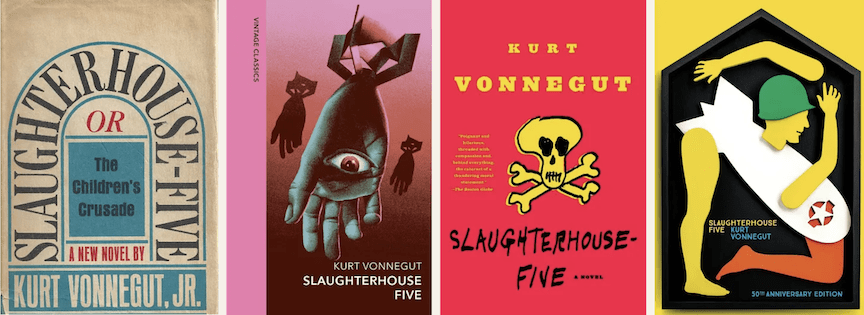
Billy Pilgrim’s journey resonates with veterans and civilians alike. His struggles highlight the long-term effects of war, from PTSD to societal alienation. By addressing these themes, Vonnegut fosters empathy and understanding among readers. “The truth is death,” Vonnegut writes, but through Billy’s perspective, he shows that life’s beauty can endure.
The Cultural Impact of Book Bans
Book bans, like those faced by Slaughterhouse-Five, reflect broader cultural tensions. These efforts often stem from fear of confronting uncomfortable truths. However, banning literature stifles growth and limits diverse perspectives.
Vonnegut’s response to censorship highlights the value of free thought. His defense of Slaughterhouse-Five inspires readers to challenge suppression and embrace intellectual freedom. This message remains vital as schools and libraries face challenges over controversial books. As Billy muses, “Everything was beautiful, and nothing hurt.”
Exploring the Tralfamadorian Philosophy
The Tralfamadorians offer Billy an unconventional perspective on time. To them, moments exist simultaneously, allowing them to view life’s entirety. This philosophy mirrors how trauma survivors experience flashbacks, reliving past events as if they were present.
Billy’s time travel symbolizes the fragmented nature of traumatic memory. Through this narrative device, Vonnegut conveys the psychological toll of war. The Tralfamadorian outlook offers hope, reminding readers that moments of joy coexist with pain. “Ignore the awful times,” the Tralfamadorians advise. “Concentrate on the good ones.”
Slaughterhouse Five in Today’s Classrooms
Teaching Slaughterhouse-Five invites students to grapple with complex themes. Its exploration of war’s consequences fosters critical thinking and empathy. Students gain insight into historical events and their lasting impact by engaging with this novel.
Despite its challenges, Slaughterhouse-Five continues to inspire meaningful discussions. Its humor, heartbreak, and humanity blend to ensure its generational relevance. Vonnegut’s plea for kindness echoes through classrooms, reminding readers of their shared humanity.