Robert Frost: The Road Not Taken and American Identity
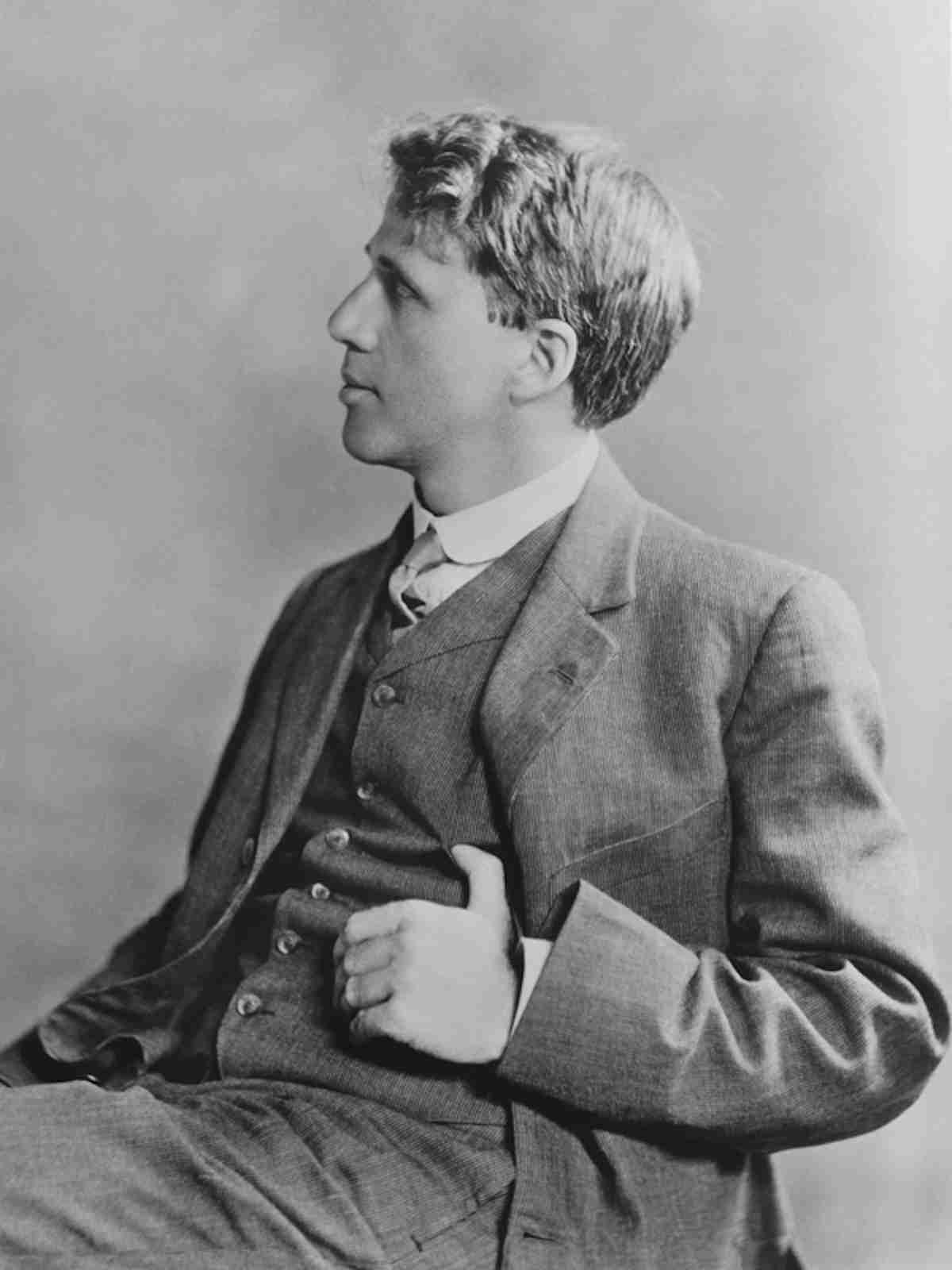
In 1916, Robert Frost published “The Road Not Taken,” a poem that has since become an indelible part of American culture. With its vivid imagery and poignant themes, the poem resonates deeply with individual choice, a cornerstone of American identity. However, beneath its surface lies a nuanced meditation on decision-making and the human condition. Frost’s masterpiece not only reflects the ideals of independence and self-reliance but also challenges the simplicity of these notions, making it an enduring symbol of the complexities that define the American spirit. Read the poem slowly as you listen to Vaughan William’s work “The Lark Ascending.”

A Poem About Choices
At first glance, “The Road Not Taken” appears to be a straightforward narrative about a traveler confronted with two diverging paths in a forest. The speaker laments their inability to explore both options, ultimately selecting one and leaving the other “for another day.” Yet, by the poem’s conclusion, the speaker claims, “I took the one less traveled by, / And that has made all the difference.”
Triumphant Declaration
This seemingly triumphant declaration has often been interpreted as celebrating individuality—a hallmark of American identity. The speaker’s choice to take the road “less traveled” suggests courage and a willingness to defy convention, embodying the ethos of self-determination that pervades American cultural mythology. From the Puritan settlers who sought religious freedom to the pioneers of the western frontier, the idea of forging one’s path has long been central to the American narrative.
Choice and Consequence
Yet Frost’s poem is more complex than a simple endorsement of nonconformity. A closer reading reveals ambiguity: the roads are described as “really about the same,” the speaker’s retrospective account may be less about factual accuracy than the human tendency to impose meaning on past decisions. This tension between choice and consequence reflects the deeper complexities of American identity, which oscillates between the ideals of freedom and the constraints of reality.
The Individual vs. Society
One of the most compelling aspects of “The Road Not Taken” is its exploration of the individual’s role in shaping their destiny. In America, where autonomy and self-reliance are highly prized, the poem is a metaphor for individuals’ countless choices in pursuing the American Dream. The United States has long been regarded as a land of opportunity, where success is limited only by one’s ambition and willingness to take risks.
Agency and Expectations
However, Frost’s poem challenges the notion that these choices are entirely free. The speaker’s decision is influenced by the immediate appearance of the paths and the awareness that they will look back and assign significance to the choice. In this sense, Frost underscores the interplay between individual agency and societal expectations. Americans are taught to value independence, but their decisions are often shaped by cultural narratives about what constitutes success, happiness, and fulfillment.
Navigating Life
This paradox is particularly evident in the speaker’s final reflection: “I shall be telling this with a sigh / Somewhere ages and ages hence.” The sigh could signify satisfaction or regret, leaving the poem’s tone in a state of ambiguity. By doing so, Frost captures the complexity of decision-making, where every choice simultaneously opens new possibilities and forecloses others. The weight of this realization speaks to the broader challenges of navigating life in a society that prizes individualism while imposing collective norms.
The Myth of the “Less Traveled” Road
A key element of “The Road Not Taken” is its subversion of the myth that choosing the unconventional path guarantees success. The poem is often cited as an anthem of independence in popular culture, but Frost viewed this interpretation skeptically. He once remarked that the poem was intended as a gentle satire of his friend Edward Thomas, who struggled with indecision during their walks in the countryside.
Equally Worn Paths
The roads in the poem are described as “equally worn,” suggesting that the distinction between them is not as significant as the speaker implies. This detail underscores the idea that the significance of a choice often lies not in the choice itself but in how it is remembered and framed. Americans frequently romanticize their decisions to pursue self-definition, transforming ordinary moments into defining milestones. This tendency reflects a cultural predisposition to view life as a series of deliberate, heroic acts, even when the reality is more nuanced.
Confront the Complexity
Frost’s subtle critique of this mindset challenges readers to reconsider the narratives they construct about their lives. While the “less traveled” road may symbolize individualism, it also reminds us that choices are rarely as clear-cut as they seem. By embracing this ambiguity, Frost invites readers to confront the complexity of their own decisions and the stories they tell about them.
A Reflection of American Identity
“The Road Not Taken” mirrors the duality of American identity, which is rooted in optimism and pragmatism. The poem’s emphasis on choice aligns with the nation’s foundational ideals of freedom and opportunity, but its underlying ambivalence challenges the notion that these ideals are quickly realized.
A Land of Contradictions
Historically, America has been a land of contradictions. The same country celebrating individual liberty has also grappled with systemic inequalities constraining personal freedom. The frontier ethos of exploration and innovation often clashes with the realities of economic and social structures that limit upward mobility. With its interplay of possibility and limitation, Frost’s poem captures these tensions in a timeless and uniquely American way.
Moreover, “The Road Not Taken” resonates with the broader human experience of navigating uncertainty. In an increasingly complex world, individuals’ decisions often come with no clear right or wrong answers. The poem’s enduring appeal lies in its ability to articulate this universal truth while grounding it in the specific context of American ideals.
The Legacy of “The Road Not Taken”
More than a century after its publication, “The Road Not Taken” remains one of American literature’s most widely read and quoted poems. Its popularity speaks to its ability to capture the imagination of readers across generations, who see a reflection of their struggles and aspirations in its lines. Yet its true power lies in its refusal to offer easy answers.
Frost’s nuanced portrayal of choice invites readers to engage with the complexities of their lives, challenging them to question the narratives they construct and the values they hold dear. By doing so, the poem transcends its specific cultural context to become a universal meditation on what it means to be human.
In many ways, “The Road Not Taken” is a quintessentially American poem, not because it celebrates independence and self-reliance, but because it interrogates them. Through its exploration of choice and consequence, it reveals the tensions at the heart of the American experience, offering a vision of identity that is both inspiring and deeply introspective.
Robert Frost: The Road Not Taken and American Identity
“The Road Not Taken” is more than a poem about a fork in the road. It is a meditation on the human condition, a reflection of American identity, and a challenge to the myths we tell ourselves about choice and individuality. Through its rich imagery and profound ambiguity, Frost’s masterpiece invites readers to confront the complexities of their lives and the stories they construct about their journeys.
In the end, the poem reminds us that every decision we make—however small or seemingly insignificant—shapes the trajectory of our lives. Yet it also encourages us to embrace the uncertainty and ambiguity that accompany these choices, finding meaning not in our paths but in how we navigate the journey. In this way, “The Road Not Taken” continues to resonate, offering a timeless reflection of what it means to be an individual in a world of infinite possibilities.
A Profound Meditation on the Symbolic Nature of Choice
I’ll close by reflecting on the philosophical, aesthetic tenets of the inimitable Susanne Langer. Through the lens of Susanne Langer’s aesthetic philosophy, “The Road Not Taken” emerges as a profound meditation on the symbolic nature of choice and its emotional ramifications. Frost’s poem transcends its literal narrative to become a “virtual experience,” inviting readers to confront the complexities of their own lives. By embodying the interplay of ambiguity, retrospection, and aesthetic wholeness, the poem exemplifies Langer’s vision of art as a unique form of human understanding. It reminds us that the meaning of our choices often lies not in the choices themselves but in the stories we create to make sense of them.

Tone, Rhythm, and Imagery
Moreover, for Langer, art’s primary function is to embody human feeling through symbolic expression. Frost’s poem achieves this through its tone, rhythm, and imagery, which collectively evoke the emotional weight of decision-making. The speaker’s reflective tone, oscillating between nostalgia and regret, encapsulates the paradoxical nature of choice: the simultaneous empowerment and burden of shaping one’s destiny.
Bittersweet Realization
Subsequently, the phrase “I shall be telling this with a sigh / Somewhere ages and ages hence” exemplifies Langer’s concept of “vital import,” or the symbolic representation of lived experience. The sigh is a concrete detail and a metaphorical expression of the speaker’s emotional state. It captures the bittersweet realization that every choice defines a path while leaving others unexplored. Langer would argue that this emotional resonance arises not from the poem’s content alone but from its symbolic structure, which mirrors the complexities of human feeling. To examine venture into Langer’s insights into music, check out Susanne Langer: Music as a Significant Form.