NEW YORK – David Bernard and the Park Avenue Chamber Symphony capture the essence of Mahler’s final completed Symphony in a new release on Recursive Classics.
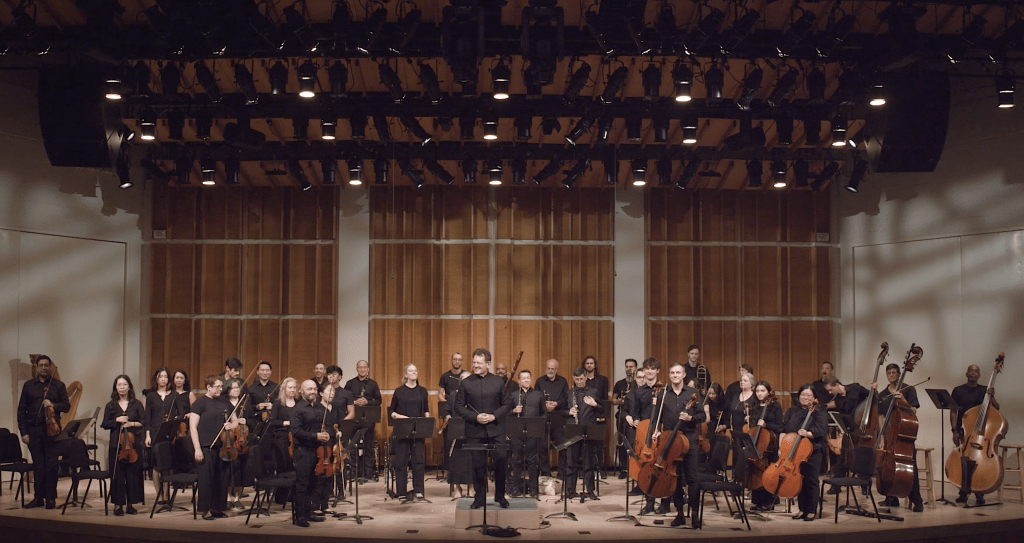
In the vast catalog of orchestral recordings, certain interpretations emerge as definitive statements that reshape our understanding of familiar masterworks. The new recording of Mahler’s Symphony No. 9 by the Park Avenue Chamber Symphony under David Bernard undoubtedly belongs in this rarefied category. Released by Recursive Classics to celebrate the orchestra’s 25th anniversary, this milestone recording achieves that most elusive of musical goals: making a well-known work sound freshly minted, as if the ink on Mahler’s manuscript had barely dried, delivering revelatory clarity.
Composed during the summer of 1909 in Toblach on the Austrian-Italian border, Mahler’s Symphony No. 9 languished in a peculiar interpretive limbo for decades following its premiere in 1912, a year after the composer’s death. Unlike his earlier symphonies or Das Lied von der Erde, this final completed work arrived without the composer’s explanatory guidance, program notes, or interpretive framework. This contextual vacuum proved particularly significant for a composer who had meticulously shaped public understanding of his earlier works through detailed commentaries and performance instructions.
Mahler’s sudden passing foreclosed any opportunity for him to defend the work against overly simplistic “farewell” interpretations, leaving the public to see it through the inescapable lens of posthumous melancholy, which was tempting as the work emerged from a period of profound personal upheaval. Just two years earlier, Mahler had endured the devastating loss of his four-year-old daughter Maria to diphtheria and scarlet fever. Furthermore, during the same traumatic period, doctors diagnosed the composer with a serious heart condition. These twin calamities cast long shadows over the symphony’s creation.
At the same time, this was also a period of extraordinary professional momentum in Mahler’s life. His appointment as Director of the New York Philharmonic in 1909 represented a prestigious new chapter, thrusting him into America’s vibrant cultural scene, where he conducted over 100 performances across four seasons. Concurrently, Mahler maintained a feverish creative pace, simultaneously sketching his Tenth Symphony while completing the Ninth and planning future conducting tours.
Leonard Bernstein, the de facto leader of the Mahler revival, constructed the overarching narrative for the Ninth Symphony during the 1960s as Mahler’s conscious farewell to life. This interpretation filled the vacuum of interpretive context brewing over the decades.
This takes us to the current Recursive Classics release. Through the introspective liner notes by David Patrick Stearns and David Bernard’s thought-provoking essay, “Beyond the Farewell: Survivorship Bias and Musical Meaning,” we are given a refreshingly multidimensional alternative to the “Farewell” narrative. Whereas Bernstein highlighted the symphony’s supposed death-obsessed finality, Stearns emphasizes its role as a culmination of the composer’s creative journey rather than merely his surrender to mortality. At the same time, Bernard explores how narratives of works written close to composers’ deaths are co-opted by public sentiment and lie in conflict with the works themselves. This suggests a recalibration of how we might understand Mahler’s final completed symphony: not as a morbid farewell but as a multifaceted reflection on artistic creation itself.
The recording is consistent with the context in the liner notes and essay. Bernard’s reading of Mahler’s Symphony No. 9 stands apart in its remarkable textural transparency. Every line emerges with clarity, yet nothing feels clinical or detached. On the contrary, this approach intensifies the emotional impact of the music, as listeners can follow each thread in Mahler’s complex tapestry while experiencing an overwhelming cumulative effect.
The opening Andante comodo unfolds with extraordinary patience, its halting rhythm suggesting the composer’s irregular heartbeat. Bernard masterfully balances the movement’s disparate elements—tender nostalgia, passionate declarations, and serene acknowledgement—while maintaining the music’s underlying pulse. The Park Avenue Chamber Symphony responds with playing of remarkable sensitivity and precision, eliciting unprecedented lucidity from Mahler’s dense orchestration.
The second movement’s grotesque Ländlers display the orchestra’s impressive technical facility. Principal woodwinds navigate Mahler’s challenging solos with astonishing agility and characterful phrasing. The string section, meanwhile, alternates between rustic earthiness and refined elegance, perfectly capturing the movement’s sardonic humor and nostalgic yearning.
In the ferocious Rondo-Burleske, Bernard unleashes his ensemble’s full virtuosic capabilities. The contrapuntal complexities emerge with startling clarity; each voice is deftly articulated yet contributes to the movement’s overwhelming momentum. The brass section deserves particular praise for its incisive attacks and sustained power, while the percussion provides a foundation of rock-solid rhythmic constancy.
The heart of this recording lies in Bernard’s profound realization of the final Adagio. In music that ponders the impact of a creative life on the world, Bernard achieves a rare mystical transcendence. The string section produces heart-stopping beauty, from whispered pianissimos that seem to emerge from silence to rich, full-bodied fortissimos of prodigious emotional authority.
Principal winds offer solos of exquisite sensitivity, with particularly notable contributions from the principal horn and oboe. With its progressively dissipating string textures, the famous valedictory coda unfolds with such concentration that time seems to stand still. Bernard’s superb pacing control allows the music to evolve naturally, creating an otherworldly experience that lingers long after the final notes have faded into silence.
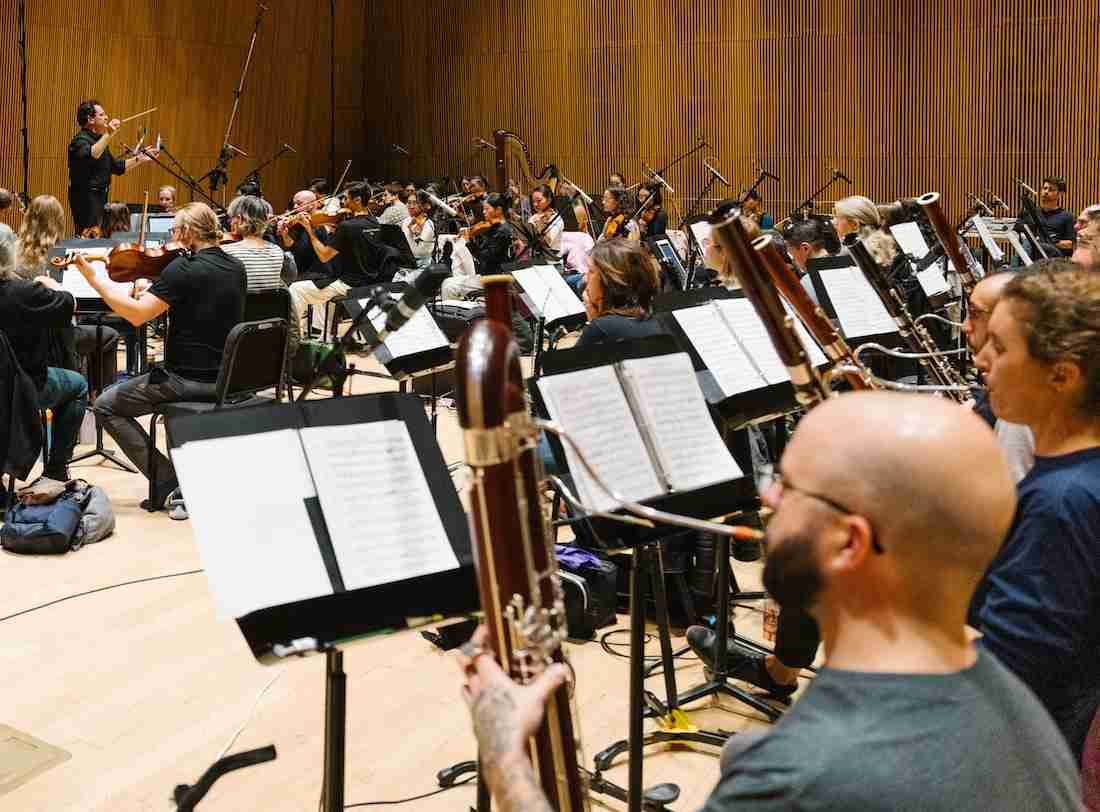
The engineering achieves a remarkable balance between presence and natural perspective, placing listeners in the sweet spot where the orchestral voices can be heard in perfect proportion. Recorded at the DiMenna Center for Classical Music by Audiosmith Digital Solutions and engineered by Christian Amonson of Seeing Sound, the transparent sound quality reveals the full spectrum of Mahler’s orchestral palette, from the deepest bass notes to the most ethereal harmonics. Dynamic contrasts, essential in Mahler’s Symphony No. 9, register with extraordinary impact, from barely audible whispers to shattering climaxes that never sound harsh or strained.
What ultimately distinguishes this recording of Mahler’s Symphony No. 9 is its remarkable ability to transport listeners across time and space. Through Bernard’s visionary interpretation and the Park Avenue Chamber Symphony’s committed playing, we experience not just the notes on the page but the full emotional and spiritual context of Mahler’s world.
As the final Adagio fades into silence, we feel we have undertaken a profound journey through life, death, and transcendence. This is not merely a fine recording of a masterpiece; it is a transformative experience that reminds us of music’s power to illuminate the deepest aspects of human existence.
Bernard and the Park Avenue Chamber Symphony have created a document that will stand as a reference point for Mahler’s Symphony No. 9 recordings for years to come. In celebrating their 25th anniversary with this album, they have given music lovers a gift of immeasurable value—a fresh perspective on one of the towering achievements of Western music.
Mahler Symphony No. 9 with David Bernard and the Park Avenue Chamber Symphony is available on Amazon in all formats (CD, download, and streaming) here: https://www.amazon.com/Mahler-Symphony-No-David-Bernard/dp/B0F6KMRXT3 and on streaming services (Apple Music, Spotify, Deezer) through this link: https://orcd.co/mahler9