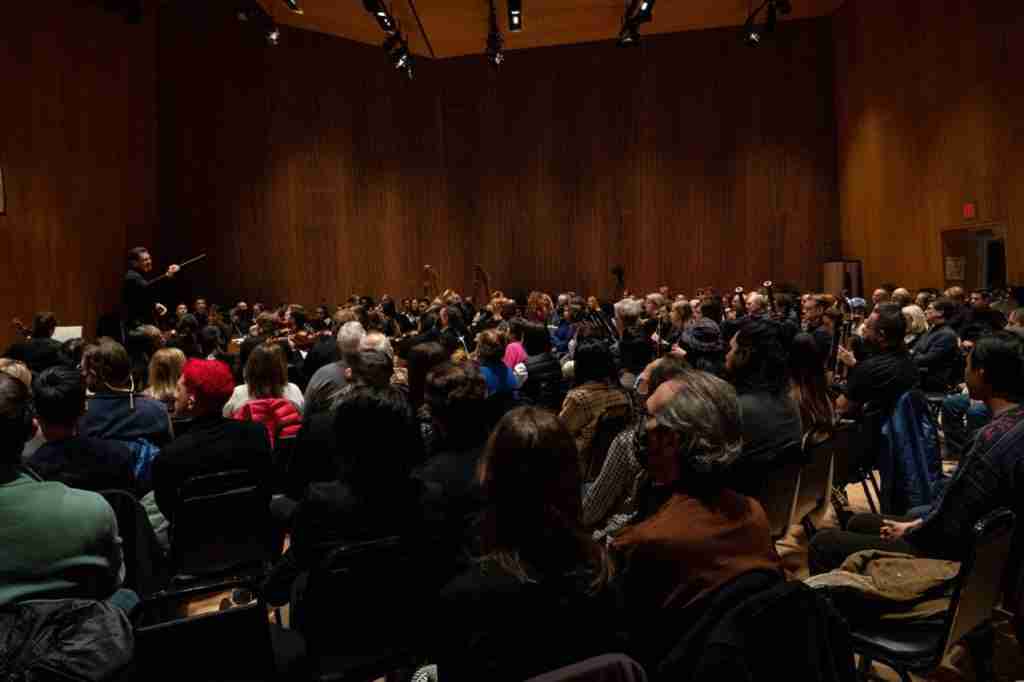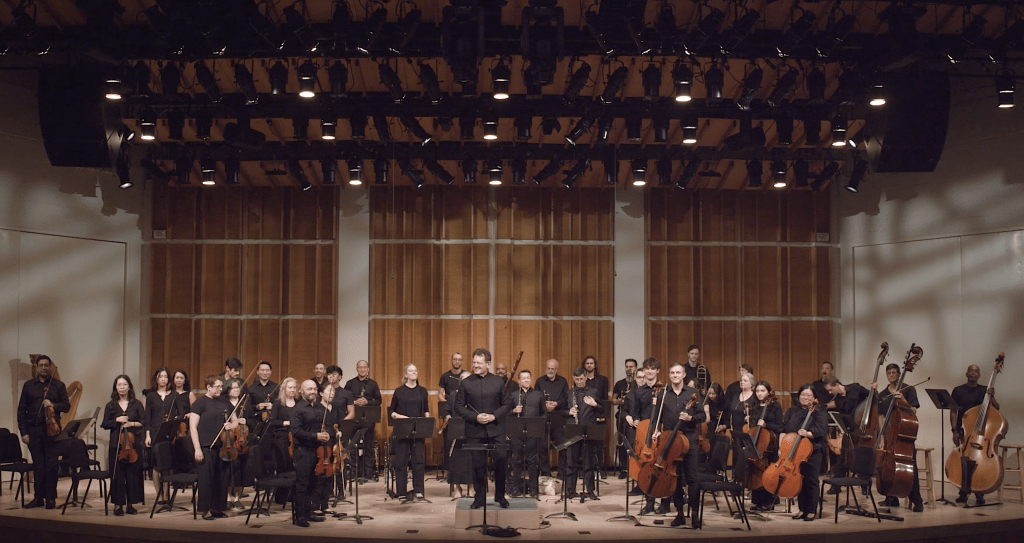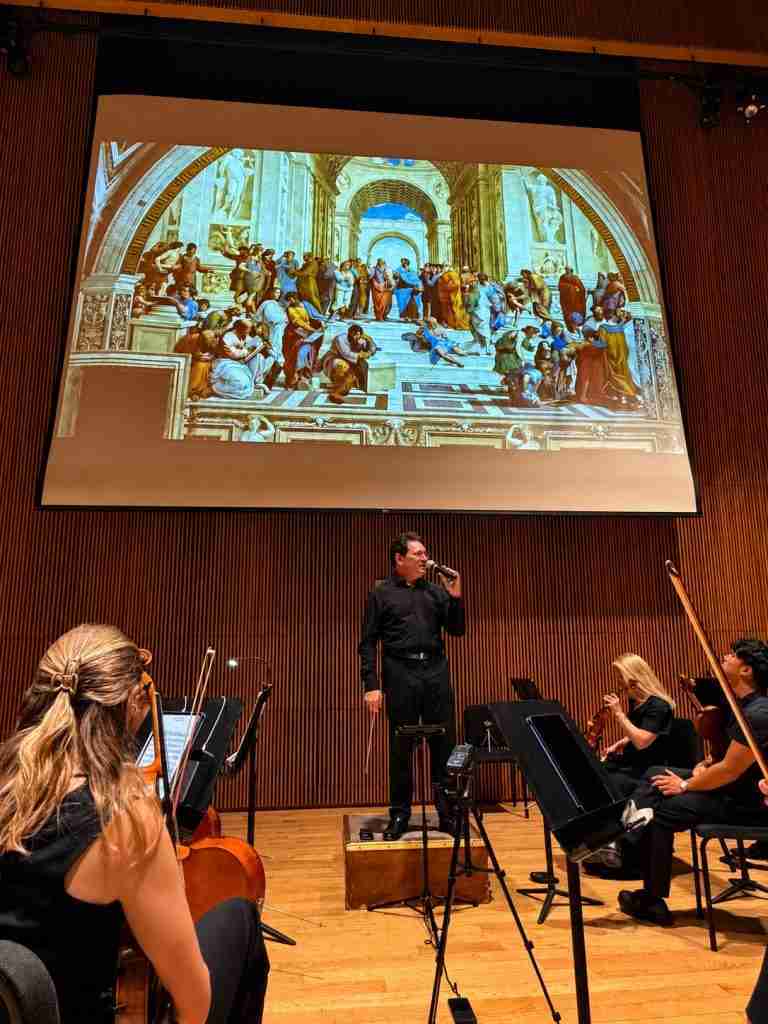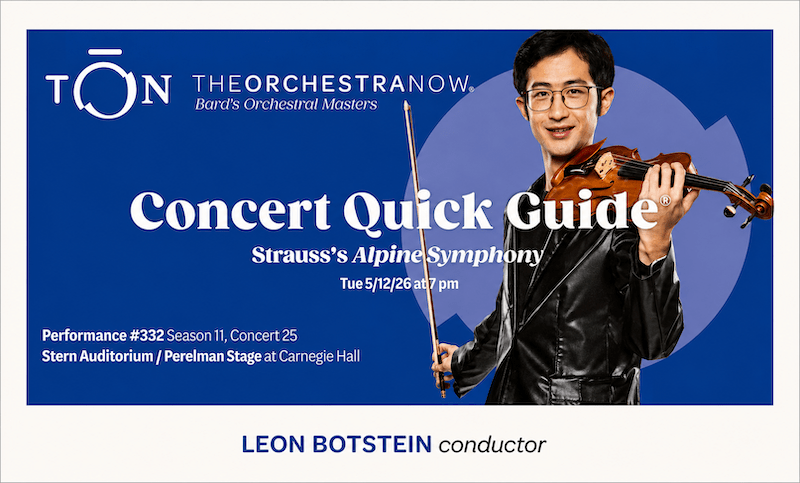

Tuesday evening at Stern Auditorium felt like an event one had been unknowingly awaiting. From the first murmurings, excitement filled the air. Every seat appeared occupied, and every program was clutched with anticipation. The audience leaned forward as though Carnegie Hall were drawing a long breath. The Orchestra Now—splendid and pre-professional, now in its eleventh season—closed its 2025–26 New York calendar with an all-Richard Strauss program. The conductor, of course, was Leon Botstein, the indefatigable founder and music director. His programmatic curiosity has long defined Bard‘s musical adventures. The combination of erudition and audience appeal felt generous. Strauss appeared in three forms: early, mature, and monumental. Nearly one hundred musicians gathered on stage, as if extending an open invitation to the Romantics.

Blair McMillen Conjures Lightning in Strauss’s Burleske
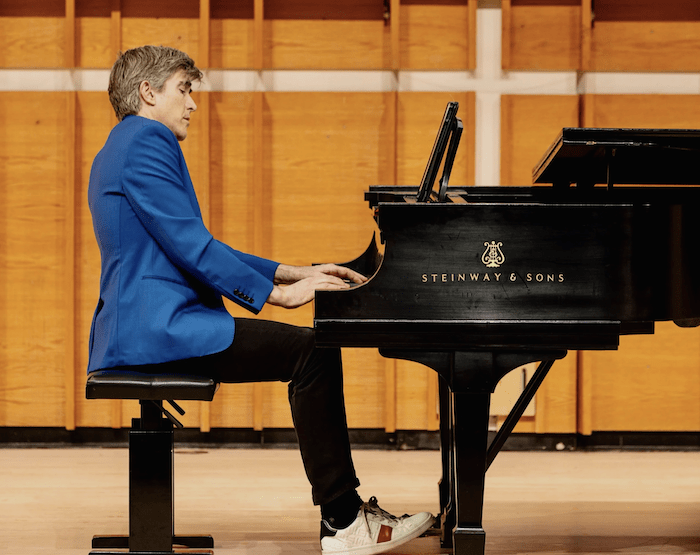
The evening opened with Burleske in D minor, TrV 145. This piece is a grinning, mischievous outburst that Strauss completed at twenty-one. He once dismissed it as juvenilia—until time proved him wrong. Blair McMillen, the celebrated pianist long affiliated with Bard College Conservatory and the Mannes School of Music, played with energy and wit. He tackled the score’s pugilistic timpani-piano dialogue with a wink and a wallop.
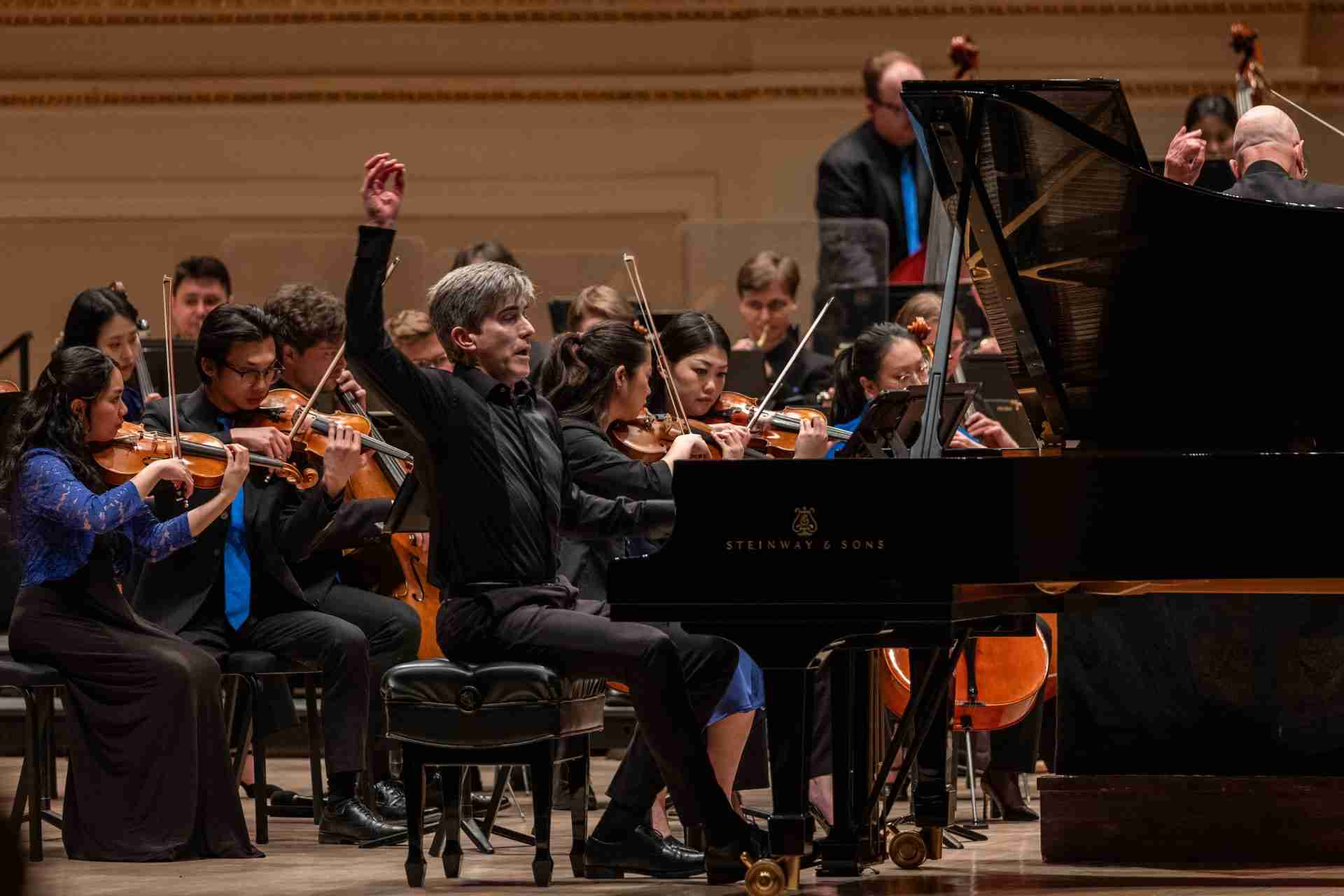
The orchestra responded with a saucy retort, brimming with rubato and pesante punctuation. McMillen played the work’s nocturnal central pages with filigree that was dolce, sostenuto. It felt almost as if Chopin were eavesdropping on Brahms, providing crystalline intimacy. His cadenza shimmered leggiero and confiding. The orchestra then returned with a chuckling tutti, as if waltzing under its breath. The roar that greeted his bow was warm and sincere.
Die Tageszeiten — Eichendorff Through Strauss’s Mature Lens
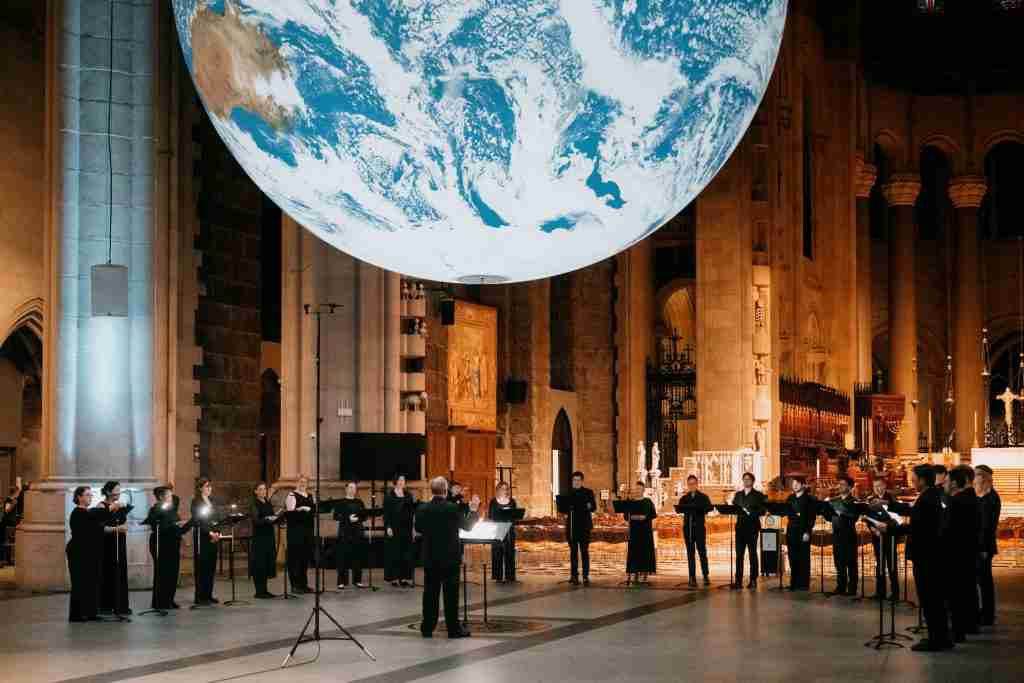
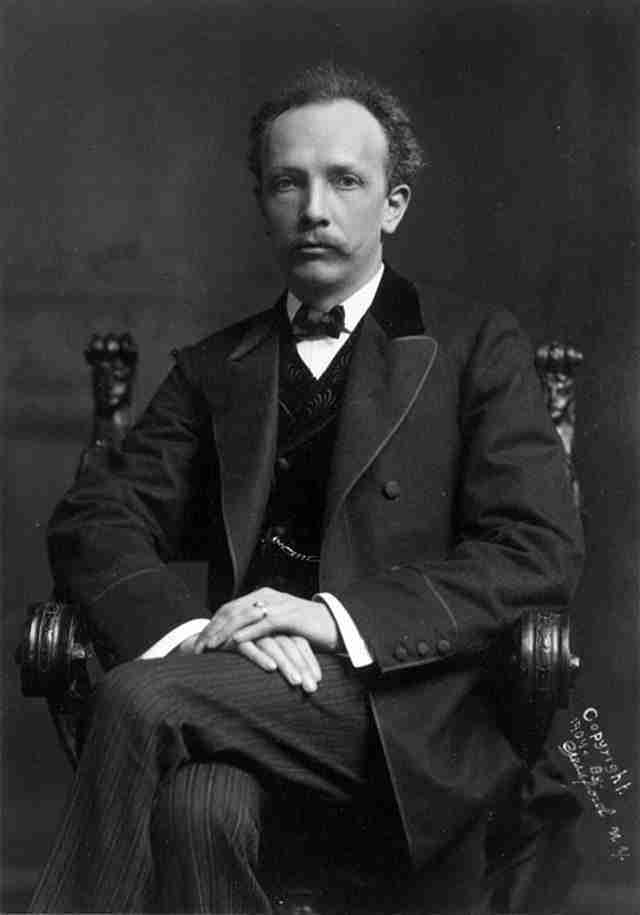
Next came Die Tageszeiten, Op. 76, Strauss’s 1928 setting of four Joseph von Eichendorff nature poems for male chorus and orchestra. Members of the Bard Festival Chorale had been meticulously prepared by James Bagwell. His chorus-mastery is by now an indispensable Bard institution. The singers entered with the diatonic candor of dawn, then deepened into the chromatic dusk of the third song with hushed espressivo. Eichendorff’s verses are full of forest paths and tolling bells. In late-Straussian orchestration, these verses found a subtlety of Klangfarbenmelodie. Muted horns sighed, harps trailed arpeggios like dew, and low strings sustained under the chorale as though they were the forest floor itself. Above all, singers and orchestra performed with a maturity that disguised TON’s youth.

The Alpensinfonie Unfolds — Strauss’s Mountain in Sound
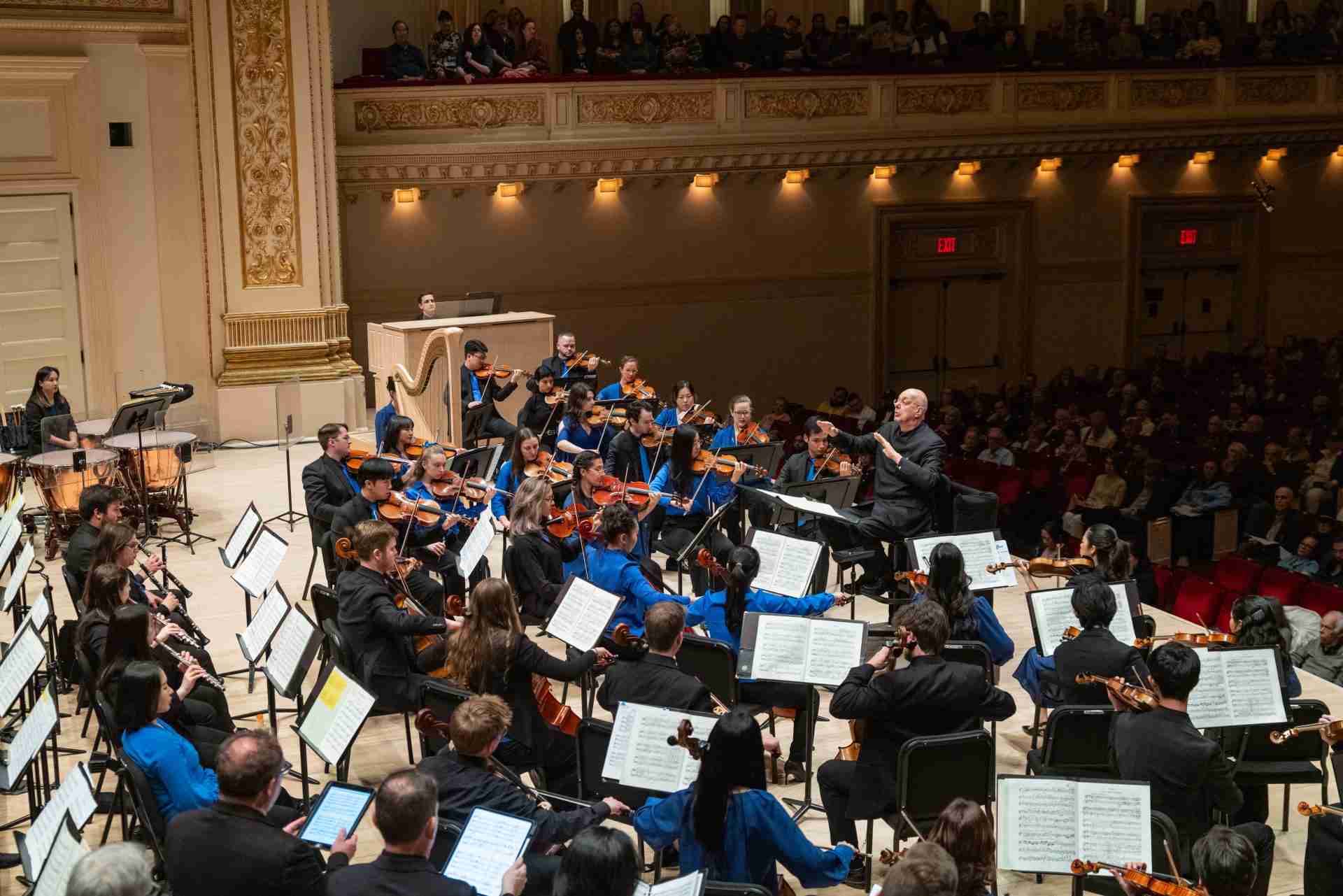
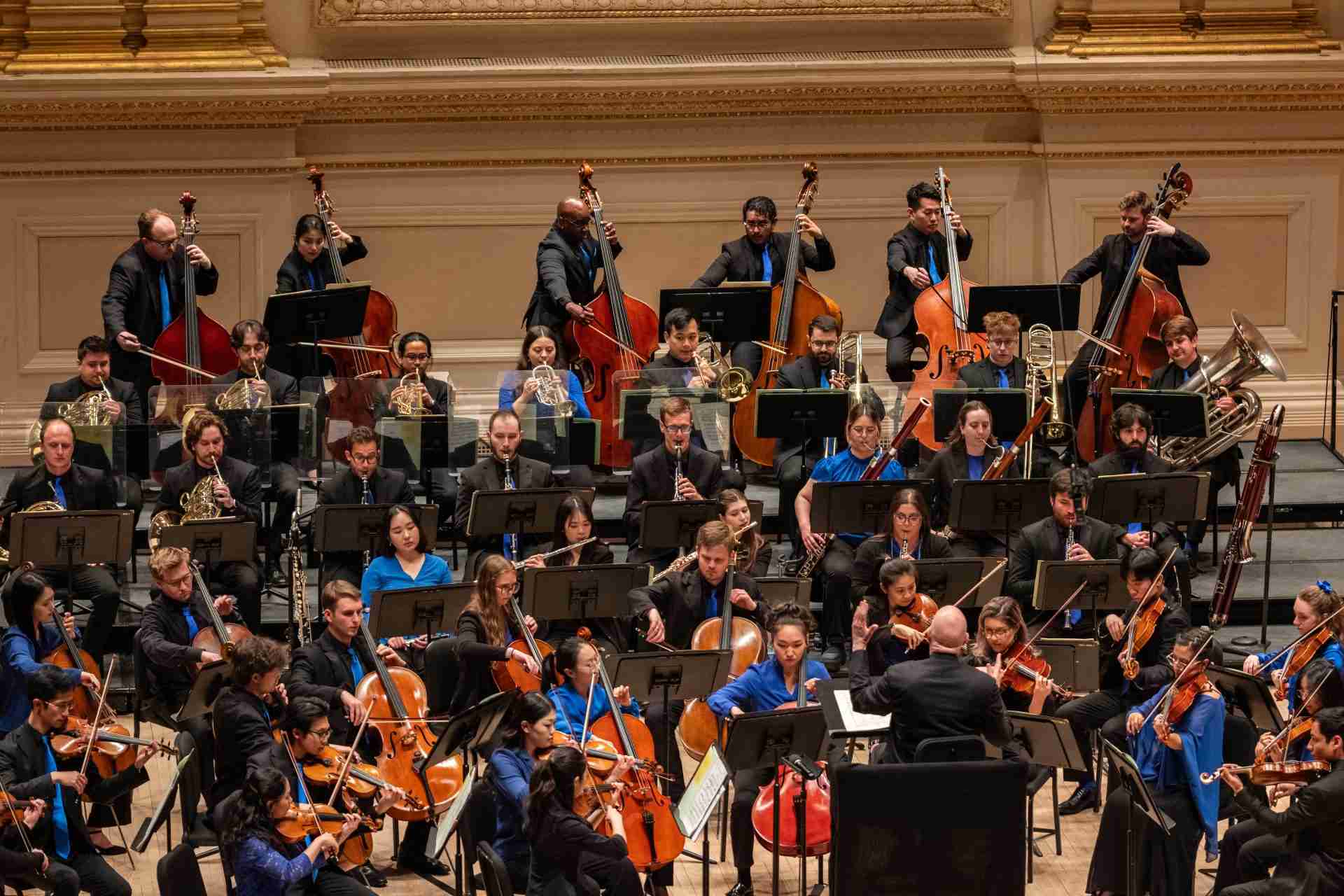
After the intermission, the stage seemed even larger. It was now filled with augmented forces from the Bard College Conservatory Orchestra and the TŌN regulars. Roughly one hundred musicians played heckelphone, wind machine, thunder sheets, organ, offstage horns, and a large percussion battery. Eine Alpensinfonie, Op. 64, completed in 1915, is Strauss’s most technically refined tone poem. Scholars, including Charles Youmans, argue that it is the culmination of the German symphonic poem tradition stretching from Liszt through Wagner to Strauss. Botstein, baton raised, looked at home in this music. He shaped the work’s twenty-two seamless episodes with architectural patience. From Nacht to Sonnenaufgang, the sound grew majestic. The brass crested fortissimo as morning light filled the hall.

A New Generation in Strauss’s Bavarian Air
Particularly moving was the sight of the augmented strings: side-by-side desks of TŌN musicians and Bard College Conservatory students, threading shared bowings as though they had played together for years. One thought of Harold Schonberg’s old contention that a real orchestra is, at heart, a chamber society scaled up by faith; here, faith was visible in glances, breaths, and shared crescendi. Indeed, the Conservatory Cellos sustained low-A pedal points under the Auf der Alm episode with the dignity of a Bach continuo, while the second violins drove the storm with an ostinato so unanimous that one might have been forgiven for suspecting digital synchronization. Botstein’s gift for promoting such cohesion—conservative polish tied to graduate-level scholarship—has demonstrably paid handsome dividends in tone and temperament.
A Tonal Poem of Cinematic Aural Proportion.
What followed was, by any honest reckoning, fifty minutes of cinema before cinema knew its own syntax. Strauss’ mountaineers—climbers, hunters, wanderers—materialized through ostinato strings and marcato woodwinds; the meadow sequence breathed agitato cowbells and pastoral oboe; the storm gathered, broke, and dissolved with operatic verisimilitude. Therefore, one understands why Karajan, Thielemann, and Welser-Möst made Alpensinfonie a calling card: its illustrative realism, when shaped with conviction, achieves the rapture of a Caspar David Friedrich canvas rendered in air. Some early critics accused Strauss of orchestral excess in this score; modern audiences, freed of this anxiety, hear instead the Romantic sublime distilled. The Bard students played as if they had themselves walked the Bavarian Alps that morning.
Botstein’s Programmatic Vision and TŌN’s Pedagogical Ethos
Founded by Botstein in 2015 as a graduate program of Bard College, TŌN fills a unique niche in the American orchestral scene. It’s sixty-three musicians this season, from seventeen countries, pursuing a full-tuition master’s degree or advanced certificate while also following the rigorous schedule of a professional ensemble: rehearsal, recording, and touring. The orchestra blends familiar and rare repertoire, teaching and reviving; at Carnegie Hall, the stage becomes a seminar room seating 2,800. Botstein has long favored thematic concerts uniting history, ideas, and sound, as shown in his work with the American Symphony Orchestra. He continues to program works others seldom attempt—like Gurre-Lieder, Guntram, and Taneyev’s At the Reading of a Psalm. Tuesday’s Alpensinfonie joined that list.

Standing Ovation — A recognition of Solo Excellence.
The final pages descended from the sunlit summit to the mountain night, sostenuto strings flowing into a calm so complete one could hear the building exhale. Then, as one, the spectators rose. Botstein, after embracing his concertmaster, moved through the ensemble to acknowledge his soloists one by one—principal oboe, principal horn, the offstage brass, the heckelphonist, the timpanist whose Burlesque dialogue had set the evening alight, the chorale, McMillen, and the Bard College Conservatory students whose presence honored TŌN’s mission of mentorship. The music did not so much describe a mountain as become one. As an evening of nineteenth-century Romanticism, it confirmed that Strauss remains stubbornly, abundantly alive. Bravo to all.
The Orchestra Now: Strauss Unbound at Carnegie Hall
The Orchestra Now — Tickets and Contact
The Orchestra Now (TŌN)
Bard College, P.O. Box 5000
30 Campus Road, Annandale-on-Hudson, NY 12504
Website: ton.bard.edu
Concerts & tickets: ton.bard.edu/fisher-center-series