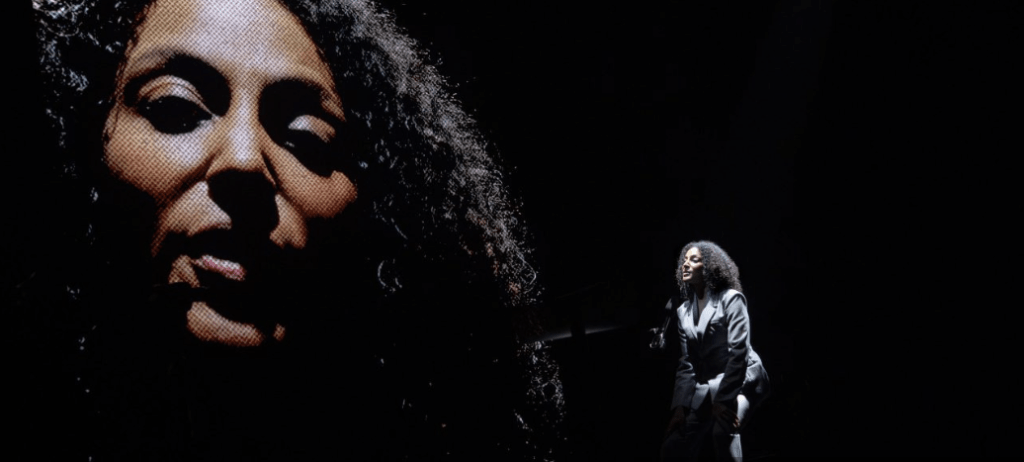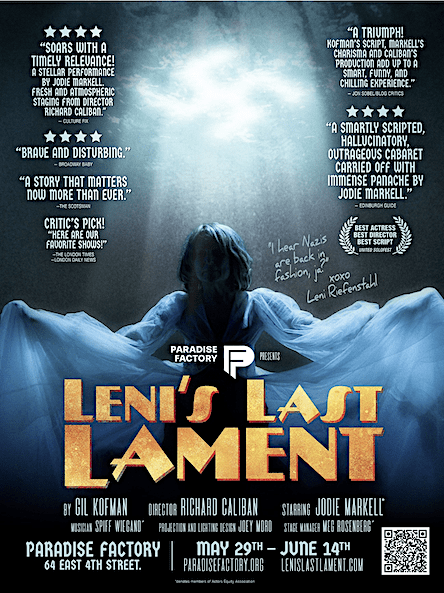

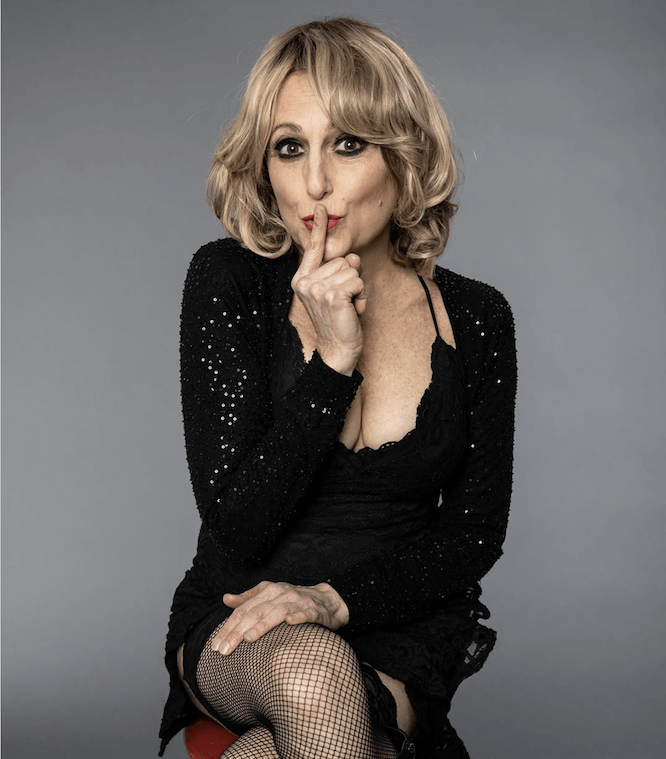
This show is a mesmerizing portrait of history’s most controversial filmmaker! Jodie Markell delivers a tour de force performance in “Leni’s Last Lament” at The Paradise Factory in New York that is nothing short of extraordinary. In this provocative one-woman show, Markell inhabits the controversial filmmaker Leni Riefenstahl with such fierce intelligence and nuanced complexity that she transforms what could have been a simple biographical sketch into a deeply unsettling meditation on art, complicity, and survival.
Jodie Markell’s Multi-Dimensional Performance Anchors the Production
Markell’s portrayal is multidimensional in the truest sense—she sings, dances, philosophizes, and shape-shifts through decades of memory with an intensity that keeps the audience riveted throughout the show’s 80-minute runtime. The OBIE Award winner, known for her work in productions ranging from “Machinal” at the Public Theater to films by Woody Allen and Jim Jarmusch, brings her considerable range to bear on this challenging material.
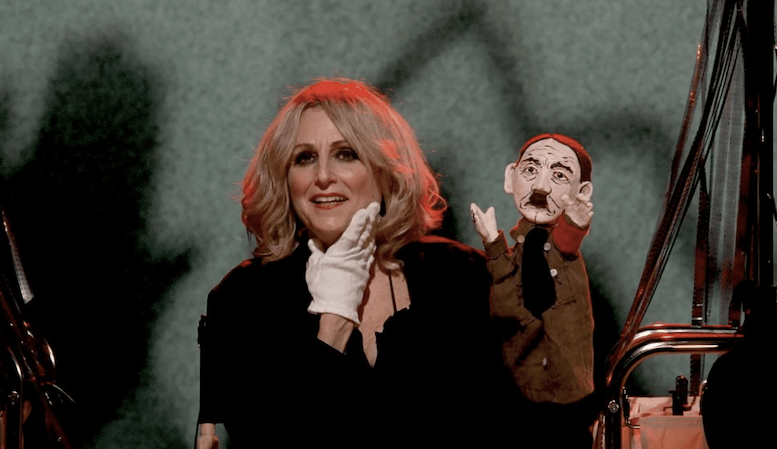
She captures Riefenstahl’s self-justifying nature without letting the character off the hook, creating a simultaneously magnetic and morally ambiguous performance. When she seamlessly switches from Leni’s voice to channeling Adolf Hitler himself, complete with posture and vocal transformation, the effect is chillingly hilarious and theatrically brilliant.
Here’s a quick preview from Paradise Factory on their Instagram page:
View this post on Instagram
Musical Performances and Character Work
Markell’s range shines particularly in her musical performances and character impersonations. Her playful alteration of “Once in Love with Amy” to “Once in Love with Leni” provides moments of levity. At the same time, her spot-on impression of Jodie Foster draws appreciative chuckles from the audience. Her renditions of period songs like “Falling in Love Again” (with its inevitable nod to Marlene Dietrich) and “Those Were the Days” are punctuated by jarring interruptions of air raid sirens and falling plaster that signal the approaching end of the war.
Spiff Wiegand’s Musical Excellence Elevates the Production
The musical landscape of the production, crafted by the remarkably versatile Spiff Wiegand, provides essential atmospheric support that elevates the entire experience. Dressed in full Bavarian lederhosen splendor, Wiegand makes a dramatic entrance by marching through the audience in German SS style while playing his accordion, immediately establishing the show’s bold willingness to confront uncomfortable historical imagery.
Throughout the performance, he masterfully shifts between accordion and violin, creating musical textures that range from nostalgic to ominous. His musical versatility—he plays over 20 instruments—brings depth and authenticity to every moment of the production.
Exceptional Production Design Creates Immersive Theater Experience
Lighting and Projection Design
Joey Moro‘s lighting and projection design transform the stage into a cinematic dreamscape. A large screen continuously displays footage from Hitler’s Germany, providing haunting visual commentary on Leni’s reminiscences. The visual elements work in remarkable harmony to create an immersive theatrical experience that supports the complex narrative.
Sound Design and Musical Score
Director Richard Caliban crafted the sound design, which incorporates everything from Wagner’s Pilgrims Chorus from Tannhäuser to themes from Beethoven’s Ninth Symphony and Elgar’s “Nimrod” from his Enigma Variations. This creates a sophisticated musical backdrop that underscores the production’s exploration of how high art became entangled with propaganda.
Creative Use of Film Props
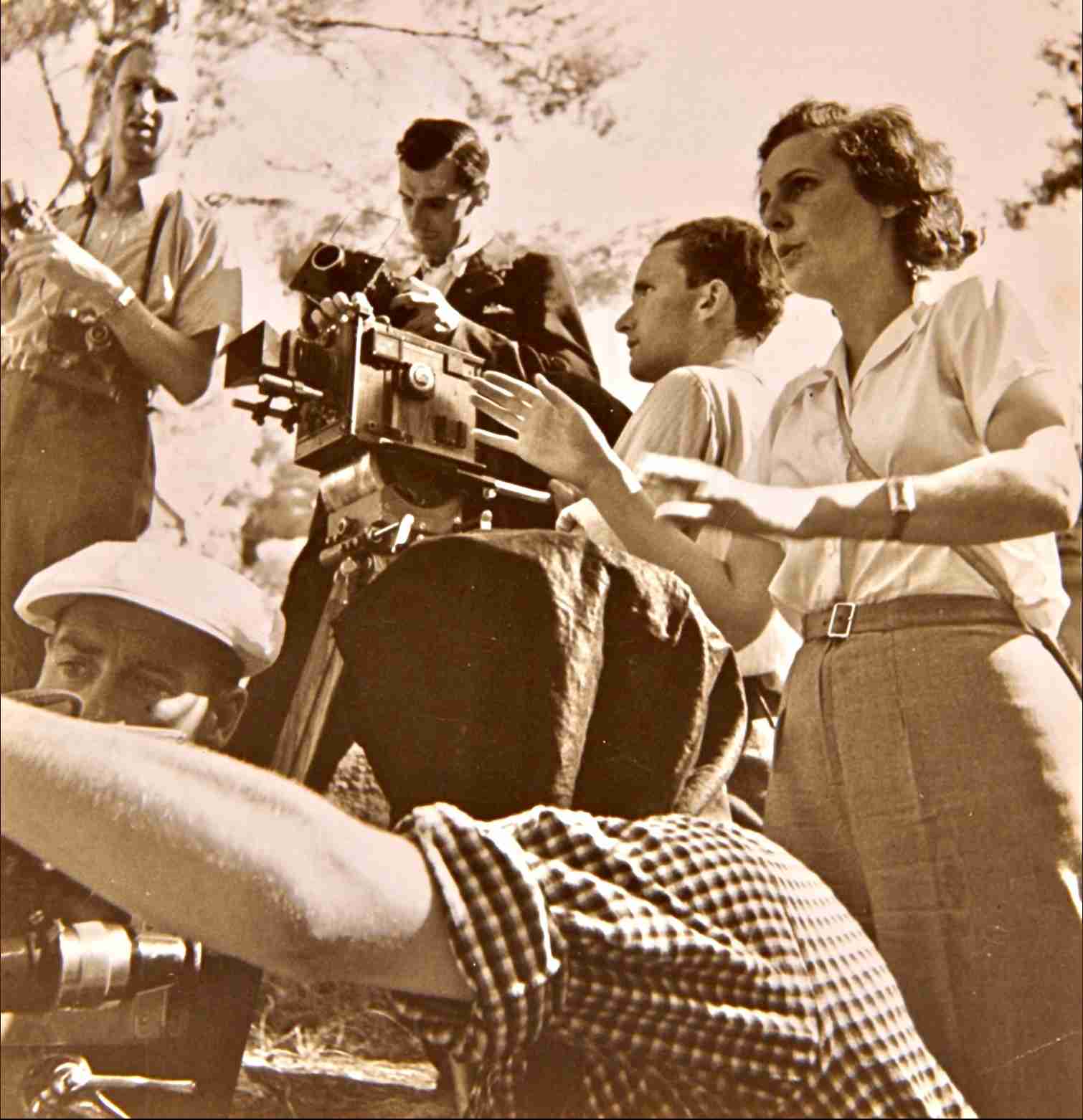
The show’s most striking visual element may be the film strips hung throughout the stage—literal pieces of cinema that Leni manipulates and splices as she makes her points to the audience. This physical representation of the filmmaking process becomes a powerful metaphor for how she reconstructs and edits her narrative, constantly defending her choices and survival strategies in Nazi Germany.
Gil Kofman’s Script Tackles Complex Historical Material
Gil Kofman‘s script, directed precisely by Richard Caliban, structures the evening as Leni awakening from a dream, launching into what becomes a detailed philosophical examination of her life and choices. The writing captures Riefenstahl’s voice with remarkable authenticity—her tendency toward self-aggrandizement, her casual name-dropping of Nazi leadership figures, and her tongue-in-cheek references to visiting “certain individuals in Argentina like Joseph Mengele.”
There’s a disturbing honesty in how the character boasts about her many dalliances with influential Nazi leaders while acknowledging how such relationships provided her with power and protection.
Robust Dialogue and Historical Authenticity
Some of the evening’s most powerful moments come through Markell’s embodiment of Riefenstahl’s contradictions. When she exclaims to Hitler, “I’m a filmmaker, not a eugenicist,” the line carries both the character’s desperate self-justification and a recognition of how thin such distinctions became under the Nazi regime. Her assertion that “everyone was doing it” as a defense of her wartime actions rings with the hollow echo of historical rationalization that remains disturbingly relevant today.

Confronting Uncomfortable Historical Truths Through Theater
Provocative Audience Interaction
The production doesn’t shy away from provocative theatrical choices. When Leni tosses swastika armbands to audience members and asks them to put them on, the nervous laughter that ripples through the theater speaks to the show’s success in making viewers confront their relationship to historical complicity. Nobody complies with her request, but the moment forces a reckoning with how easy it might be to normalize symbols of hate.
Moral Complexity Without Easy Answers
“Leni’s Last Lament” offers no easy answers about art, complicity, or survival under authoritarianism. Instead, it provides what the best theater always should: a space for complex questions and uncomfortable recognitions. The production succeeds not by condemning or absolving its central figure but by forcing audiences to grapple with the awkward truth that moral complexity rarely offers the clarity we might prefer.
A Dreamlike Conclusion and Community Connection
The production’s final sequence returns to the dreamscape imagery of the opening, with Markell submerged in blue light, singing and moving through what appears to be an underwater world of memory and regret. Here, she seems “beautiful, innocent and whole,” but the staging reminds us that she must always “come up for air”—return to the reality of her choices and their consequences.
“Leni’s Last Lament” concludes with a communal moment as Leni and Wiegand invite the audience to join them in song, creating an unexpectedly intimate ending to an evening that has interrogated some of history’s darkest chapters.
Final Verdict: Essential Theater for Our Times
In tackling such morally complex material, Paradise Factory Theater has produced a work that feels urgently relevant to our current moment. As the program notes acknowledge, these are “sad, urgent times,” and this production provides essential theater that lingers long after the final song.
Markell’s powerhouse performance, supported by Wiegand’s musical virtuosity and the production team’s sophisticated design work, creates an evening that forces audiences to grapple with uncomfortable truths about moral complexity. In doing so, it becomes a must-see theater that challenges, provokes, and ultimately enriches its audience’s understanding of history and human nature.
Leni’s Last Lament: Jodie Markell Delivers a Powerhouse Performance
Leni’s Last Lament
at the Paradise Factory
64 East 4th Street
New York NY
10003
For information and tickets, go to https://www.paradisefactory.org/.