
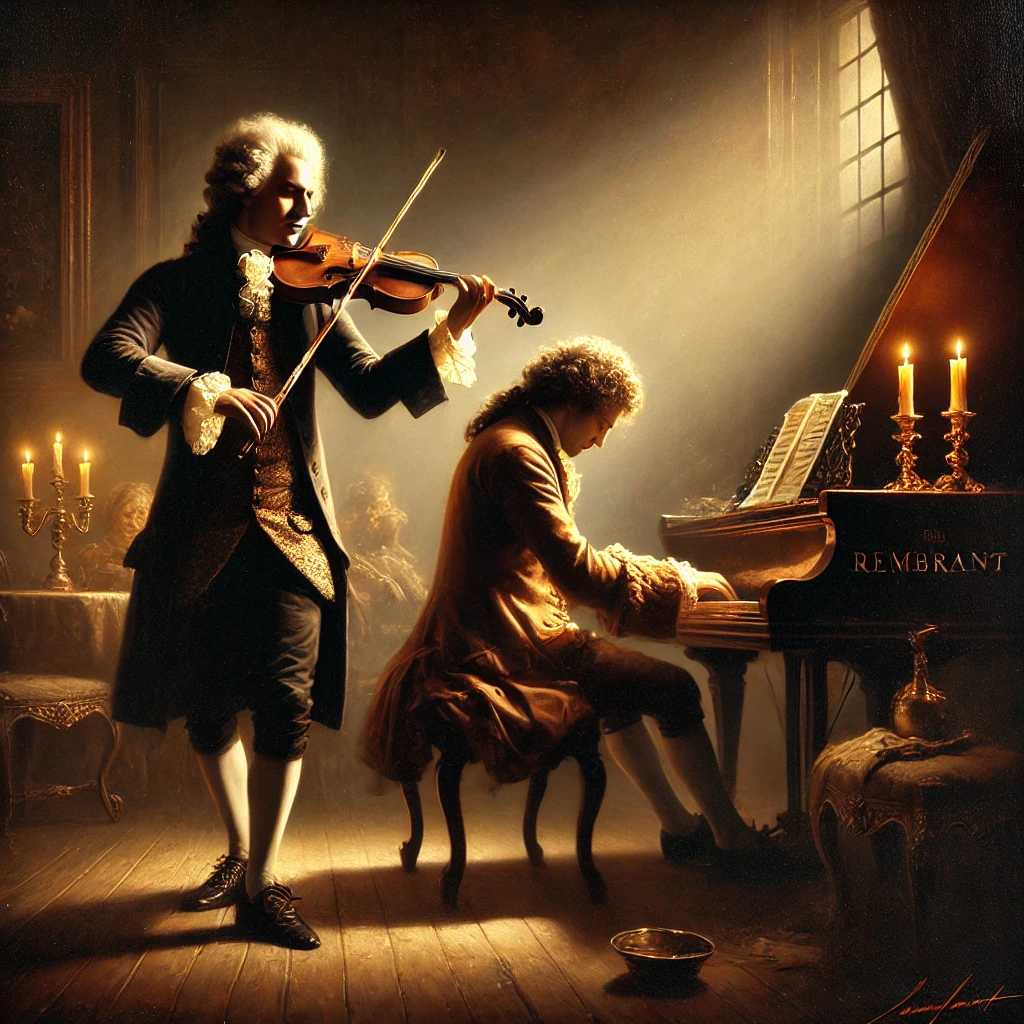

Artistic Maturity: Mozart’s Violin Sonata No 21 in E Minor
Mozart’s Musical Evolution Unveiled
Wolfgang Amadeus Mozart’s Violin Sonata No. 21 in E Minor, K. 304 marks a significant point in his musical career, illustrating the depth and nuance of his evolved composition style. Composed in 1778 during his stay in Paris, this sonata is a testament to Mozart’s artistic maturity. Its creation followed the dramatic period of losing his mother, a profound experience that influenced its emotive depth.
Exploring the Emotional Depth
This sonata, noted for its haunting and somber tone, diverges from the brighter compositions typical of Mozart’s earlier works. It exhibits his ability to convey deep emotion through music, suggesting a transformation in his artistic expression. The piece’s two-movement structure—Allegro followed by Tempo di Menuetto—effectively captures the melancholy and reflective qualities, leaving a lasting impression on listeners.
Innovative Use of Instrumentation
Unlike many compositions of the time, Mozart‘s Violin Sonata in E Minor showcases an equal partnership between the violin and the piano. This balanced interplay was pioneering, distinguishing it from the typical sonatas, where the violin played a subordinate role. Such innovation highlighted Mozart’s forward-thinking approach and his ability to challenge the conventions of his time.
Structural Analysis
The sonata’s succinct two-movement form is unorthodox yet effective, allowing for a concise yet expressively rich exploration of themes. The Allegro commences with a brooding theme, intertwining tension and resolution. The second movement, Tempo di Menuetto, features a stark contrast, presenting a Menuet-like rhythm that further deepens the sonata’s emotional arc.
The Influence of Personal Tragedy
Mozart composed this sonata amidst personal turmoil, having recently lost his mother, Maria Anna. Such emotional upheaval likely fueled the music’s gravitas and depth. The E Minor key suggests sorrow and introspection, adding a layer of personal expression seldom seen in Mozart’s earlier works. Despite its brevity, the sonata leaves an indelible mark on classical music. Its innovative structure and emotive strength confirm its place as a mature work in Mozart’s oeuvre. Musicians and classical enthusiasts continue to explore it, appreciating its complexity and emotional resonance.

Timeless Appeal
The universal themes of loss, reflection, and resilience ensure that this sonata remains relevant today. Its ability to convey profound emotion transcends time, allowing audiences to experience the depth of Mozart’s genius. Discovering the Violin Sonata No. 21 in E Minor offers listeners a rare glimpse into the heart of one of history’s greatest composers.
For more insights on Mozart’s musical journey, visit the Biography of Mozart.
The Role of Chamber Music in Mozart’s Compositional Journey
Exploring the Depths of Mozart’s Chamber Music
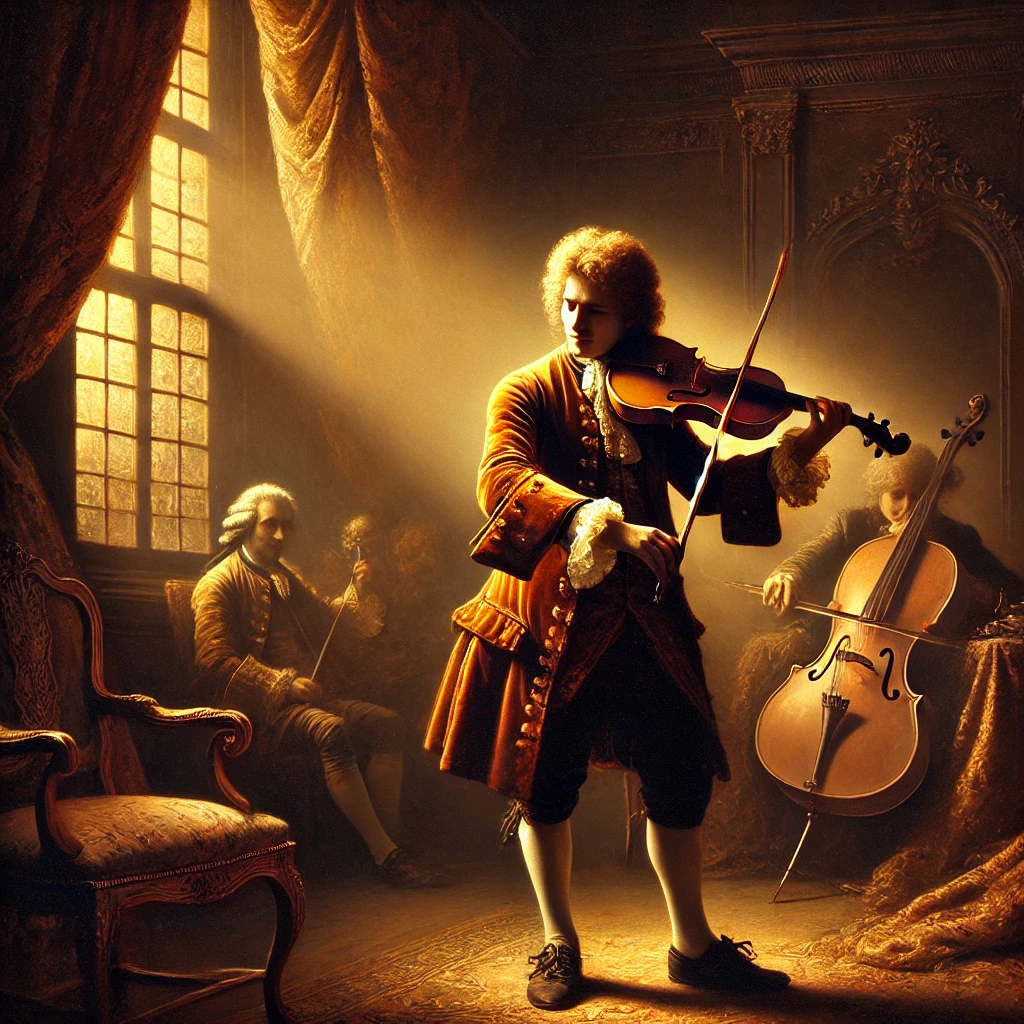
Mozart’s works are a testament to his extraordinary talent, with chamber music playing a pivotal role in his compositional journey. His violin sonatas, string quartets, and quintets reveal a progression from producing simple, courtly music to creating mature masterpieces. One such work is the esteemed Violin Sonata No. 21 in E Minor, which exemplifies his mature style and innovative spirit.
The Violin Sonata No. 21 in E Minor
The Violin Sonata No. 21 in E Minor, K. 304, composed in 1778, stands out due to its emotional depth and structural complexity. Written during a challenging period in Mozart’s life, this sonata expresses intricate feelings through its minor key, contrasting the optimistic nature often found in his earlier compositions. The sonata is in two movements; the play between elegance and tension throughout these movements reveals Mozart’s mastery of chamber music.
Characteristics of Mozart’s Mature Chamber Works
- Emotional Depth: This sonata demonstrates sophisticated emotional layers, especially in its first movement, the Allegro. Such depth offers a window into Mozart’s early struggles and poignant life experiences.
- Structural Balance: His mature works often exhibit perfect balance, with the violin and piano sharing the spotlight equally. This sonata ensures both instruments engage in a conversational exchange, showcasing Mozart’s ability to weave intricate musical dialogues.
- Expressive Phrasing: Mozart’s chamber music is renowned for its expressive phrases and lyrical lines. In K. 304, the seamless transition between dynamic contrasts adds dramatic tension to the sonata.
Influence of Chamber Music on Mozart’s Style
The role of chamber music in shaping Mozart as a composer cannot be understated. It prompted his experimentation with melodies and harmonies, refining his style. The intimate nature of chamber music allowed Mozart to explore intricate textures and blend various instrument voices, paving the way for his symphonic works.
- Innovative Harmonies: Chamber music encouraged Mozart to develop innovative harmonies, as evident in his string quartets and the sonata in E Minor. His adventurous exploration of harmonies became a hallmark of his later compositions.
- Interactive Dialogues: The emphasis on interaction within small ensembles refined Mozart’s narrative style, influencing his operatic and orchestral compositions.
To gain deeper insight into Mozart’s works, explore Mozart’s Complete Scores.
Comparing Early and Mature Chamber Works
In contrast, compare the Violin Sonata No. 21 with Mozart’s earlier chamber compositions. His youthful works often featured simpler forms aimed at delighting audiences with clear themes and tuneful melodies. In contrast, his mature repertoire demands a richer interpretative skill.
| Aspect | Early Works | Mature Works |
|---|---|---|
| Complexity | Simple and straightforward | Intricate and sophisticated |
| Emotional Expression | Light, playful | Deep, often dramatic, and poignant |
| Instrumental Interaction | Hierarchical roles | Balanced, with voices sharing dialogues |
Appreciating the Legacy
Thanks to chamber music, Mozart left a legacy filled with compositions that captivate listeners. His later works reflect a deep understanding of human emotions and the intricacies of music. The Violin Sonata No. 21 in E Minor remains a shining example of how chamber music significantly influenced Mozart’s compositional journey.
For more insights into Mozart’s music and legacy, visit Mozart’s Biography and Works.
As listeners and musicians explore Mozart’s chamber music, they enter a world crafted with extraordinary emotional and musical depth. These explorations reveal Mozart’s true genius, a composer whose work transcends time and continues to inspire future generations.
Key Takeaways
Mozart’s Violin Sonata No 21 in E Minor is a striking embodiment of his artistic maturity and serves as a vivid representation of his skillful journey in chamber music composition. This sonata, composed in 1778, is remarkable for its depth and emotional intensity—a contrast to his previous lighter sonatas. It reveals a more profound understanding of musical expression, showcasing Mozart’s ability to weave intricate dialogues between the violin and piano. The sonata stands out for its dynamic interplay, where each instrument not only complements but elevates the other’s narrative. This approach highlights Mozart’s mature sense of harmony and thematic development, allowing the sonata to resonate with audiences deeply and holistically.
Structural Clarity and the Emotive Depth
The E Minor Sonata also signifies a pivotal moment in Mozart’s exploration of chamber music, a genre he would continue to elevate throughout his career. Chamber music for Mozart was not just a form of entertainment but a crucial platform for experimentation and personal expression. It provided him the opportunity to explore complex emotions and subtle nuances, which were often clouded in larger symphonic works. Through the lens of chamber music, Mozart honed his skills in creating intimate soundscapes that captivated listeners and performers alike.
Furthermore, the sonata illustrates how chamber music influenced Mozart’s compositional style. His ability to balance economy of notes with rich emotive content speaks to his brilliance as a composer. The structural clarity and the emotive depth of the sonata also demonstrate how chamber music served as a canvas for his creativity. It was with chamber works like this sonata that Mozart refined his compositional techniques, which would later influence his broader works.
In essence, Mozart’s Violin Sonata No 21 in E Minor is more than a beautiful piece of music; it is a testament to his remarkable journey toward artistic maturity. This sonata not only showcases Mozart’s innovative spirit within the realm of chamber music but also stands as a beacon of his enduring influence on the classical music landscape. As listeners, we are invited not just to hear but to engage with the intricate beauty of his mature artistry.
View this post on Instagram
Final Thoughts
Mozart’s Violin Sonata, No. 21 in E Minor, is a testament to his artistic maturity. It captures the depth and complexity of human emotions through a refined yet powerful interplay between violin and piano. This work beautifully illustrates how Mozart leveraged the chamber music medium to explore and expand his artistic expression. His ability to weave intricate dialogues and lyrical expressions sets this sonata apart as a significant milestone in his musical journey.
Chamber music was pivotal in Mozart’s compositional development, allowing him to craft intimate and nuanced musical narratives. In this sonata, he masterfully balances simplicity and sophistication, embodying the elegance and emotional depth that define his later works. The Violin Sonata No 21 exemplifies not only Mozart’s technical precision but also his profound understanding of musical form and dialogue, inviting listeners into a rich tapestry of emotions and thematic exploration.
Effortless Musical Flow
Through Violin Sonata No. 21, Mozart transcends the boundaries of conventional chamber music, pushing the genre towards new heights. This piece showcases his ability to communicate complex emotional landscapes while maintaining a seemingly effortless musical flow. As listeners, we are invited to journey through the expressive potential of chamber music, experiencing the profound impact of Mozart’s compositional prowess.
Ultimately, Mozart’s Violin Sonata No 21 in E Minor exemplifies the maturation of a composer who continually redefined the boundaries of his craft. It embodies the sophistication and emotional resonance that characterized his later works. As a key piece in Mozart’s chamber music repertoire, it not only marks a significant chapter in his artistic evolution but also continues to captivate and inspire listeners worldwide, affirming the timeless appeal of his musical genius.
Readers may also enjoy The Linear Grace of Mozart’s Piano Sonata No. 13 in B flat Major, Jay Campbell, Cello, and Conor Hanick, Piano, and Duke Ellington Sacred Concerts.