An interview with the Park Avenue Chamber Symphony’s conductor and impresario about the November 22nd concert at DiMenna Center for Classical Music in NYC
The Park Avenue Chamber Symphony kicks off its 2025-2025 season at the DiMenna Center for Classical Music on November 22, 2025, with one of the most thrilling works in the orchestral repertoire: Camille Saint-Saëns’ Symphony No. 3 in C minor, the “Organ Symphony.” I sat down with David Bernard, the ensemble’s conductor and impresario, to discuss why this concert promises to be an unforgettable evening.
Saint-Saëns’ Third Symphony: A Showcase Masterwork
Edward Kliszus: Maestro Bernard, Saint-Saëns’ Third Symphony is incredibly popular—and I think it is one of the greatest symphonies ever written. What are your thoughts on this incredible work?
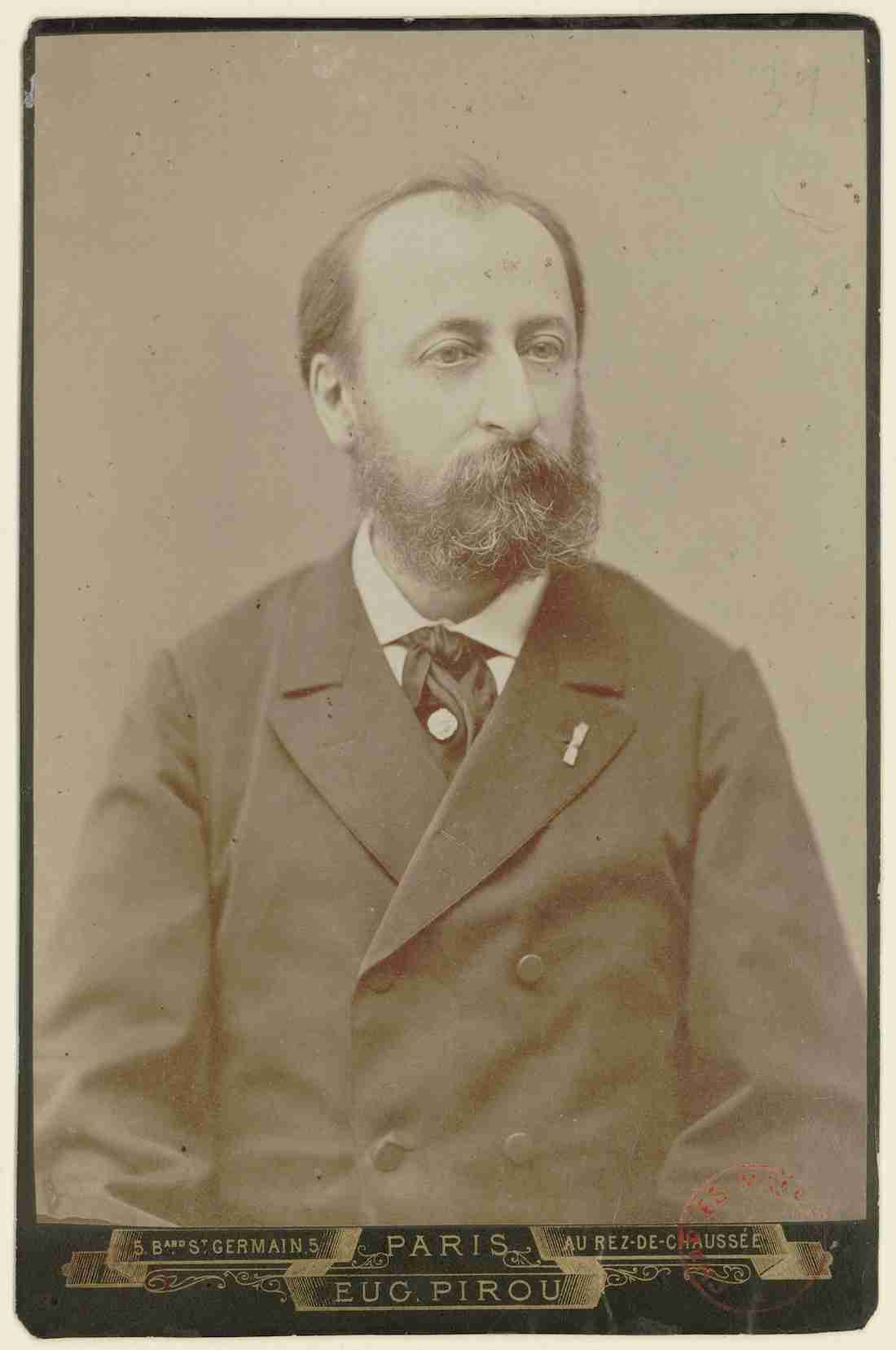
David Bernard: I completely agree that it is one of the greatest symphonies, and I am often puzzled by the degree to which Saint-Saëns is under-estimated as a composer. He was both an innovator and a craftsman—always writing music that inspires and delights. But with his Third Symphony, we have the pinnacle of his symphonic career. Saint-Saëns called the Third Symphony his “most important work,” having “poured everything he knew” into it.
What makes it extraordinary is how you hear Saint-Saëns crafting every note and every phrase to be his absolute best. I call this kind of work a “Showcase Symphony,” where the composer demonstrates a lifelong artistic arc by presenting the most evolved voice. As you listen to the pacing, contrapuntal skill, beautiful textures, and melodies expertly intertwined and choreographed through one of the most prominent orchestras that can fit in a concert hall, along with a large organ and a grand piano with two players, you vividly experience all that Saint-Saëns has to offer the world.
EK: It certainly is a “showcase symphony,” as you put it—is this what drew you to programming this work?
DB: I seem to be drawn to “showcase symphonies”. Despite each symphony existing in its own artistic world, composers often seek to hone and perfect their voices over the course of their lifetimes. This quest frequently results in a late work that emerges as their last and best artistic expression. There are so many examples of this—in both Tchaikovsky’s Pathetique and Mahler’s Ninth, each movement presents the composer’s most evolved voice across key archetypes. La Mer was Debussy’s “Showcase Symphony”—a work that he continued to perfect and adjust to his final day. And Gershwin, in an homage to Debussy, similarly wrote and perfected “An American in Paris” in a similar way to Debussy and La Mer.
EK: Interesting point about Tchaikovsky Pathetique and Mahler’s Ninth—though these works are seen as “Farewells” not “Showcases” by many. That seems to be contradictory, right?
Yes, that’s true. When studying these works, I felt the energy and creative imperative emanate from each page. I heard a creative voice relentlessly elevating this music to new heights, making it difficult to see them as reflective of composers with one foot in the astral plane. They are clearly showcases of mastery and sophistication.
EK: This piece is commonly known as the “Organ Symphony,” but won’t those who know this work from its triumphant Finale be surprised to learn that the organ doesn’t play throughout the entire work?
DB: The name “Organ Symphony” didn’t come from Saint-Saëns. For him, it was simply “Symphony No. 3,” and the inclusion of the Organ, along with the virtuosic solo Piano part, is all about Saint-Saëns showcasing his most evolved artistic voice. In this work, you have Saint-Saëns the Organist, and Saint-Saëns the virtuoso pianist, along with Saint-Saëns the symphonist, all seamlessly integrated. And just as Saint-Saëns portrayed all of the facets of this musical life, his use of the Organ showcased everything the instrument brings. Alongside the triumphant organ in the Finale, there are the subtle ethereal organ textures in the Adagio. And yes, there are incredible purely symphonic sections as well.
Digital Organ Technology Meets Classical Performance
From the Space Program to the Concert Hall
EK: I have attended many concerts at the DiMenna Center and have never seen an Organ there. How will you feature the Organ on November 22nd?
DB: We will be bringing in an Allen Dual Manual Digital Organ for this concert. The DiMenna Center is a flexible performance space, and a digital organ allows us to bring an appropriate organ sound to this excellent venue. Digital organs can be voiced and balanced specifically for the space they’re in. We can ensure seamless integration between the organ and the orchestra, which is essential for this piece.
EK: Some purists might argue that only a large pipe organ can do justice to this work. What would you say to them?
DB: Large pipe organs are wonderful, with an incredible variety of sounds and range, creating absolutely breathtaking sound worlds. And it is undoubtedly important to remember that this symphony was written with a large pipe organ in mind. However, a symphony alongside a large pipe organ presents significant challenges for presenters and the audience. In most cases, performing or recording this work on a large pipe organ requires using a church that is not well-suited to such performances. While it is possible to address acoustic hurdles in a recording with mic placement, the results vary. In many recordings, including Eugene Ormandy’s with E. Power Biggs, the organ is recorded separately from the orchestra and is incorporated in post-production. But in live performances, while the organ is perfectly harmonized with the church’s acoustics, the orchestra is not. The clarity and balance of the orchestra within itself and with the organ suffer, with challenges that vary depending on where you are sitting in the pews.
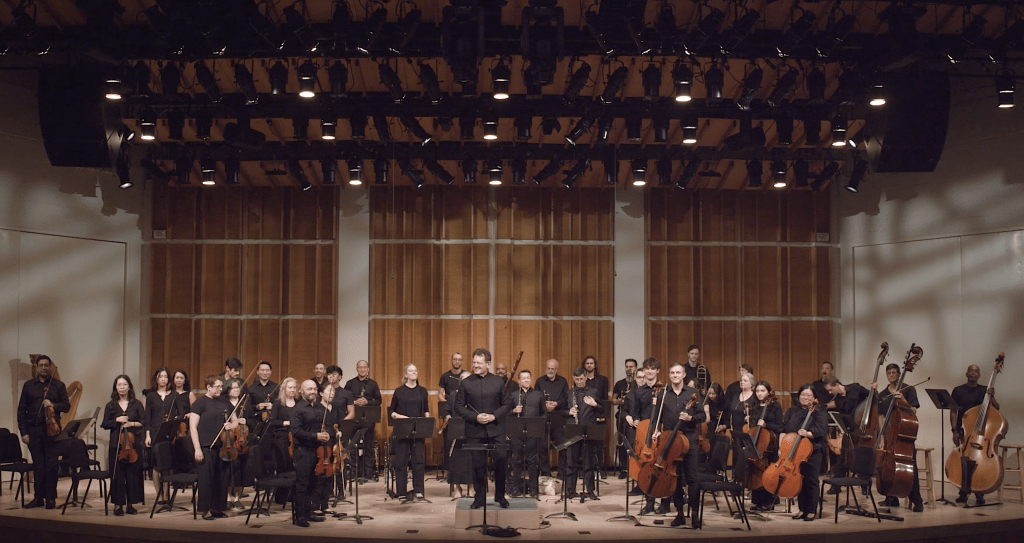
In this event, we can create the perfect environment for Saint-Saëns’ Symphony No. 3. The Digital Pipe Organ’s speakers will be placed to surround the audience, who are seated within the orchestra. This way, the audience experiences the organ and the orchestra from within, fully immersed in Saint-Saëns’ incredible sound world, something not possible without the Digital Organ or InsideOut.
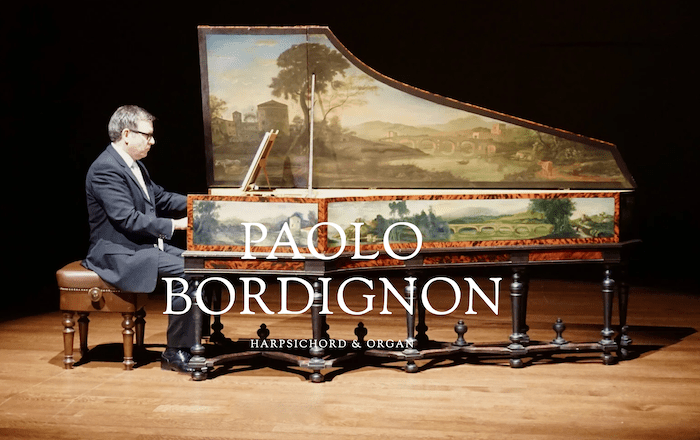
And we’re absolutely thrilled to have Pablo Bordignon as our organist for this performance. Pablo is not only a magnificent musician but also brings an exceptional pedigree to this project. As Organist and Choirmaster at the Church of St. Bartholomew on Park Avenue—one of New York’s most prestigious musical institutions—he works with one of the city’s finest pipe organs week in and week out. Pablo intimately understands both the capabilities and the sonic character of great pipe organs, which makes him the ideal artist to realize Saint-Saëns’ vision through our digital instrument.
What’s remarkable about Pablo is his versatility and his deep understanding of the French Romantic organ tradition that Saint-Saëns was writing for. He knows exactly how to voice the registrations, how to shape those long, sustained lines in the Adagio, and how to unleash the organ’s full majesty in that triumphant finale. His sensitivity as a musician means he’ll be listening intently to the orchestra, ensuring perfect balance and integration—which is crucial, as I mentioned, because this isn’t an organ concerto but a true symphony where organ and orchestra must breathe as one.
Having an organist of Pablo’s caliber also means our audiences will hear interpretive choices informed by the highest level of artistry. He brings both technical mastery and profound musicality to everything he plays. The fact that he’s equally comfortable with the great pipe organs of New York’s churches and with cutting-edge digital technology speaks to his forward-thinking approach to music-making. He understands that what matters most is serving the music and the composer’s intentions, regardless of the medium.
What to Listen For in Saint-Saëns’ Organ Symphony
EK: What should audiences listen for in this symphony?
DB: Oh, there’s so much! First, listen for the motto theme that appears at the beginning—a simple four-note motif that Saint-Saëns transforms throughout the entire symphony. It’s like a musical seed that grows into a mighty tree. In the first movement, pay attention to the strings’ passionate outpouring and the mysterious atmosphere Saint-Saëns creates. The slow section is achingly beautiful, with some of the most gorgeous string writing you’ll ever hear.
In the second movement, the scherzo section features delightful, quicksilver passage work—listen for the interplay between strings and winds. And then there’s the finale: when that organ enters with the full orchestra in C major, it’s pure, unbridled joy. The final pages build to an overwhelming climax that never fails to raise the hair on the back of your neck. I’ve conducted this piece several times, and I still get chills.
In our immersive setup, you can also watch these moments unfold. You might see the organist preparing for that massive entrance or observe the wind players preparing for their solos. It adds another layer of anticipation and excitement to the experience.
EK: The final Maestoso of the Third Symphony was included in the film “Babe.” How do you feel about that?
DB: I love “Babe”! The soundtrack included not only a portion of the Third Symphony but also the pop song “If I had Words,” a cover of the same music with lyrics by Jonathan Hodge. It is always wonderful when the audience comes to a concert knowing at least a bit of the music in advance.
Featured Soloist: Saint-Saëns Piano Concerto No. 2
EK: Your program also features Saint-Saëns’ Piano Concerto No. 2. How did you choose this work to pair with the Third Symphony?
DB: Consistent with each concert during our 2025-2026 IMMERSIONS AND EXPLORATIONS season, I devoted this concert to an expansive exploration of Saint-Saëns. I chose the Second Piano Concerto as an example of the mature elegance, virtuosity, and seamless blend of French refinement and Romantic passion.
It is also innovative. At the opening of the concerto, where most listeners would expect a majestic first movement, Saint-Saëns delivers a cadenza for the lone soloist. The writing, with its superbly crafted voice leading infused through running 16th notes, sounds like an organ prelude. It is shockingly beautiful and brilliant and clearly designed to evoke Saint-Saëns’ personal experiences as an organist. As this movement continues to unfold, Saint-Saëns continues to surprise and delight with a fantasia that contains yet another cadenza. The second movement is a delightful perpetual motion, while the finale delivers a driving tarantella imbued with brilliance and gracefulness. In so many ways, it is a perfect concerto.
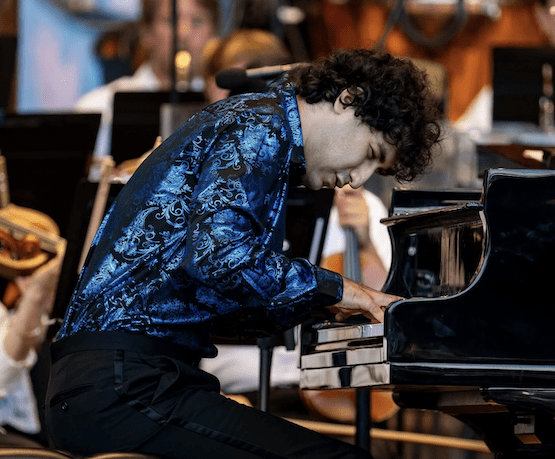
Maxim Lando: Virtuoso Pianist and Rising Star
EK: You’ve engaged the young pianist Maxim Lando for this performance. What can you tell us about him?
DB: Maxim Lando is an extraordinarily talented, musical, and accomplished artist—one of the most exciting pianists on the scene today. He’s already built an impressive career performing with major orchestras and at prestigious venues worldwide. What I love about Maxim is that he not only combines dazzling technical facility with genuine musical insight, but he always seems to have fun bringing this music to audiences. And this happens to be one of his favorite concertos, which is always important to me when I select soloists.
Maxim represents the best of the new generation of pianists—artists who have prodigious technique but never let virtuosity overshadow musicality. He studied at some of the world’s most prestigious conservatories and has won numerous competitions, but what sets him apart is his maturity as an interpreter. When you hear Maxim play, you’re not just witnessing finger gymnastics; you’re experiencing a deeply thoughtful musical mind at work. He understands the architecture of a piece, the harmonic language, the rhetorical gestures—all the elements that transform notes on a page into compelling storytelling.
For the Saint-Saëns Second Concerto, you need a pianist who can do it all. The opening cadenza requires not just technical command but also a sense of dramatic timing and improvisatory freedom—it must sound spontaneous, almost as if Maxim were composing it on the spot. The scherzo movement demands crystalline clarity and lightning-fast finger work, with delicate passagework that can easily sound mechanical in lesser hands. And the tarantella finale needs both rhythmic drive and infectious energy. Maxim brings all of these qualities to his playing. He has the technical prowess to toss off the most difficult passages with apparent ease. Still, he also has the sensitivity to shape a phrase beautifully, to find the singing line within the virtuosic display.
What’s particularly exciting is Maxim’s affinity for French repertoire. He has an innate understanding of that French aesthetic—the elegance, the clarity, the subtle shadings of color that distinguish French Romantic music from its German counterpart. Saint-Saëns was himself one of the greatest pianists of his era, and he wrote this concerto knowing precisely what the instrument could do. Maxim plays with that same kind of natural pianism, where everything sounds effortless even when it’s fiendishly difficult.
Beyond his artistry, Maxim is an excellent collaborator. In a concerto, the relationship between soloist and orchestra is crucial—it’s a conversation, not a competition. Maxim listens, he responds, he shapes his playing to blend with and complement the orchestral texture. That collaborative spirit will be especially evident in our immersive format, where the audience will see and hear that musical dialogue happening in real time.
I also appreciate that Maxim is genuinely passionate about sharing classical music with diverse audiences. He understands that our mission with the InsideOut concerts is to make classical music more accessible and engaging, and he embraces that philosophy wholeheartedly. His joy in performing is palpable, and that enthusiasm is contagious—it draws audiences in and helps them connect with the music on a deeper level.
The fact that this concerto is one of his favorites means he’s lived with this music, studied it deeply, and developed a personal relationship with it. That kind of commitment shows in every performance. When an artist loves the music they’re playing, it transforms the experience for everyone in the hall. I do not doubt that Maxim’s performance will be one of the highlights of our entire season.
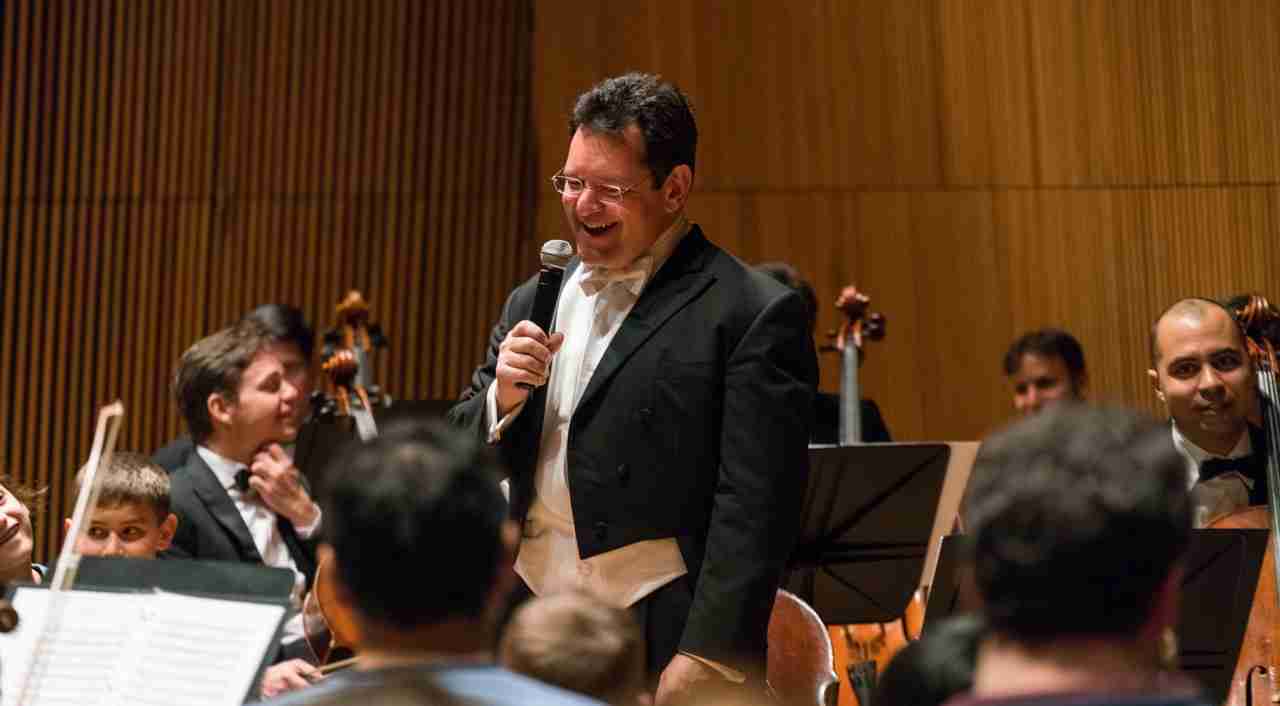
The InsideOut Concerts Experience: Immersive Classical Music
EK: The Park Avenue Chamber Symphony is known for its immersive seating arrangement. Please explain how this works and why you’ve chosen this format.
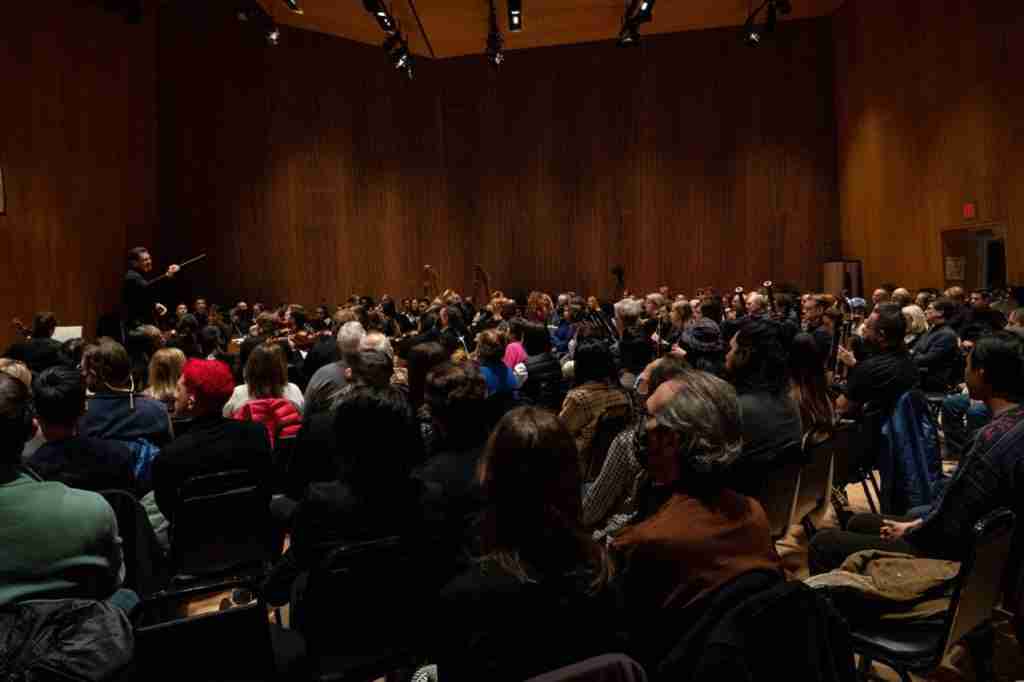
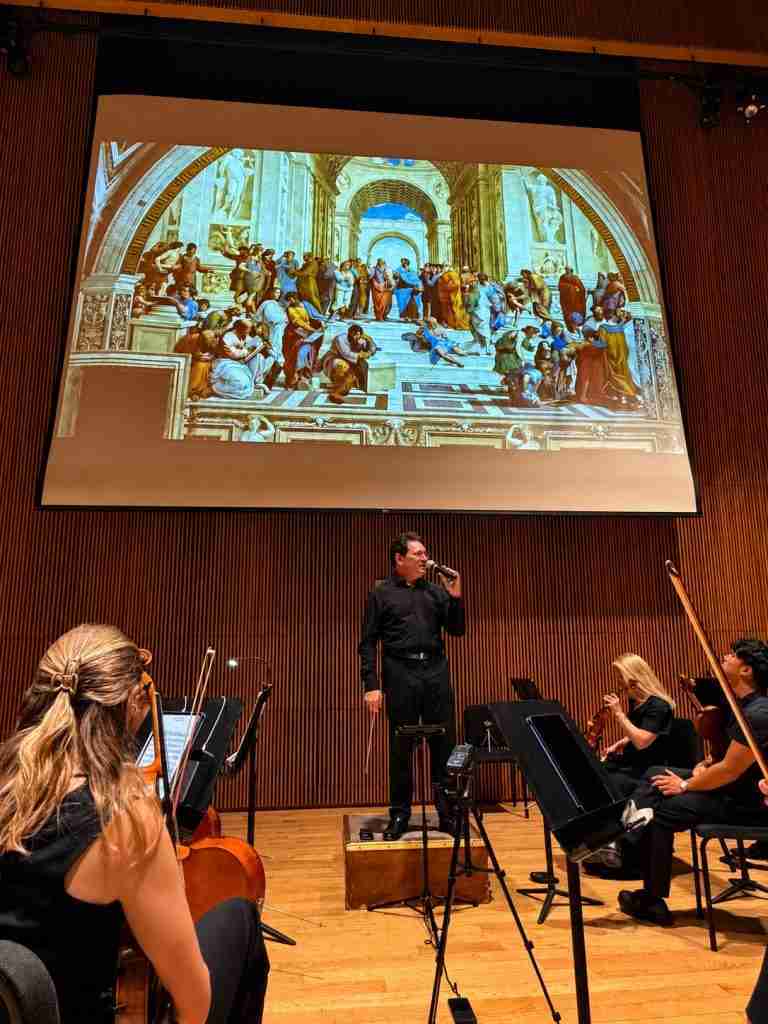
DB: The immersive concert experience is something I’m deeply passionate about because it attracts and builds audiences for classical music. Instead of the traditional setup where the audience sits in rows facing the orchestra, we place audience members throughout the ensemble—you might find yourself sitting next to the French horns, behind the cellos, or near the timpani. It’s like being inside the music rather than observing it from a distance.
The philosophy behind this approach is simple: music is an experiential, communal, three-dimensional experience. When you’re seated among the musicians, you become part of the performance. You can see the violinists’ bows moving in perfect synchronization, watch the eye contact between players as they pass melodic lines back and forth, and observe the physical effort and emotion on the musicians’ faces. You hear the music from within, experiencing the different instrumental colors as they bloom around you.
For the Third Symphony specifically, this immersive setup is absolutely ideal. Imagine sitting near the strings during that achingly beautiful slow section, feeling the intimacy and vulnerability of their sound. Or being positioned near the brass when they enter with those triumphant fanfares. And when that organ unleashes its full power in the finale—wherever you’re sitting in the hall, you’ll feel those vibrations resonating through your entire body, but the orchestral response happening all around you creates an almost surround-sound effect. It’s overwhelming in the best possible way.
EK: How does the immersive seating change the experience for audience members who might be used to traditional concerts?
DB: It’s a revelation for most people. In traditional seating, you get a carefully curated, balanced sound—which is terrific, don’t get me wrong. But you’re essentially hearing what you would typically hear in a recording: a blended orchestral sound. In the immersive setup, you experience the orchestra as the musicians experience it. You might hear the oboe solo more prominently because you’re closer to it, or the rich sonority of the cello section might envelop you. But while every seat offers a unique sonic perspective, the room’s acoustic enhancement ensures you hear the full experience.
What surprises people most is the visual element. Concertgoers often tell me they had no idea how much communication happens between musicians—the subtle nods, the breathing together, the way a concertmaster might lean into a phrase to lead the section. You witness the choreography of music-making, a form of artistry in its own right. And for a piece like the Saint-Saëns, where there are so many intricate conversations between different instrumental groups, being able to see and hear those dialogues up close is extraordinary.
There’s also something wonderfully democratic about it. In a traditional hall, the “best” seats are typically in the center orchestra section. In our immersive setup, every seat is special in its own way. You’re not watching the performance—you’re inside it.
EK: Any final thoughts for potential concertgoers?
DB: Just this: don’t miss this opportunity. The Third Symphony, performed with a full orchestra and a digital organ in an intimate hall like the DiMenna Center, is something special. November 22nd will be here before you know it, and this is a concert you’ll remember for years to come. I promise you—when that organ enters in the finale and the full orchestra joins in that glorious C major proclamation, you’ll understand why this symphony has moved audiences to tears of joy for nearly 140 years.
And experiencing it in our immersive format? That takes it to another level entirely. You’ll be sitting among world-class musicians who love this music as much as I do, surrounded by sound, witnessing the joy and intensity of live music-making from the inside. It’s an experience that simply can’t be replicated anywhere else.
This is Saint-Saëns’ showcase symphony—his ultimate statement as a composer. Experience it the way it deserves to be heard up close, personal, and overwhelming. Come join us. We’ll be waiting for you—and we’ll make sure you have a seat right in the heart of the music.
The Park Avenue Chamber Symphony performs Saint-Saëns’ Third Symphony and Second Piano Concerto featuring Maxim Lando at the DiMenna Center for Classical Music on Saturday, November 22, 2025
David Bernard, Conductor
Guest Artists
Maxim Lando, Piano
Paolo Bordignon, Organ
2 PM: Family Experience with Instrument Laboratory for Children under 13 and their Caregivers
Click Here for Tickets: https://www.eventbrite.com/e/scintillating-saint-saens-the-family-insideout-concertsr-experience-tickets-1369060319269?aff=oddtdtcreator
5 PM: Full Experience for Adults with Post Concert Reception
Click Here for Tickets: https://www.eventbrite.com/e/scintillating-saint-saens-the-family-insideout-concertsr-experience-tickets-1369060319269?aff=oddtdtcreator
5 PM: Full Experience for Adults with Post Concert Reception
Click Here for Tickets: https://www.eventbrite.com/e/scintillating-saint-saens-the-full-insideout-concertsr-experience-tickets-1369106908619?aff=oddtdtcreator
Park Avenue Chamber Symphony
875 5th Avenue
New York, NY 10065
(917) 740-7227
https://chambersymphony.com/
Tickets & Season Information: https://www.eventbrite.com/cc/park-avenue-chamber-symphony-2025-26-season-events-4325463
All Park Avenue Chamber Symphony concerts are held at The DiMenna Center for Classical Music (450 West 37th Street, between 9th and 10th Avenues, New York, NY 10018)
Donate to Support the Orchestra at https://chambersymphony.com/donate
The Park Avenue Chamber Symphony is a 501(c)(3) tax-exempt organization. Donations are tax-deductible to the extent permissible by law. Park Avenue Chamber Symphony events are made possible in part by public funds from The New York State Council on the Arts, with the support of the Office of the Governor and the New York State Legislature, and by private funds from generous individuals.