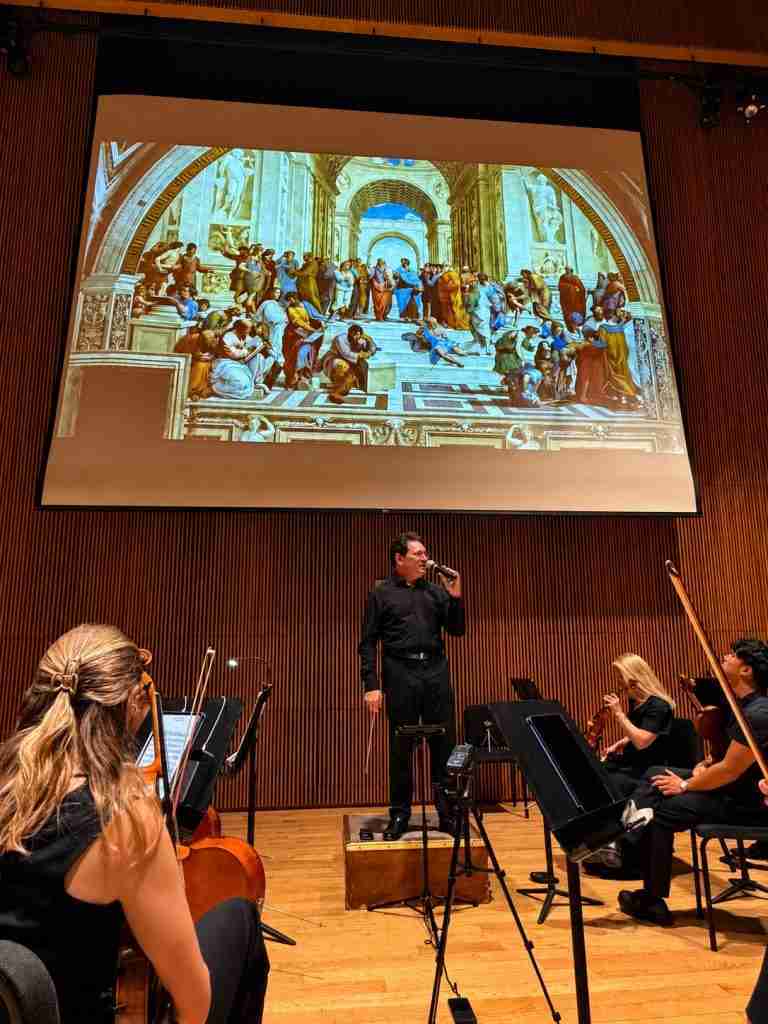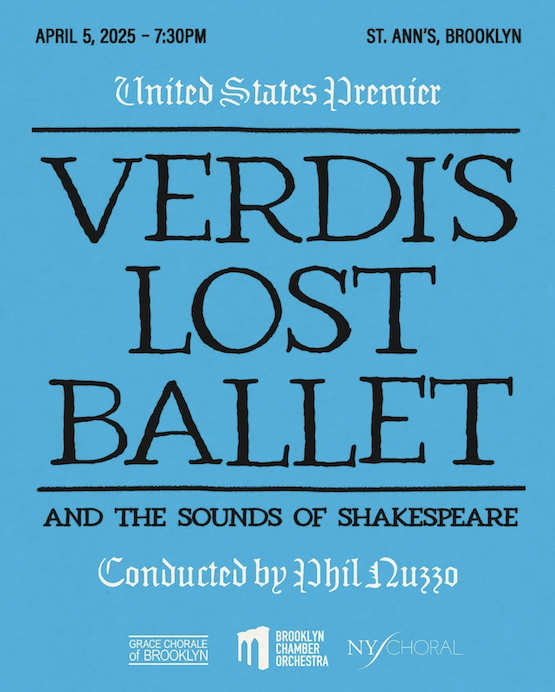

The Brooklyn Chamber Orchestra delivered a remarkable premiere in an evening of musical storytelling in the sumptuous acoustic embrace of St. Ann and the Holy Trinity Church. Under the assured direction of Philip Nuzzo, the Brooklyn Chamber Orchestra delivered a concert of extraordinary historical significance and artistic merit. The evening’s centerpiece—Verdi’s Lost Ballet—brought to American ears ballet music by Giuseppe Verdi that had lain dormant in a basement for 175 years. Moreover, the imaginative programming wedded this rarity with compelling Shakespearean-inspired works, creating a tapestry of intellectually stimulating and emotionally satisfying sound.
Rediscovered Treasure: Verdi’s Ballet Music Emerges from the Shadows
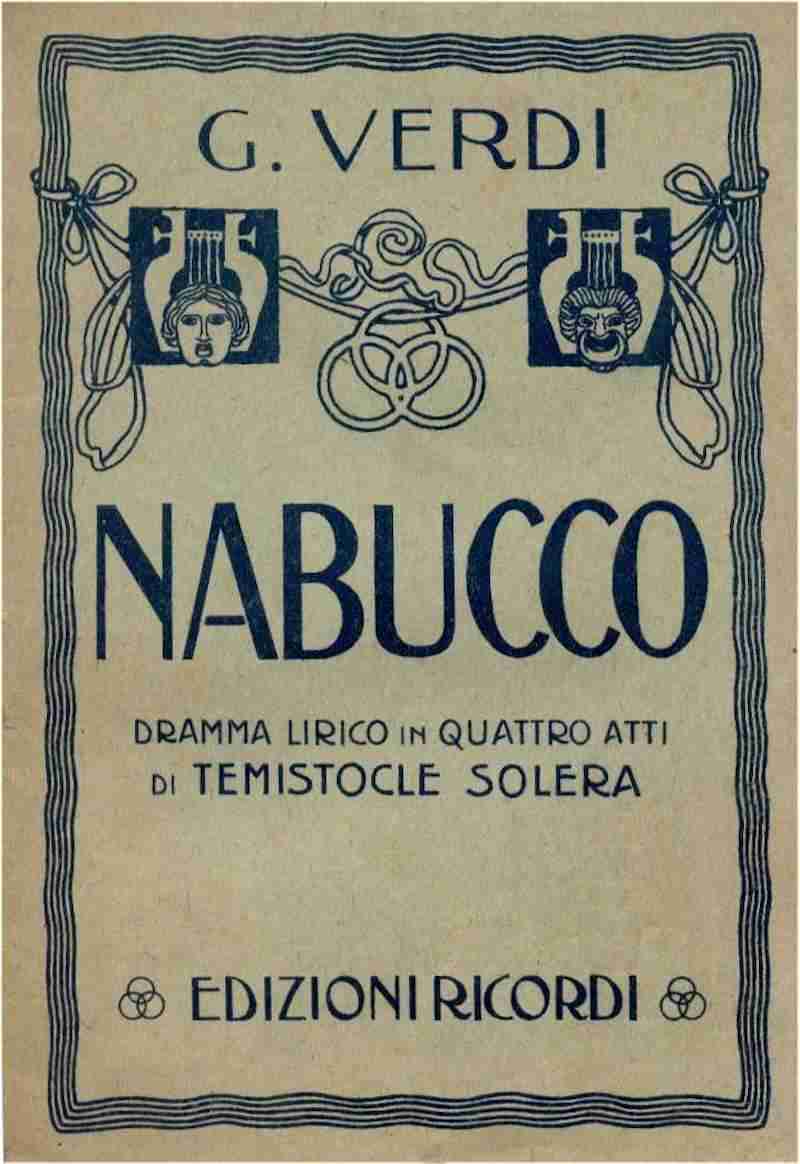
The undisputed highlight of this remarkable Verdi’s Lost Ballet and the Sounds of Shakespeare evening was the U.S. premiere of Verdi’s “Divertissements from ‘Nabucco'”—music composed in 1848 for a French production at Brussels’ Théâtre de la Monnaie. These ballet sections, unearthed from the basement of the composer’s Villa Verdi in Sant’Agata, emerged from obscurity with their Verdian identity gloriously intact. The composer’s unmistakable dramatic flair announced itself from the first notes, leaving no doubt of the music’s provenance.
Here’s an NBC news report on the discovery and upcoming premiere of Verdi’s work by the Brooklyn Chamber Orchestra:
View this post on Instagram
In the “Passe a 3,” concertmaster Anna Majcherczyk delivered exquisite solo passages with a honeyed tone that soared above the ensemble. The melody’s sinuous contours, underpinned by Verdi’s characteristically pulsing accompaniment, evoked the operatic world of “Nabucco” while offering something distinctly evoking movement through dance. Furthermore, the “Pas d’Ensemble” revealed the composer’s gift for orchestral color, with excellent contributions from principal flutist Eva Ding and oboist Zachary Pulse.

Nuzzo’s interpretation emphasized the music’s inherent theatricality without sacrificing its structural coherence. His tempo choices honored the score’s dance origins and operatic character. Additionally, one could hear echoes of Verdi’s contemporaneous works—hints of “Macbeth” and premonitions of “Luisa Miller”—suggesting this “lost” music provides a fascinating window into the composer’s evolving style during the late 1840s.
Orchestral Magic: Balance, Placement, and Sonic Splendor
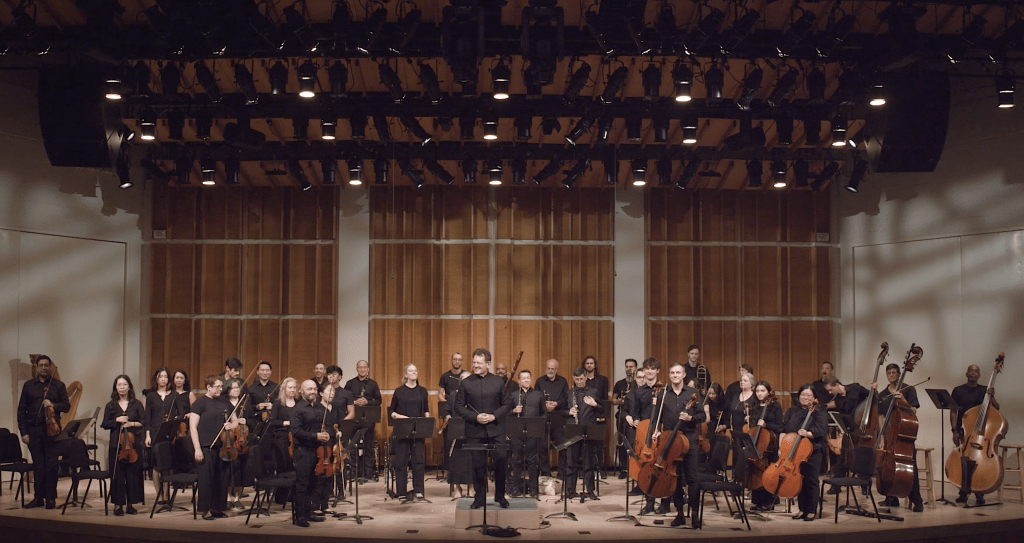
Maestro Nuzzo demonstrated his keen understanding of orchestral balance and spatial acoustics throughout Verdi’s Lost Ballet and the Sounds of Shakespeare program. The scope of the string sections was perfectly balanced with the full winds, brass, and percussion sections. His decision to place second violins to his right—a 19th-century seating arrangement—created a stereophonic dialogue between violin sections that clarified contrapuntal passages. This historically informed approach yielded especially rich rewards in the Shostakovich and Walton works, where conversational exchanges between violin sections created engaging antiphonal effects.
The orchestra responded with remarkable sensitivity to Nuzzo’s nuanced gestures. Dynamic contrasts were meticulously observed, from the most delicate pianissimos in Ophelia’s song from Shostakovich’s “Hamlet” suite to the thunderous battle sequences in Walton’s “Henry V.” Principal cellist Connor Kim delivered impassioned solo lines in the Shostakovich. In contrast, the brass section, led by trumpet principal Samantha Atlas, exhibited grandiose precision and power in Walton’s “Agincourt.”
Shakespeare in Sound: From Soviet Drama to British Cinema
Shostakovich’s incidental music for “Hamlet,” composed in 1932 for Nikolai Akimov’s controversial Soviet production, provided a fascinating opening to Verdi’s Lost Ballet and the Sounds of Shakespeare concert. The selection of the five movements revealed the composer’s sardonic wit and lyrical gifts. In “Flourish and Dancing Music,” Nuzzo emphasized the music’s angular rhythms and piquant harmonies. At the same time, “Ophelia’s Song” received a reading of unexpected tenderness, with harpist Yeonhwa Chung providing exquisite accompaniment to the string melody.
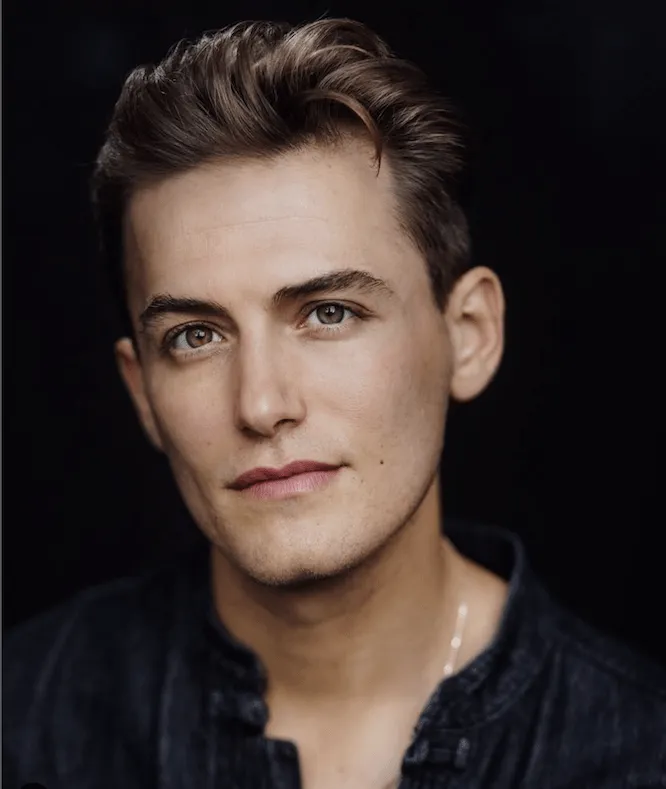
The evening’s most substantial offering was William Walton’s “Henry V: A Shakespeare Scenario.” Christopher Palmer arranged this work from Walton’s score for Laurence Olivier’s 1944 film. Actor Jose Espinosa delivered the play’s iconic monologues with a commanding presence and nuanced understanding. His “Once more unto the breach” rang through the cathedral with stirring conviction, while the St. Crispin’s Day speech achieved a perfect balance of intimacy and grandeur.
Members of the New York Choral Society and the Grace Choral of Brooklyn, prepared by music directors David Hayes and Jason Asbury respectively, brought vocal luster to the battle hymn “Non Nobis Domine” and ethereal beauty to the French court scene. Their impeccable articulation and blend enhanced Walton’s already colorful orchestration. Additionally, the brass instruments soared during the battle sequences, creating a thrilling spatial dimension in the music. Powerful brass and percussion amplified the dramatic intensity.
Sacred Space: Gothic Beauty Meets Musical Glory
St. Ann and the Holy Trinity Church, a Gothic Revival masterpiece dating from 1847, provided the perfect setting for the Verdi’s Lost Ballet and the Sounds of Shakespeare program. The soaring arches and stained-glass windows created a visual counterpoint to the music’s spiritual and dramatic elements. Furthermore, the church’s warm yet clear acoustics allowed orchestral colors to project with ideal clarity.

The sacred space seemed particularly appropriate for Walton’s “Touch Her Soft Lips and Part,” a movement of transcendent beauty rendered with exquisite delicacy by the strings. In this moment, as in many throughout the evening, one could sense the audience collectively holding its breath, transported by the marriage of music and environment into a realm of pure emotional communion.
Philip Nuzzo: Brooklyn’s Musical Treasure
Maestro Nuzzo’s programming vision for Verdi’s Lost Ballet and the Sounds of Shakespeare concert deserves special praise. By juxtaposing three distinct interpretations of Shakespeare—Soviet, British, and implicitly Italian (through Verdi)—alongside an actual musical discovery, he created an evening of intellectual fascination and sensuous pleasure. Moreover, his skilled leadership drew performances of remarkable cohesion, balance, and expressivity from his musicians.
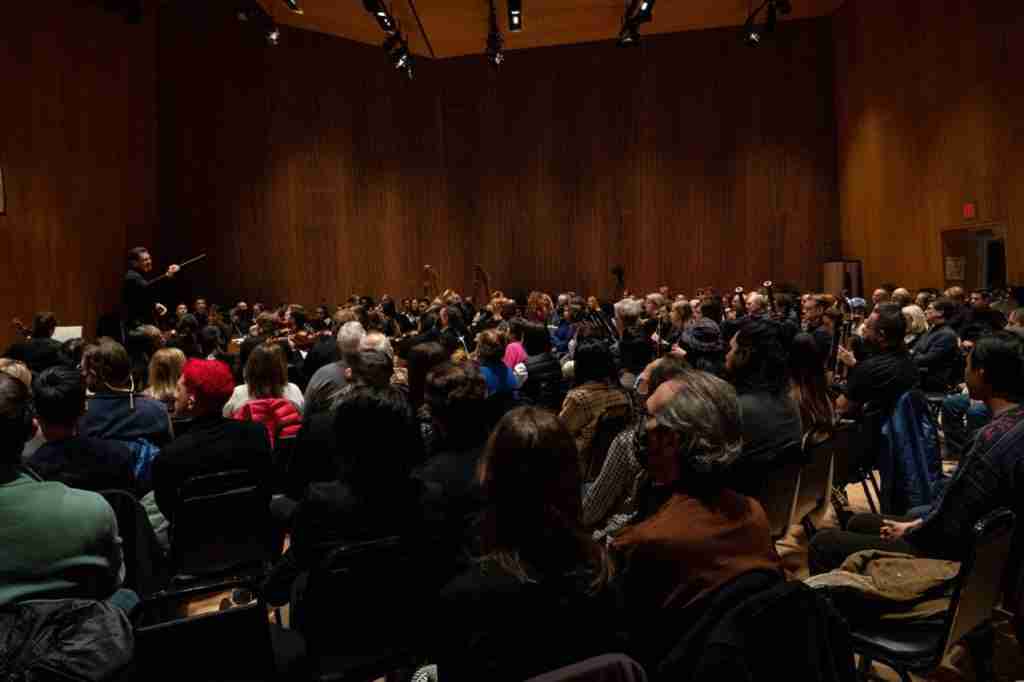
The audience, notably diverse in age and background, responded with enthusiastic appreciation throughout the evening. This powerful connection between performers and listeners exemplifies Nuzzo’s gift for selecting repertoire that bridges historical significance while garnering immediate appeal. Indeed, his vision for the Brooklyn Chamber Orchestra has transformed it into an essential cultural institution for the borough and beyond.
Legacy and Future: The Continuing Relevance of Rediscovered Works
The significance of Verdi’s Lost Ballet and the Sounds of Shakespeare performance extends beyond a single evening’s pleasure. By bringing Verdi’s long-lost ballet music to American audiences, the Brooklyn Chamber Orchestra has genuinely contributed to our understanding of the composer’s development. While not revolutionary works, these divertissements offer valuable insights into how Verdi adapted his dramatic instincts to meet the requirements of French theatrical tradition.
Similarly, the juxtaposition of Shostakovich’s and Walton’s Shakespearean interpretations illuminated how different cultural contexts shape artistic responses to universal texts. The Soviet composer’s sardonic take on “Hamlet” contrasted fascinatingly with the British composer’s patriotic reading of “Henry V.” Yet, both demonstrated profound musical engagement with the Bard’s timeless characters and themes.
As the Brooklyn Chamber Orchestra continues its 2025-26 season, audiences can anticipate more innovative programming, from silent film accompaniment (“Nosferatu” in October) to holiday celebrations and explorations of Beethoven and Haydn. If the Verdi’s Lost Ballet and the Sounds of Shakespeare concert is any indication, each promises to combine historical insight with immediate emotional impact.
For those fortunate enough to have attended this landmark event, the experience will undoubtedly linger in memory—a reminder of music’s power to transcend time and connect us across centuries. For Verdi’s ballet music, liberated at last from its basement confinement, the journey from 1848 Brussels to 2025 Brooklyn proved worth the wait.
Brooklyn Chamber Orchestra
157 Montague St, Brooklyn, NY 11201
Phone: (718) 801-3811
For tickets and information, go to https://brooklynchamberorchestra.org/.
Click HERE for videos of past BCO performances.
Readers may also enjoy SurRound II: Divine Sonic Tapestry at St. John the Divine, and the Leonkoro String Quartet: Sublime Brilliance at the 92nd Street Y.