Enjoy this marvelous performance by Edita Gruberová of the Zerbinetta aria from Ariadne auf Naxos — the role that made her name in Vienna and never quite let her go. “Großmächtige Prinzessin” is, by common consent, one of the most difficult coloratura solos ever written: roughly a dozen minutes of recitative, arietta, and rondo in which the soprano must act, argue, flirt, and land a high F while the orchestra declines to help her. Gruberová performs it with aplomb. Listen closely for the staccato ladders, the trills that arrive on the run, and the long unaccompanied cadenza, and you will hear why it is not undertaken by the faint of heart.
Dramatically, the aria is an argument. Ariadne, abandoned on her island, wants to die. Zerbinetta, a comedienne dropped into the middle of a tragedy, takes her aside to explain — with enormous tact and rather less discretion — that another god always comes along. The coloratura is the character. Every roulade is one more piece of worldly consolation.
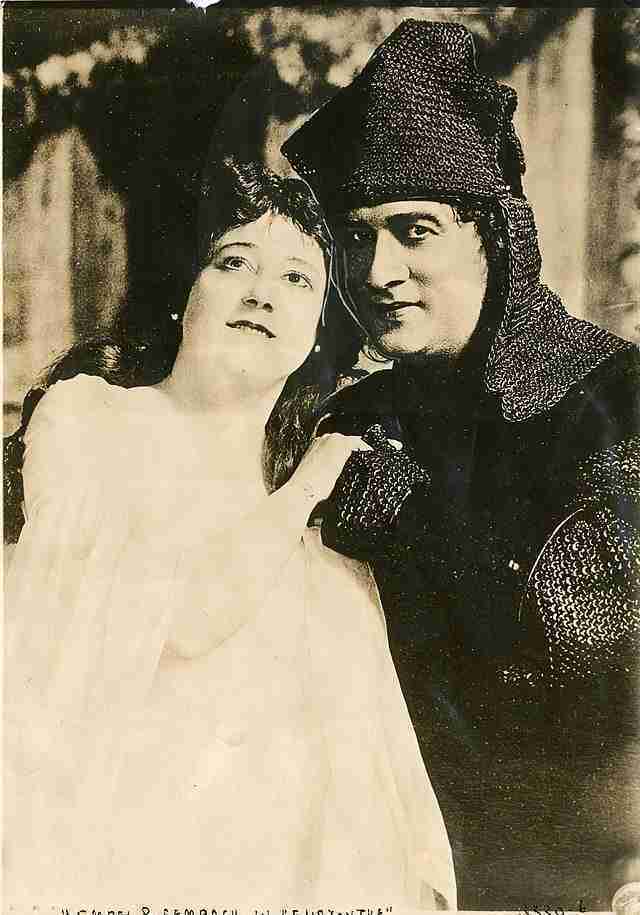
Johannes Semback (tenor) and_Frieda Hempel (soprano) in a scene from Euryanthe. Dated Jan. 15, 1915. Public Domain
This aria represents Strauss’ first effort in writing for coloratura soprano. He composed it for Frieda Hempel and hoped she would perform it at the Stuttgart premiere on October 25, 1912. She was not available — 1912 was the year she took up residence at the Metropolitan Opera in New York — and the part fell instead to Margarethe Siems, who had already survived Chrysothemis and the Marschallin on Strauss’ behalf. Perhaps Hempel had seen the score.
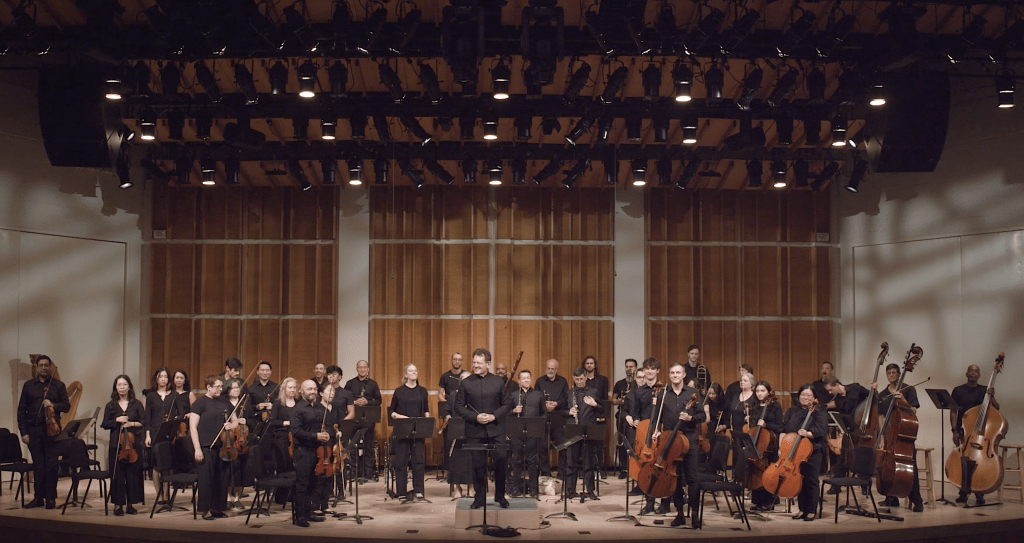
Interestingly, the orchestra accompanying the premiere comprised musicians playing only stringed instruments created by Italian masters. The orchestra borrowed instruments from Stuttgart dealers—among them the Hamma house, later led by Walter Hamma—including Stradivari, Guarneri, Amati, Bergonzi, and Guadagnini. One imagines a supremely sumptuous beauty of tone: a chamber ensemble of fewer than forty players, nearly every string of it museum-grade.
The premiere was sold out, and luminaries attended from and around Europe and the United States. Max Reinhardt directed and Strauss himself conducted. The chairman of New York’s Metropolitan Board of Directors, Otto Kahn, attended, as did Sir Edgar and Lady Speyer of New York. One of its earliest performances in the United States took place at the Juilliard School, then headed by Ernest Hutcheson. He had studied piano in 1893 with Bernard Stavenhagen in Weimar. Stavenhagen was Franz Liszt’s last pupil — which places the American Ariadne three handshakes from Liszt and, by way of Liszt’s teacher Czerny, four from Beethoven.
Strauss intended to pair Molière’s comedy Le Bourgeois gentilhomme with the opera, his longtime librettist Hugo von Hofmannsthal adapting the play and supplying the libretto. On the night, it proved impractical. The evening ran past six hours and required both a troupe of actors and an opera company; the theater crowd fidgeted through the opera, and the opera lovers sat through the play with folded arms. By 1916 the two men had replaced Molière with the Prologue we know today — and trimmed Zerbinetta’s aria in the bargain. What Gruberová sings is the merciful version.