
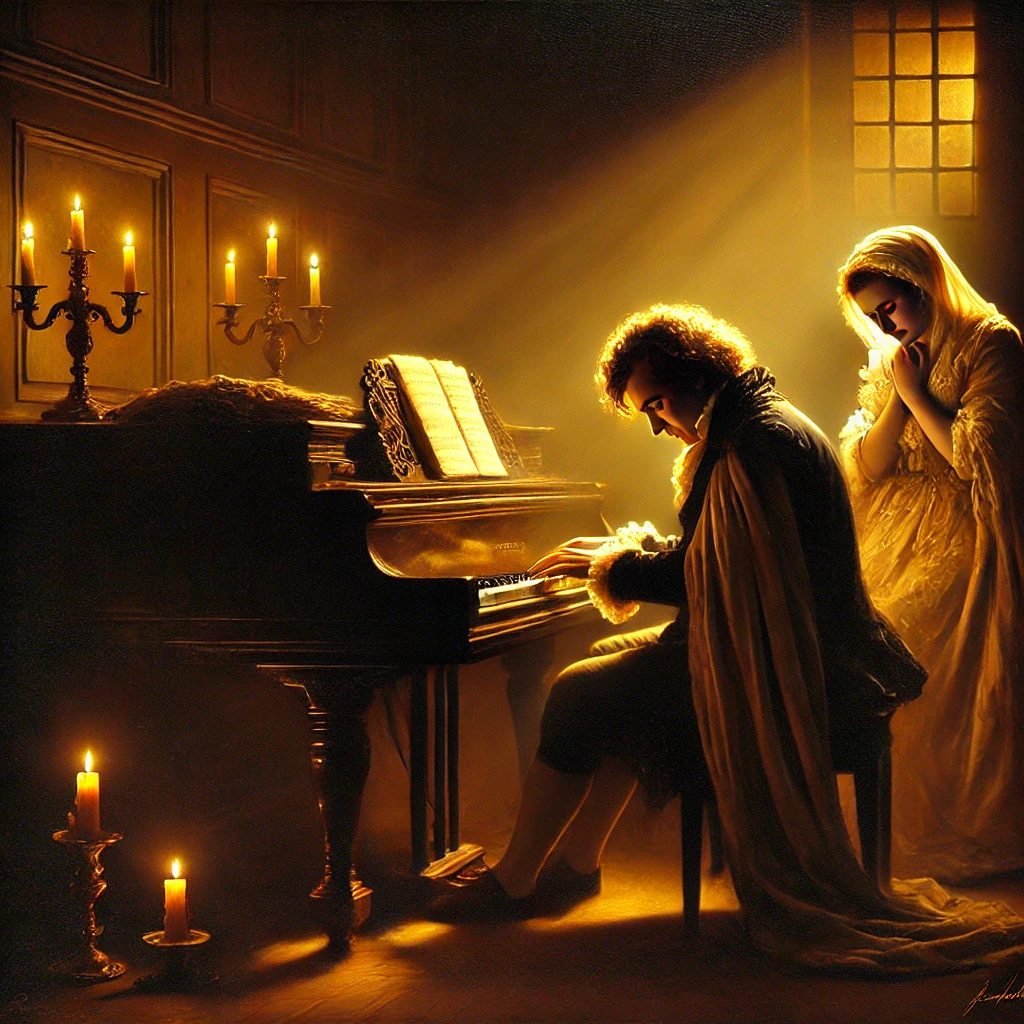

Baroness Dorothea von Ertmann was a devoted patron of the arts, known for her deep admiration of Ludwig van Beethoven and her exceptional talent as a pianist. But a heart shattered by unimaginable grief lay beneath her social grace and musical prowess. She had lost her last and only child—a pain so profound it rendered words insufficient. In this abyss of sorrow, Beethoven, the man whose music she revered above all, reached into her soul not with speech but with sound.
How could mere words address such devastation?
The Baroness, cloaked in mourning, sought solace wherever she could. She longed to speak with Beethoven, the composer whose works she had championed and whose music had once filled her home with joy. Yet Beethoven, a man not easily moved to conventional gestures, hesitated to face the magnitude of her loss. The silence of her house, heavy with a child’s absence, was too much for him to bear. How could mere words address such devastation?
A rare and profound sensitivity
When the Baroness, desperate for connection, begged him to come, Beethoven invited her to visit him instead. She arrived with her head bowed low, heavily veiled, her body wrapped in the shadow of her sorrow. Beethoven, notoriously brusque with social graces, displayed a rare and profound sensitivity. Rising to greet her, he took her hand and led her silently to a chair. Then, in a voice heavy with understanding, he said gently, “We will now talk to each other in tones.”
The promise of healing
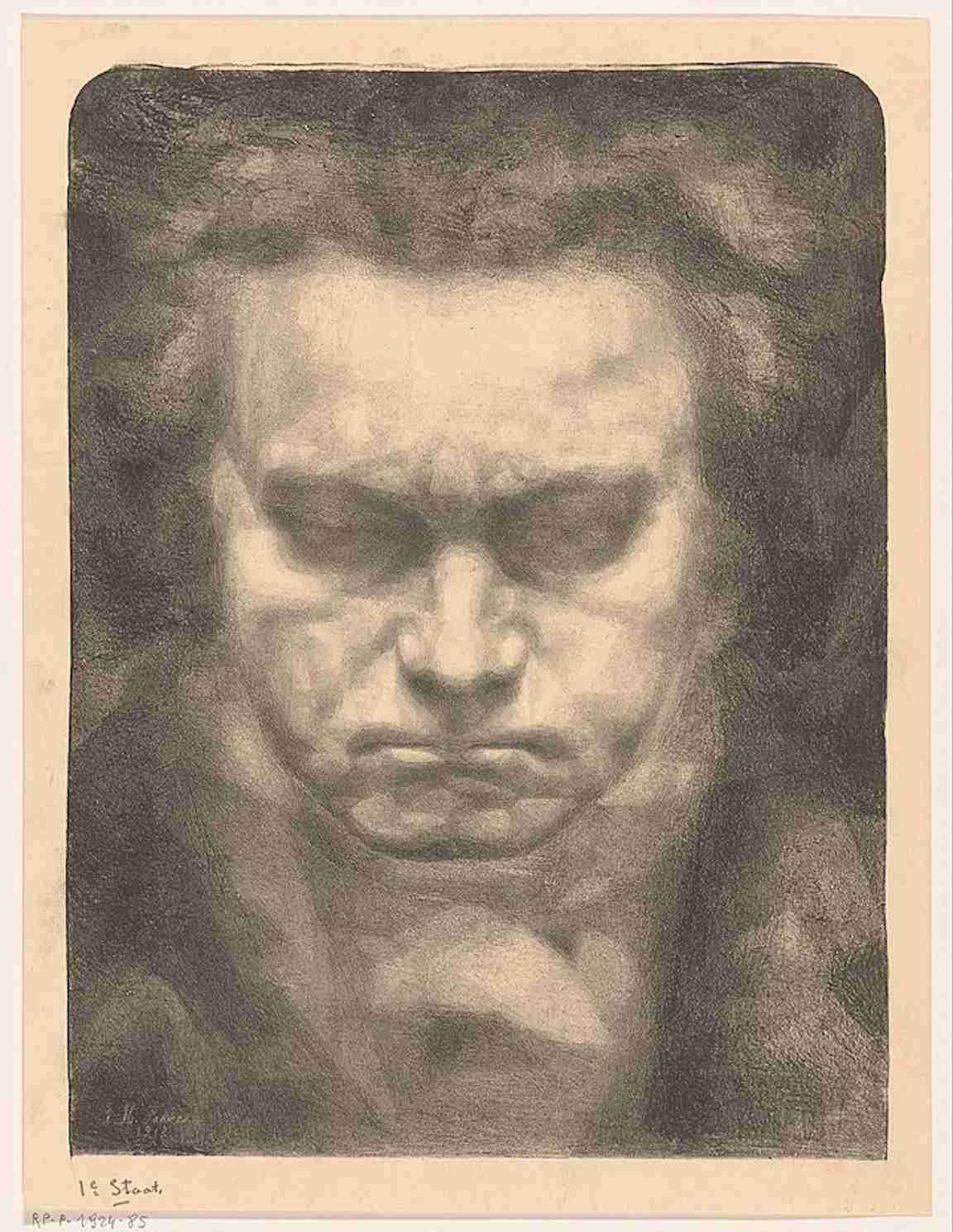
Seating himself at the piano, Beethoven began to play. The room filled with sound—not melodies of triumph or joy, but tones steeped in compassion, grief, and the promise of healing. His hands flowed over the keys for over an hour, weaving a tapestry of emotion that transcended words. Each note spoke of pain, resilience, and the fragile beauty of life, creating a dialogue of solace that only music could sustain.
She was not alone
The Baroness sat motionless, her veil concealing the tears that fell silently. For the first time since her loss, the crushing tension that had gripped her heart began to ease. Beethoven’s music pierced through the darkness of her grief, speaking the unspoken and offering her something no words could: recognizing her pain and the assurance that she was not alone.
When the last note faded into silence, the Baroness rose, still silent, and left the room. She did not speak of the visit until years later when she reflected on that profound moment: “He told me everything with his music and at last brought me comfort.”
A bond beyond spoken language’s boundaries
Beethoven, who understood the depths of human suffering, had given her the only gift he could—a piece of his soul, translated through the keys of a piano. In doing so, he comforted the grieving Baroness. He demonstrated music’s extraordinary power to communicate the ineffable, heal where words fail, and create a bond beyond spoken language’s boundaries.