

Erlkönig: A Sublime Convergence of Goethe and Schubert
Rarely in the annals of art does a single work encapsulate the raw power of genius in two mediums, but such is the case with Erlkönig. Johann Wolfgang von Goethe, the titan of German letters, provided the haunting narrative. The prodigious Viennese composer Franz Schubert infused it with music of unparalleled drama and intensity. Together, these two giants—though separated by time and circumstance—created a work that still electrifies the senses and challenges performers. Let’s examine Erlkönig: a sublime convergence of Goethe and Schubert.
As you read on, listen to the magnificent Baritone Dietrich Fischer-Dieskau, accompanied by Gerald Moore, perform Schubert’s masterpiece.
Lyrics to the Erlking
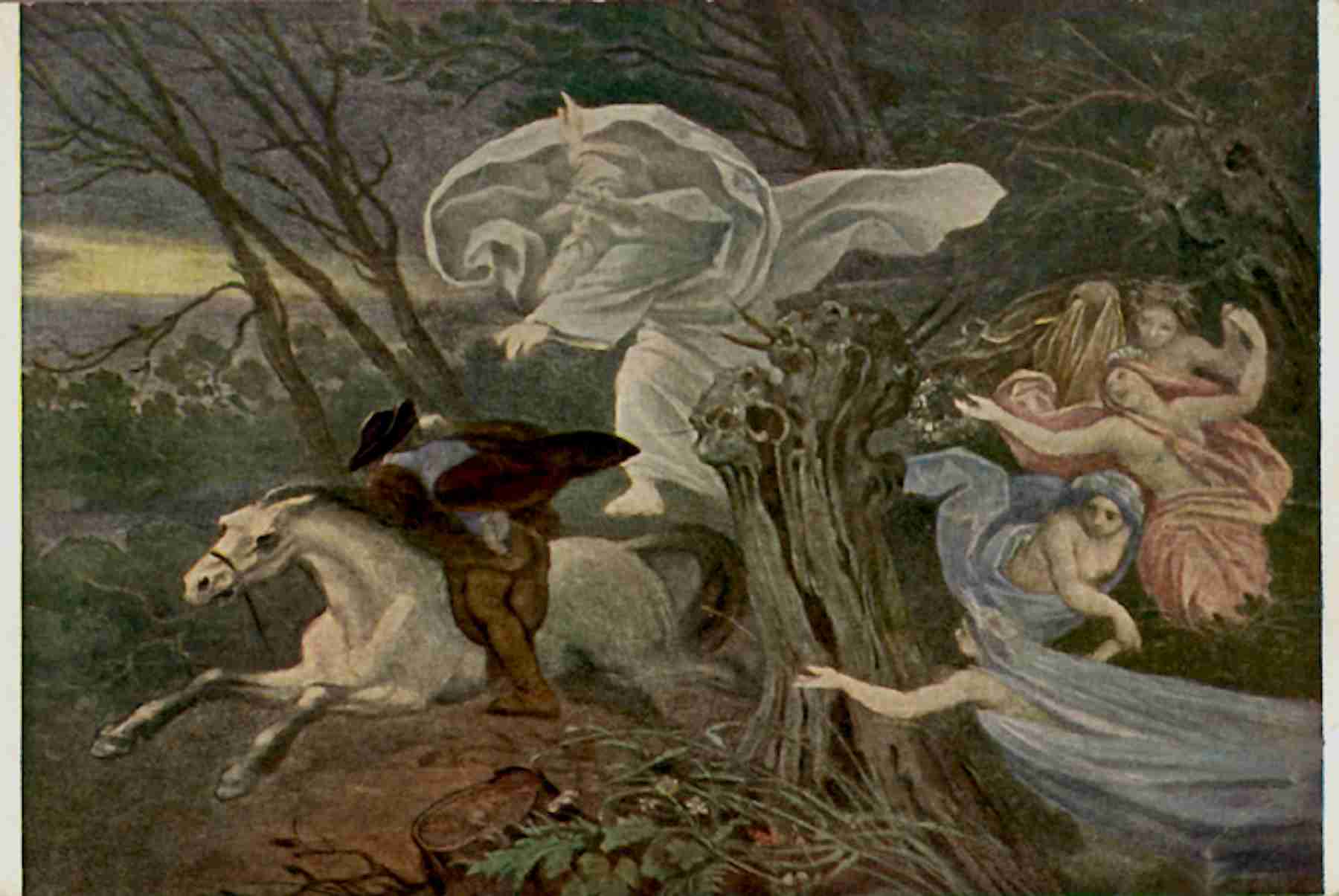
Who rides so late through the night and wind?
It is the father with his child.
He has the boy in his arms;
he holds him safely, he keeps him warm.
‘My son, why do you hide your face in fear?’
‘Father, can you not see the Erlking?
The Erlking with his crown and tail?’
‘My son, it is a streak of mist.’
‘Sweet child, come with me.
I’ll play wonderful games with you.
Many a pretty flower grows on the shore;
my mother has many a golden robe.’
‘Father, father, do you not hear
what the Erlking softly promises me?’
‘Calm, be calm, my child:
the wind is rustling in the withered leaves.’
‘Won’t you come with me, my fine lad?
My daughters shall wait upon you;
my daughters lead the nightly dance,
and will rock you, and dance, and sing you to sleep.’
‘Father, father, can you not see
Erlking’s daughters there in the darkness?’
‘My son, my son, I can see clearly:
it is the old grey willows gleaming.’
‘I love you, your fair form allures me,
and if you don’t come willingly, I’ll use force.’
‘Father, father, now he’s seizing me!
The Erlking has hurt me!’
The father shudders, he rides swiftly,
he holds the moaning child in his arms;
with one last effort he reaches home;
the child lay dead in his arms.
Translation by Richard Wigmore (First published by Gollancz and reprinted in the Hyperion Schubert Song Edition)
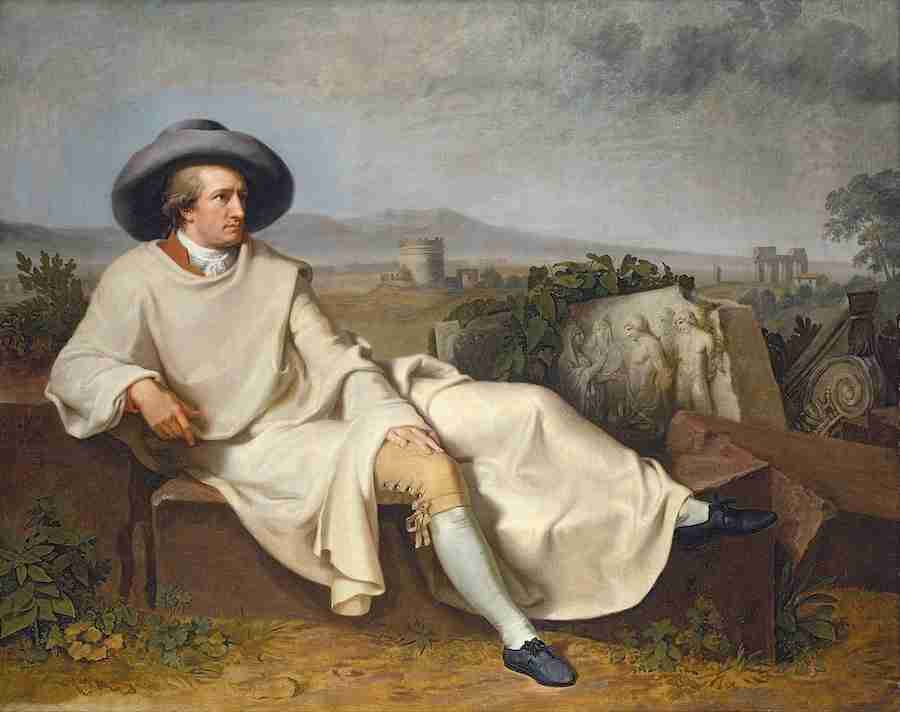
Goethe’s Morbid Fairytale
Goethe’s Erlkönig, written in 1782, is not a ghost story but a psychological tour de force. At first glance, it is a tale of mortal peril: a frantic father gallops through the night, clutching his feverish child, pursued by the spectral Erlking—a sinister figure who tempts the boy with soothing promises of pleasure and rest. Goethe’s language is surgical in its precision. The Erlking’s insidious and coaxing whispers contrast chillingly with the child’s increasingly desperate cries. The father’s reassurances ring hollow against the inevitable conclusion: by the time they reach safety, the child is dead.
Goethe, a literary colossus, understood the power of suggestion. The Erlking’s true nature is never clarified. Is he a phantom born of the child’s feverish imagination? Or a genuine supernatural entity indifferent to human struggles? Goethe’s genius lies in his refusal to answer, leaving readers suspended in a fog of ambiguity, their imaginations inflamed by the poem’s sinister undercurrents.
Schubert’s Musical Miracle
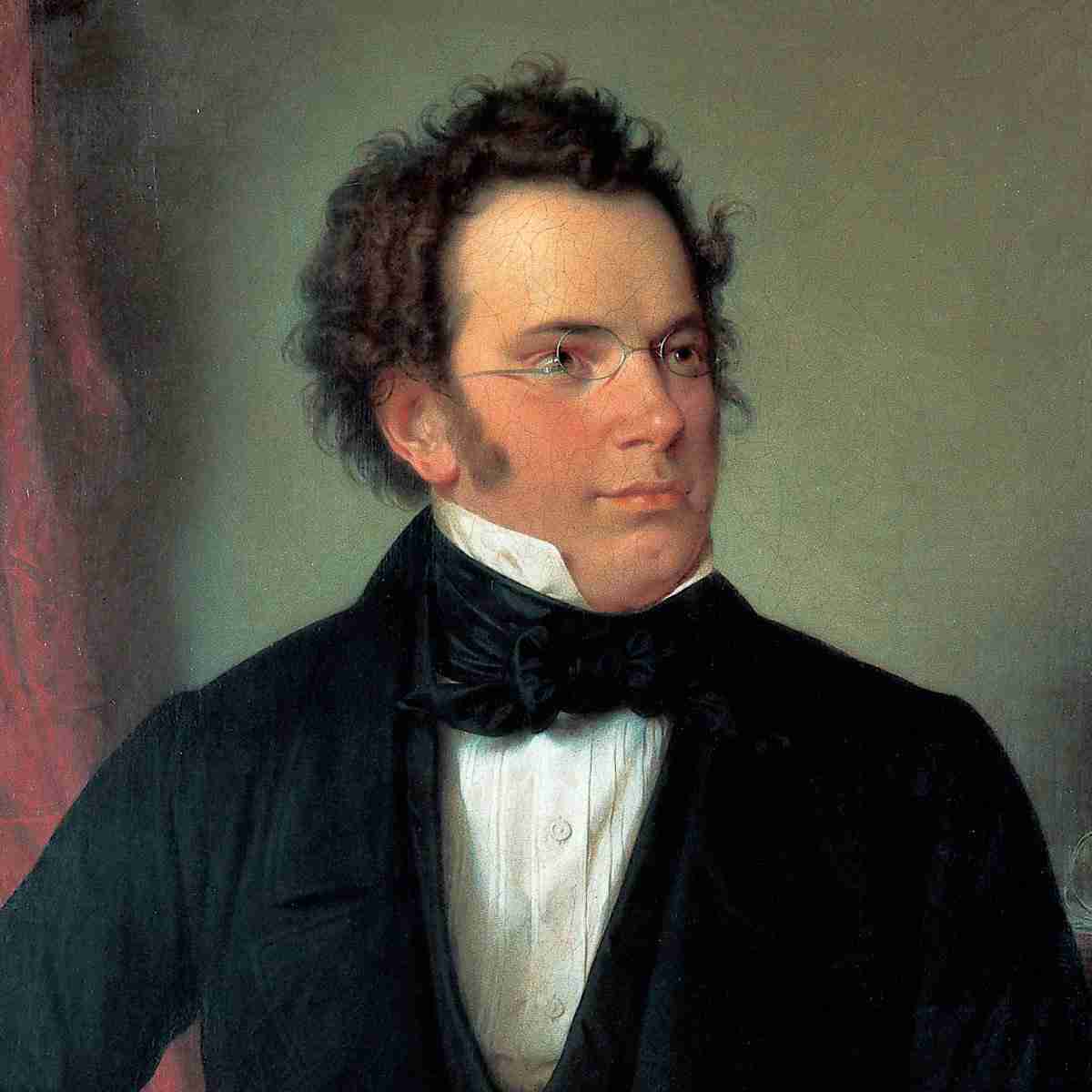
Enter Franz Schubert, who in 1815, at the impossibly young age of 18, took Goethe’s words and transformed them into one of the most astonishing compositions in music history. That such profundity came from the pen of a teenager defies belief, yet here it stands, immortal.
The piano’s relentless triplets immediately seize the listener. This is no simple accompaniment but an evocation of the galloping horse, a ceaseless, pounding urgency that drives the piece forward. Over this fevered ground, Schubert paints his drama: four voices—the narrator, the father, the child, and the Erlking—each given their own distinct musical identity.
The father’s voice is steady, grounded in the lower registers, a man desperate to reassure his child even as terror gnaws at him. The child’s voice, pitched higher, darts and trembles, a perfect portrait of fear. The Erlking, however, is the masterstroke. Schubert gives him an insidiously lilting melody, sweet and almost hypnotic. It is the sound of death cloaked in charm, a predator toying with its prey.
Schubert’s gift for drama is operatic in its scope yet compressed into a mere four minutes. The song rises to its climax with an inevitability as terrible as it is exhilarating. When the piano halts abruptly at the song’s conclusion, leaving only the stark pronouncement of the narrator—“In his arms, the child lay dead”—the silence is deafening.

The Genius of Two Titans
Goethe and Schubert never met, and one wonders if they would have understood one another. By all accounts, Goethe dismissed Schubert’s setting, preferring his poetry unadorned. Yet, history has had the final word. Schubert’s Erlkönig does not merely complement Goethe’s poem; it elevates it, illuminating its emotional core with unparalleled intensity.
Both men were innovators, towering figures of their respective eras. Goethe revolutionized German literature, while Schubert redefined the possibilities of song, the genre of 19th-century German Lieder, in his tragically short life. Together, their contributions to Erlkönig exemplify the fusion of text and music, where each enhances the other to create something transcendent.
The Eternal Erlkönig: A Sublime Convergence of Goethe and Schubert
Performers who dare tackle Erlkönig face a daunting challenge. The singer must navigate four distinct voices, shifting seamlessly between father, child, narrator, and Erlking, all while riding the storm of the piano part. For their part, the pianist must deliver the galloping triplets with unerring precision and dramatic flair. When done well, the result is electrifying—a performance that leaves audiences breathless.
Yet beyond the technical feats lies the heart of Erlkönig: its relentless confrontation with mortality. Goethe’s poem and Schubert’s music remind us of life’s fragility, death’s inevitability, and the helplessness of love in the face of forces beyond our control.
Erlkönig endures not simply as a masterpiece but as a testament to the heights human creativity can achieve. Goethe’s words and Schubert’s music merge into something greater than the sum of their parts, an alchemy of art that continues to captivate, unsettle, and inspire. It is a work that reminds us why we return to great art—not just to be entertained but to feel deeply, to confront the sublime, and to glimpse the eternal.
Readers may also enjoy Schubert’s The Trout, Wilfred Owen’s Anthem for Doomed Youth, and Oratorio Society of NY Performs Mahler, Beethoven, and Karen P. Thomas.