
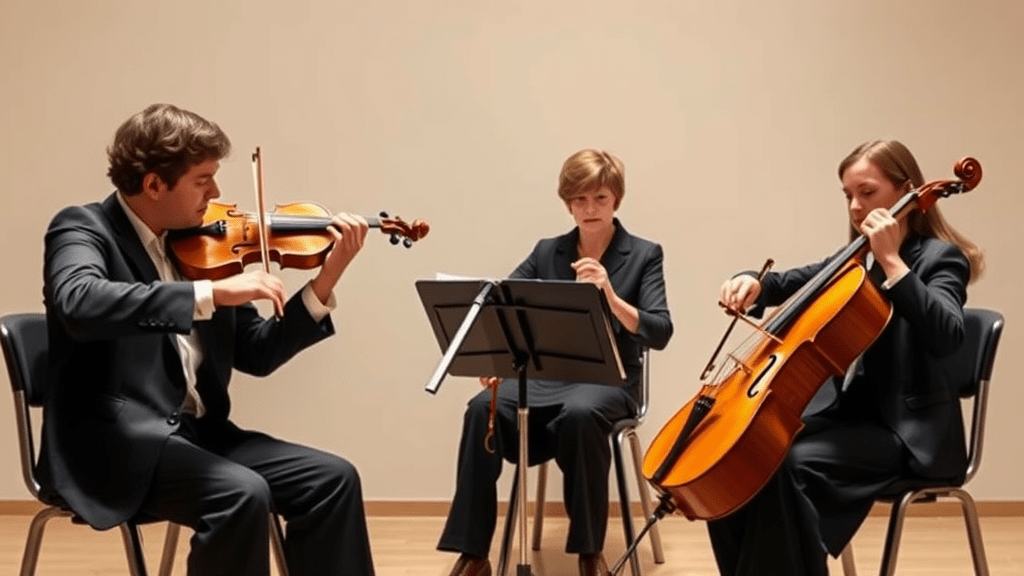

Complexity and Beauty: Brahms’ String Quartet No. 2 in A Minor
Exploring Brahms’ Musical Mastery
Brahms’ String Quartet No. 2 in A Minor is a testament to his exceptional skill in handling intricate musical textures. This work is a stellar example of Brahms’ genius in composing complex and beautiful music that resonates with audiences today. The quartet navigates an impressive range of emotions, merging intense counterpoint with lyrical melodies to create a sound that is both sophisticated and profoundly touching.
The Structure of A Minor Quartet
Composed in 1873, this quartet is structured in four movements, each showcasing Brahms’ extraordinary ability to blend harmony and counterpoint. The first movement, Allegro non troppo, introduces the themes somberly, immersing listeners in deep, dynamic soundscapes. The interplay between the strings is rich with emotional depth, as each instrument independently adds to the complex counterpoint woven throughout.
The Intricacy of the Second Movement
The Andante moderato offers a contrast, switching to a more serene atmosphere. This movement is a beautiful interlace of melodies that echo and converse, demonstrating Brahms’ deft hand at creating a narrative in music. The use of counterpoint here is a technical showcase and a means to evoke a serene, almost pastoral quality within the music. It’s a brilliant shift that highlights Brahms’ sensitivity to the varying dynamics of a quartet.
Third and Fourth Movements
The third movement, Quasi minuetto, moderato, remains true to its title, offering dance-like rhythms peppered with syncopations and shifts in tempo. It feels almost like a dialogue between the instruments, with unexpected twists that tease the listener. Brahms, always the innovator, infuses these dance patterns with his signature intensity.
The fourth movement, Allegro non assai, vivace ma serioso, re-establishes the quartet’s dark intensity. The playful yet forceful energy here brings the piece full circle, ending on a note of passionate complexity. Brahms successfully intertwines joy and solemnity, leaving listeners with an appreciation for the nuanced beauty of his composition.
Understanding Brahms’ Counterpoint
Counterpoint is a technique where different melodic lines are interwoven to create a cohesive whole, and Brahms employed this method masterfully in his quartet. Throughout the piece, different string instruments engage in conversations that appear almost spontaneous, though they are meticulously planned. This creates a rich tapestry of sound where each instrument retains its voice yet contributes to the greater harmony.
- Melodic Interaction: The themes and motifs introduced are often played by different instruments, providing a varied perspective that keeps listeners engaged.
- Harmonic Depth: Brahms uses contrapuntal techniques to enhance the quartet’s harmonic richness, allowing for profound emotional expression.
- Rhythmic Play: Syncopations and cross-rhythms add an element of surprise, showcasing Brahms’ innovative approach to rhythm.
For those interested in delving deeper into Brahms’ use of counterpoint, Romantic Music provides a broader context of his work within his era.
An Invitation to Listen
Brahms’ String Quartet No. 2 in A Minor is not just music but an experience of layered emotions and artistic genius. Each listening reveals new intricacies and facets, offering a glimpse into Brahms’ remarkable musical mind. Whether you are a classical music aficionado or a casual listener, this quartet invites you to explore the profound understanding of beauty and complexity that Brahms infused into his compositions.
Exploring the Essence of Counterpoint in Romantic Chamber Music
Key Takeaways
Brahms’ String Quartet No. 2 in A Minor stands as a testament to the intricate blend of complexity and beauty found in Romantic-era chamber music. The Quartet, with its rich tapestry of sound, weaves an emotional narrative that captivates both the heart and mind. Brahms, widely celebrated for his ability to synthesize rigorous classical forms with evocative romanticism, perfectly exemplifies this balance in his second string quartet. The quartet’s melodious lines and layered textures invite listeners into a world where each note is carefully crafted, showcasing Brahms’ genius in creating a cohesive and poignant musical journey.
One of the most striking features of Brahms’ String Quartet No. 2 is its intensive use of counterpoint, a method where multiple musical lines interact independently but harmoniously. This sophisticated technique, commonly found in Bach’s compositions, resurfaces in Brahms’ hands with a distinctly Romantic touch. Here, counterpoint becomes a tool not just for structure, but for expressiveness, adding depth and richness to the ensemble’s interplay. The weaving of themes throughout the quartet serves as a testament to Brahms’ mastery in blending voices in a way that both preserves their independence and enhances their collective resonance.
Music that is Intellectually Rewarding and Emotionally Stirring
Exploring the essence of counterpoint within this composition reveals the broader role it played in Romantic chamber music. In an era often associated with emotive and expansive symphonic works, Brahms’ use of counterpoint stands out as an homage to traditional techniques within a modern framework. It offers listeners a chance to appreciate the complexity and innovation that can be found in smaller, more intimate musical settings. Through this melding of past influences with contemporary expressiveness, Brahms has not only honored the counterpoint tradition but has also elevated it, allowing listeners to experience music that is intellectually rewarding and emotionally stirring.
Brahms’ String Quartet No. 2 in A Minor exemplifies the balance of complexity and beauty, inviting listeners into a delicate dance of harmony and independence. It showcases counterpoint as a vital component of Romantic chamber music, serving both as a structural backbone and a source of emotional depth. Such a combination highlights Brahms’ renowned ability to create music that is both technically masterful and deeply moving, offering a timeless journey through sound that resonates with its listeners.
Final Words
Brahms’ String Quartet No. 2 in A Minor offers an enchanting blend of complexity and beauty that captivates listeners and performers alike. Through this piece, Brahms showcases his mastery of the string quartet form, interweaving melodies that sing and harmonies that resonate deeply. Its intricate structures reveal the depth of Brahms’ genius, offering rich textures that invite audiences to experience the full spectrum of human emotion. The quartet stands as a testament to Brahms’ ability to convey profound narratives through music while maintaining an accessible charm that appeals to both seasoned listeners and newcomers to classical music.
Counterpoint plays a significant role in this quartet, highlighting the vibrant interplay of musical lines characteristic of Romantic chamber music. Brahms’ use of counterpoint adds to the work’s complexity and enriches its emotional content, crafting a dialogue between the instruments that draw audiences into an intimate conversation. His innovative approach to counterpoint reveals an understanding of how individual voices can combine artfully, creating a harmonious whole that is greater than the sum of its parts. This technique allows Brahms to explore themes of longing and resolution, mirroring the Romantic era’s fascination with emotional expression and musical storytelling.
Together, these elements make Brahms’ String Quartet No. 2 in A Minor a remarkable achievement in chamber music. It continues to inspire musicians and delight audiences with its intricate beauty and emotional depth. For those who seek to understand the expressive potential of the string quartet, Brahms’ work stands as an enduring beacon, encouraging exploration into the nuanced art of counterpoint within the rich tapestry of Romantic music. Through this piece, we find a poignant reminder of the enduring power of music to touch the heart and stir the soul.
Readers may also enjoy The Muse Behind the Melody: Johannes Brahms and His Violin Concerto in D Major, The Park Avenue Chamber Symphony presents Romantic Reflections, and Maestro Kent Tritle and Musica Sacra,