


NEW YORK – Clapton’s Masterful 2017 Layla Performance
When Eric Clapton stepped onto the stage in 2017 to perform his “Layla,” it wasn’t just another show—it was a masterclass in guitar craftsmanship and emotion. Having spent decades perfecting his sound, Clapton’s performance that night was a reminder of why he’s considered one of rock’s greatest guitarists. His passion for the instrument and song was unmistakable from the first note.
Setting the Tone
From the opening slide guitar riff, you could feel the intensity, the raw emotion that defines “Layla.” Slide guitar is a technique Clapton’s always been fond of, and he used it here to perfection. For those unfamiliar, the slide technique involves gliding a glass or metal slide along the strings, creating that smooth, soulful sound that oozes emotion. Clapton’s slide work set the tone for the performance, bringing out the song’s heart.
Clapton seamlessly transitioned between electric and acoustic elements and gave the song a fresh spin without losing its classic feel. It’s no wonder the audience was immediately hooked—this wasn’t just any rendition of “Layla.” It was Clapton breathing new life into a timeless track.
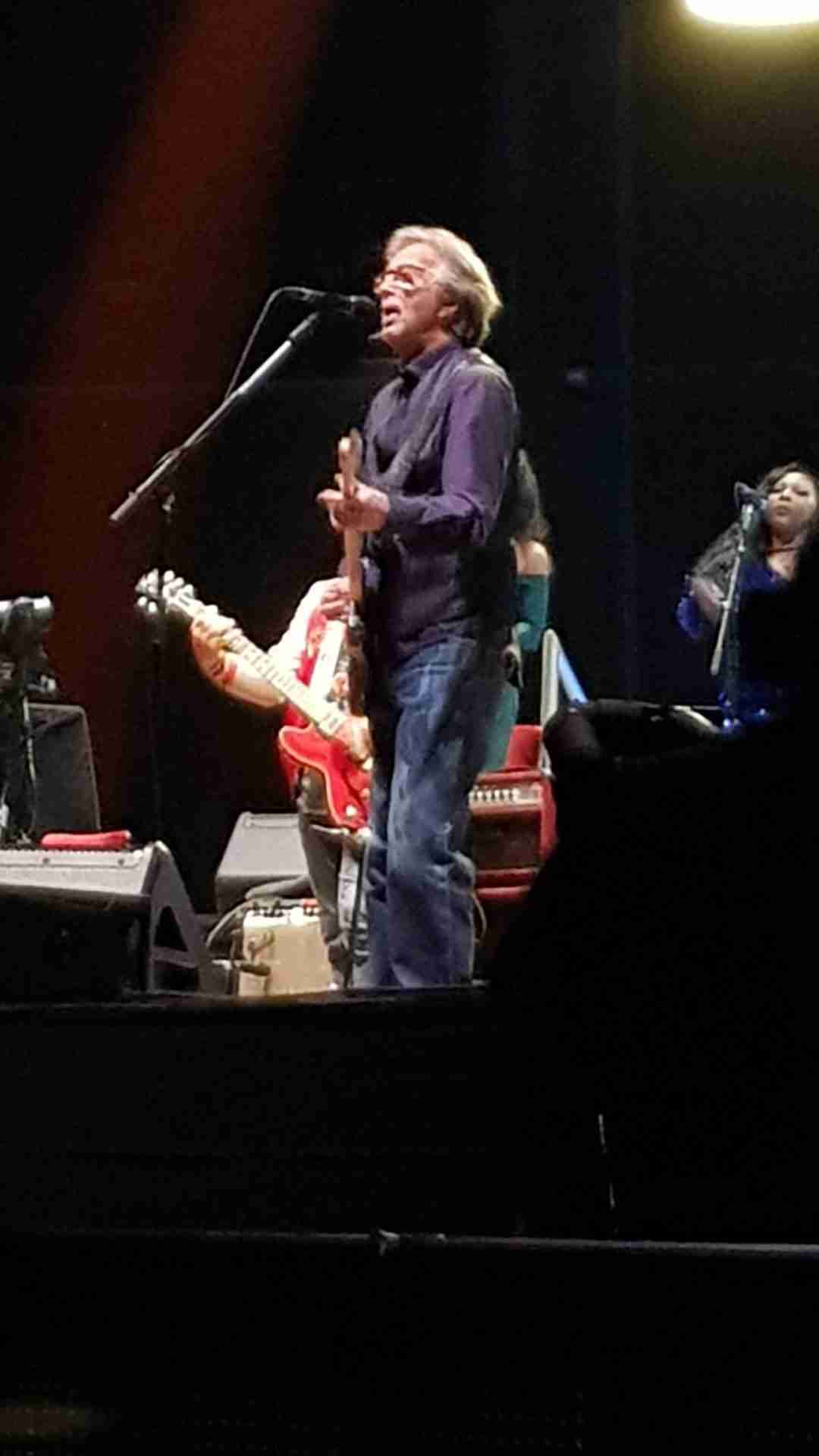
Gear Talk: The Stratocaster & Beyond
Now, as a guitarist, I can’t help but talk about the gear—because Clapton’s sound is just as much about his tools as his technique. That night, Clapton wielded his trusty Fender Stratocaster, likely one of his signature models. The Strat has always been Clapton’s go-to for its versatility and bright tone, perfect for everything from soulful blues licks to hard-hitting rock riffs.
As for strings, Clapton typically uses Ernie Ball Regular Slinky (.010-.046 gauge). These offer an outstanding balance, giving him the flexibility for those smooth bends while still delivering a full, rich sound when he digs in. It’s all about feel, and these strings give Clapton the control he needs to express himself fully through his guitar.
Amp & Effects Setup
Of course, the guitar is only part of the equation. You’ve got to talk about the amplification. Clapton’s amps are just as iconic as his playing, and for this performance, he most likely ran through his favorite Fender Tweed or Marshall amps. He often uses the Fender Twin Reverb, which gives him that warm, responsive, clean tone perfect for his dynamic playing style. When he pushes the amp into overdrive, it sings with that sweet sustain we all know and love.
Now, you might be wondering about the effects. Clapton is known for keeping it simple, but he does use a few pedals to shape his tone. Overdrive is crucial to his sound, and he often relies on a Fulltone OCD or Ibanez Tube Screamer to give him that smooth, creamy distortion. Paired with a compressor like the MXR Dynacomp, his solos have that extra bit of sustain and smoothness, helping every note ring out clear and strong.
One thing that’s always stood out about Clapton is his attention to dynamics. His effects are subtle—never overwhelming the guitar’s natural tone but enhancing it to bring out the depth in his playing.

The Emotional Core of “Layla”
But let’s not get too wrapped up in the gear. What made Clapton’s 2017 performance of “Layla” so unforgettable was the emotional depth behind each note. As a veteran guitarist, I can tell you—anyone can learn the licks, but few can pour their soul into a song like Clapton does. The way he phrases each bend and the touch he brings to his slide work is part of his ability to tell a story with his guitar.
During the performance, Clapton reflected on the song’s meaning, sharing anecdotes with the crowd. By connecting with the audience, he transformed the experience from a concert to something personal—like a conversation between old friends. This, combined with his tight backing band, kept the original intensity of “Layla” alive, even decades after it was first released.
Solo Mastery
And then came the solo. Clapton didn’t disappoint. His fingers danced across the fretboard, delivering a technically impressive and emotionally charged solo. He balanced speed and feel, each note dripping in bluesy emotion.
Clapton’s slow-hand approach to soloing is something I’ve always admired.
He doesn’t rush through a million notes per second. Instead, he picks each one carefully, bending and sustaining just the right amount, pulling the audience in with every phrase. That night, the crowd was captivated—cheers erupted, followed by moments of quiet reflection. You could feel the love and longing in each note, perfectly embodying the spirit of “Layla.”
Clapton’s Enduring Legacy
In the end, Clapton’s 2017 performance of “Layla” was more than just a showcase of his guitar prowess—it was a celebration of his legacy. His ability to connect with his instrument and audience sets him apart. Even after all these years, he continues to evolve, blending his iconic style with new elements while staying true to the song’s heart.
One takeaway from this performance is that Clapton’s lifelong passion for music and the guitar hasn’t faded. He’s still the same master musician we’ve always known, delivering performances that remind us why “Layla” is not just a song but an enduring classic in the world of rock.
Clapton’s Masterful 2017 Layla Performance
If you enjoyed this article, check out our reviews of other local events and venues, such as Yachtly Crew, Opera in the Garden by ON SITE OPERA, Norm Lewis at 54 Below, Tony Danza, Meg Okura at the Met Museum, Laura Benanti at the Minetta Lane Theater, Brazilian Jazz at Le Bab Ilo in Paris, and Marilyn Maye birthday celebration at 54 Below.