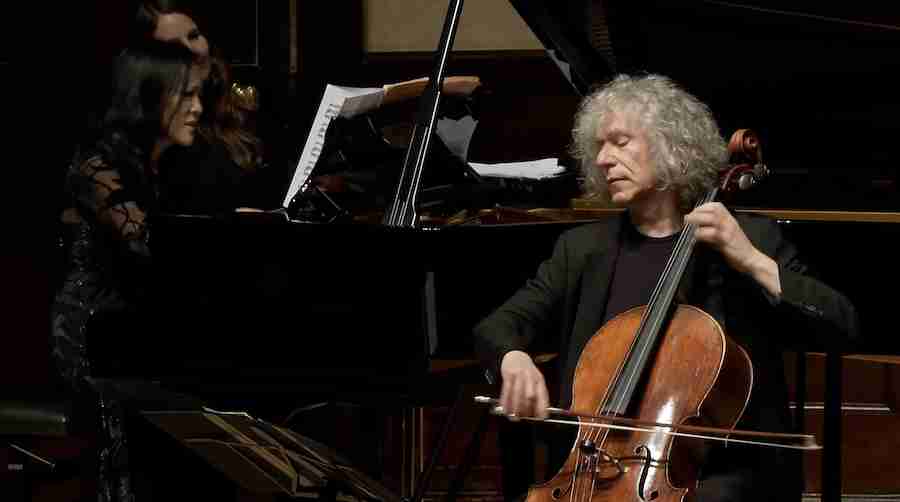

On a luminous evening at the historic 92nd Street Y, the Kaufmann Concert Hall appeared to breathe history and poetry. The chamber music concert by Steven Isserlis and Connie Shih was more than a performance—it was a genuinely human meditation, formed by remembrance, resilience, and the enduring voice of music. Focused intent, reflected in the program materials, set the evening apart from a standard recital.
In retrospect, the program’s architecture emerged. Each work honored artists defined by struggle—deafness, exile, illness, or untimely death. Yet Isserlis and Shih refused to dwell in sorrow; instead, these accounts became acts of affirmation. As Carl Dahlhaus writes on Romanticism, suffering refines artistic expression into something truer, more distilled. That idea lingered above the evening’s offerings.
Beethoven’s Wit and Wonder: Variations on “The Magic Flute”
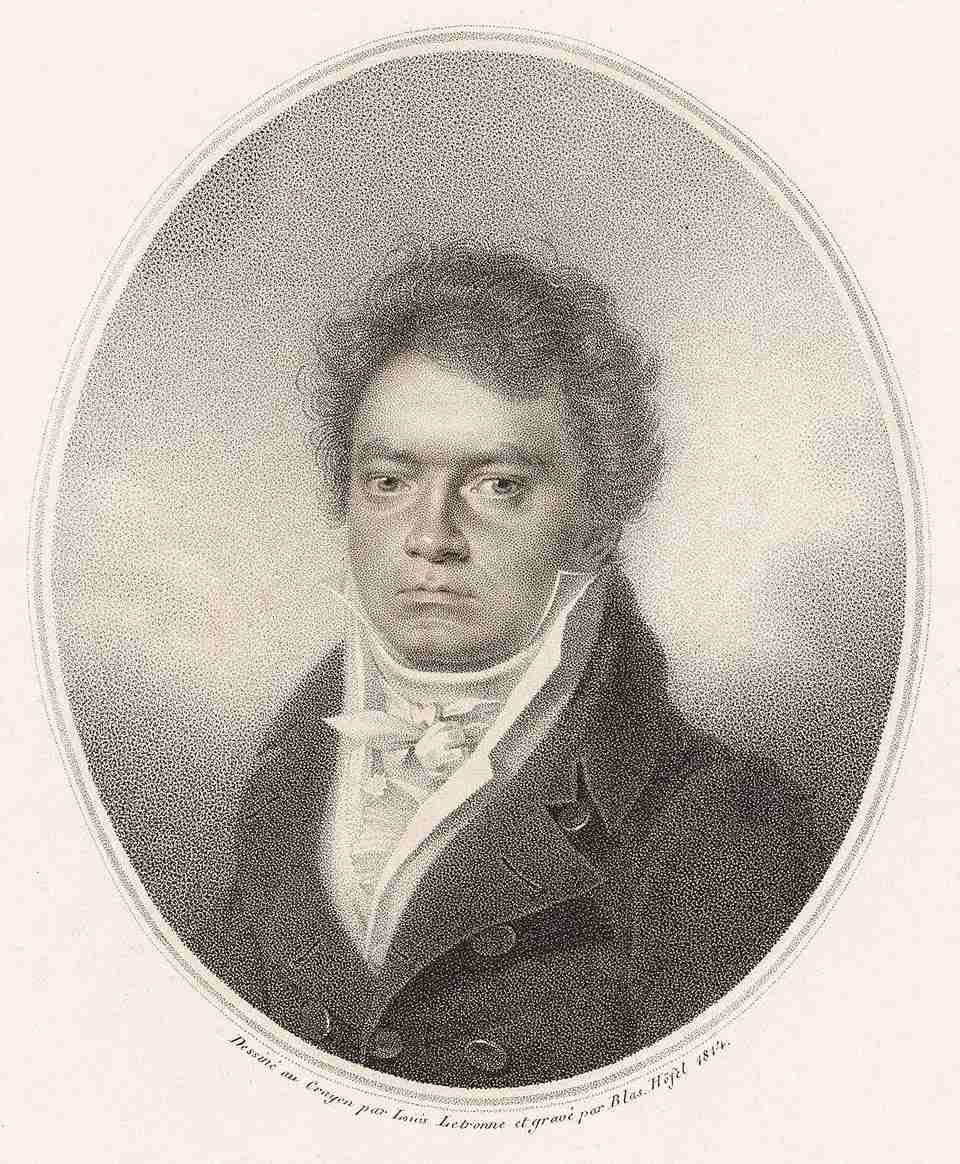
The recital opened with Ludwig van Beethoven’s 12 Variations on a Theme from The Magic Flute by Mozart—a piece integrating an eloquent musical commentary of practicality and imagination. Early in his career, Beethoven aimed to impress, particularly a cello-loving Prussian king. Yet the work shines with wit, invention, and structural poise.
A Balance of Delicacy and Spontaneity
From the opening phrase, Isserlis embodied all one hopes for in an artist of his stature: expressive, animated, virtuosic, and unpretentious. His phrasing possessed the cadence of speech—each variation felt freshly discovered. Shih was not purely an accompanist. She offered a finely etched framework, her articulation crisp and tonal palette luminous.
A memorable moment arose during the minor-key variation, when Beethoven’s music briefly becomes more reflective.
Isserlis evoked a quiet solemnity here, a subtle shadow in an otherwise lively venture. Even as a young man, Beethoven explored deep emotions. This performance showcased a balance of delicacy, effervescence, and spontaneity, as well as intellect and warmth, qualities often highlighted in erudite discussions of Beethoven’s music. A recent article by Benjamin Reissenberger and Eric Hoeprich explores the origins and performance practices of Schumann’s Fantasiestücke, Op. 73, granting further insight into the work’s expressive possibilities.
The Cello Became Less an Instrument and More a Voice
When the program shifted to Robert Schumann’s Fantasiestücke, Op. 73, the atmosphere changed to devotional rapture, exquisite joinings, and subtle expressive content. Composed in a year of intense creativity and political unrest, this work turns inward—it sings akin to musical monologues.
Isserlis’s tone was spellbinding—rich and burnished, yet able to dissolve toward whispers at the edge of audibility. The cello became less an instrument and more a voice: confiding, not proclaiming. Shih’s sensitivity was remarkable as she matched this intimacy, her phrasing breathing in tandem with Isserlis’s lines.

The performance evoked both Schumann’s troubled inner life and, to me, the heartbreaking legacy of Jacqueline du Pré, whose Romantic interpretations with Gerald Moore at the piano are landmarks of brilliance and emotional honesty. Like du Pré, Isserlis treated the music as something to fully experience, not just to perform.
The program materials suggested that these works speak in a language of inward reflection rather than outward display—a sentiment fully realized in this performance. Every phrase appeared to carry the burden of an implicit thought.
Kabalevsky, Rostropovich, and the Continuity of Tradition
With Dmitri Kabalevsky’s cello sonata, the mood became more dramatic. The sonata’s links to Mstislav Rostropovich and the unfinished work of Sergei Prokofiev gave it a clear sense of provenance beyond the score itself.
The Andante molto sostenuto began with dignity, its melodic lines unfolding patiently. Isserlis displayed artistic authority, letting tension build. Shih anchored the music with clearness and precision, ensuring structure even in volatile moments.
The dialogue between the cello and the piano was noteworthy. Instead of one leading, both instruments shaped and replied to each other. This approach matches music scholar Richard Taruskin’s idea of performance as a conversation between artists, past and present.
Kaprálová’s Voice: Fleeting and Enduring
The inclusion of Vítězslava Kaprálová’s Deux ritournelles offered one of the evening’s most poignant moments. A composer of extraordinary promise, Kaprálová died at 25, her career tragically cut short.
This late work carries a tonal freshness that belies its turbulent expressions. Traces of Poulenc’s wit and Copland’s clarity surface, and though Boulanger’s tutelage is audible, the voice remains unmistakably Kaprálová’s—its textures vibrant, its utterance direct, distinct, imaginative, and expressive.

Knowing that part of Kaprálová’s work was lost during wartime makes the surviving music even more poignant. What remains appears both full and incomplete—a glimpse of a voice history almost silenced.
Isserlis and Shih performed the piece with tenderness and vitality, allowing it to resound fully despite its brevity. In doing so, they briefly restored a voice that deserves to be heard.
Beethoven’s Expansive Vision: Sonata No. 3 in A Major
The evening closed with Beethoven’s Cello Sonata No. 3 in A Major, a landmark of chamber music. Written in his so-called “middle period,” it expresses a surge likely inspired by Beethoven’s confrontation with deafness.
From the cello’s unaccompanied opening, Isserlis established profound, effulgent expressivity—his sound, rich and vocal, carried intimacy and grandeur. When Shih entered, the partnership expanded, creating a sonic panorama of symphonic breadth.
Each movement unfolded inevitably. The scherzo sparkled, the slow movement was calm, and the finale surged joyfully. The duo balanced precision with spontaneity, structure with freedom.
Musicologist Donald Francis Tovey noted that Beethoven’s chamber works often turn grand symphonic ideas into more personal forms. This performance brought that insight to life. The effect wasn’t merely impressive; it was paradigm-shifting.
The Encore: Schumann’s Quiet Benediction
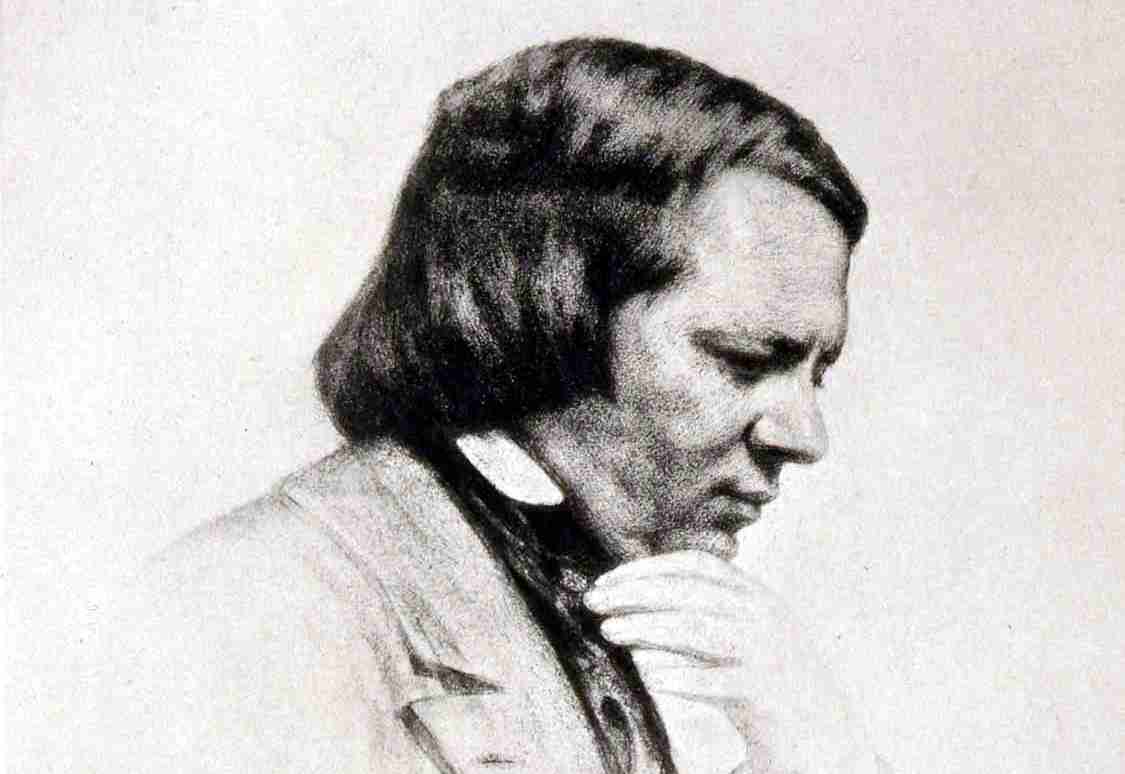
After an extended standing ovation—one that came across less like applause and more like collective gratitude—Isserlis and Shih returned for an encore of rare poignancy: Schumann’s Sängers Trost (“The Poet’s Comfort”), Op. 127 No. 1.
In context, this encore felt necessary. With its gentle triplets and elegiac lyricism, the piece offered a musical farewell. This musical denouement was consoling rather than mournful. Its imagery suggests a poet at rest, embraced by nature and peace beyond grief.
Isserlis played with exquisite restraint, graceful and glittering, poetic speech in song. The cello’s simple line felt sacred as Shih’s accompaniment shimmered with gentle elegance. There was no need for display—only sincerity.
In its brevity, the piece gathered the evening into a single exalted gesture. The program’s tragedies—Beethoven’s deafness, Schumann’s inner demons, Kaprálová’s early demise—were not erased, but gently transformed.
This was not a finale, but a benediction.
A Living Tradition: The Cello as Voice
What united the evening was not only its thematic coherence but its embodiment of a larger musical tradition. The cello, once a supporting instrument in Baroque ensembles, has evolved into one of the most expressive and sensually dazzling solo voices in Western music. Its timbre—so often compared to the human voice—makes it uniquely capable of articulating both anguish and hope through sheer melodic rapture.
Isserlis, both performer and scholar of irresistible magnetism, stands firmly within this lineage. The majesty and poetry of his playing show a nonpareil mastery of technique and history. He reminds us of the cello’s capacity in the artist’s hands to carry memory across the generations.
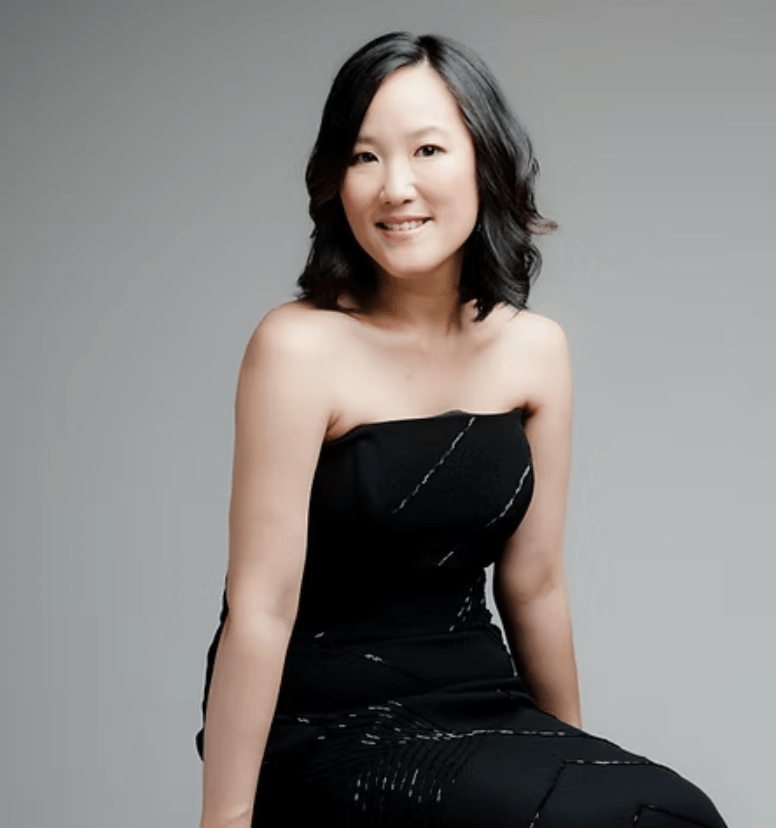
Shih was an ideal partner: attentive, imaginative, engaged. Together, they embodied chamber music’s essence—a ravishing collaboration and dialogue, not hierarchy or display.
Music as Memory, Memory as Music
This concert rose above performance; it became remembrance and a confirmation of art’s endurance. In a fragmented, noisy world, Isserlis and Shih offered rare coherence and beauty borne of afflatus and supreme artistry. As Schumann’s encore faded, it felt less an ending than a continued thread—uniting past to present, loss to renewal.
A Night of Resonant Memory: Steven Isserlis and Connie Shih at the 92nd Street Y
Concert Title: Steven Isserlis and Connie Shih Recital
Venue: 92nd Street Y
Address: 1395 Lexington Avenue, New York, NY 10128
Contact: (212) 415-5500
For tickets and season information, visit the official 92nd Street Y website and follow the ongoing international recital work of Steven Isserlis and Connie Shih through their respective artist platforms.