
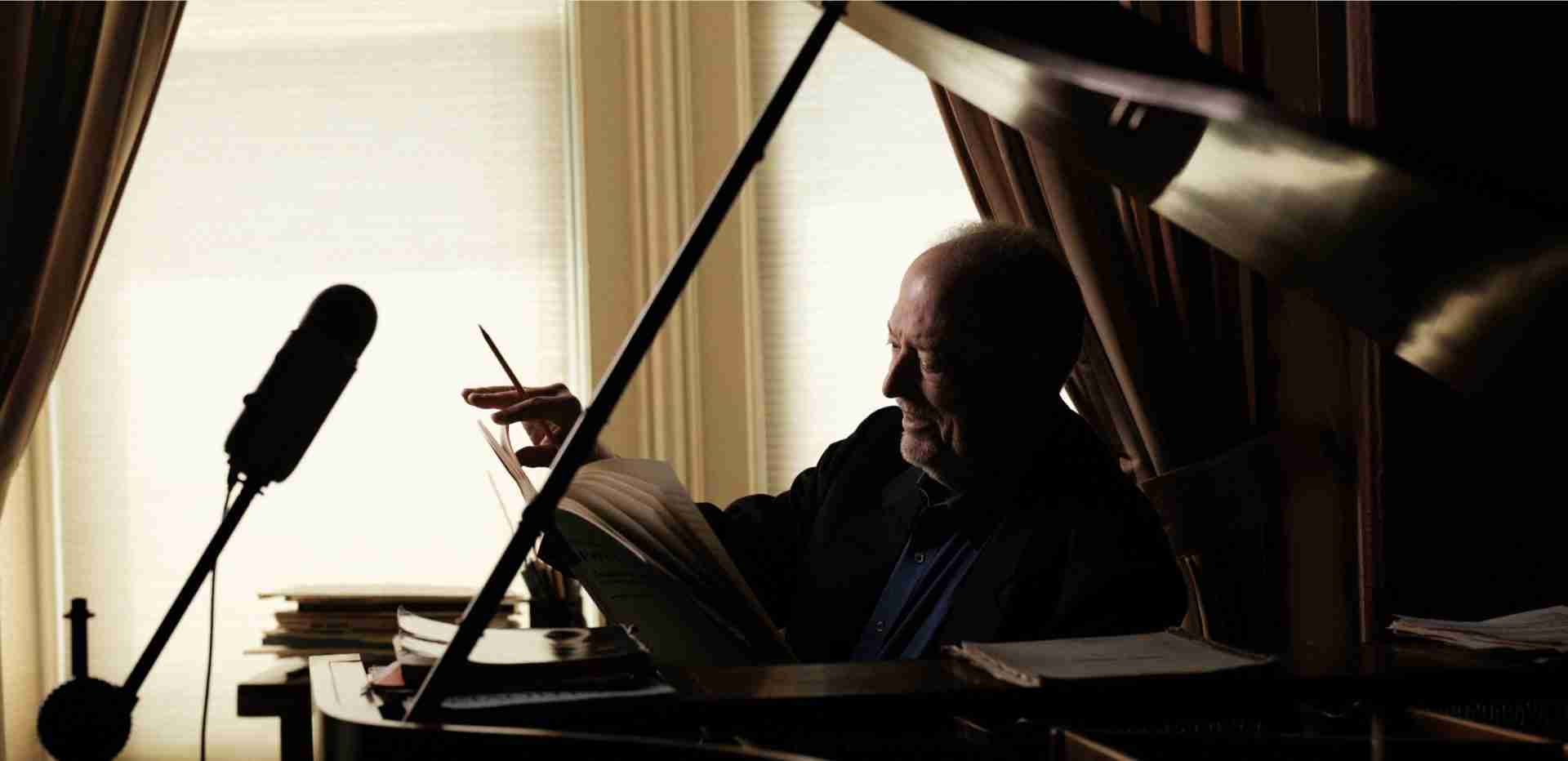
When Garrick Ohlsson struck the first note, one understood immediately that something extraordinary was about to unfold. So it was at the 92nd Street Y‘s historic Kaufmann Concert Hall, where Garrick Ohlsson opened the evening with Franz Schubert‘s Impromptu in C Minor, Op. 90, No. 1, D. 899 (1827). From the majestic opening gestures — those dotted rhythms rising with ceremonial gravitas — it was clear that Ohlsson intended nothing less than a philosophical meditation on Schubert’s singular genius.
Finesse of a Master Colorist
Ohlsson’s pianistic command, honed through decades of collaboration with the great Steinway concert grands he has championed since winning the International Chopin Competition in 1970, was magnificent and flawless. Each theme emerged with radiant phrasing, every dynamic subtlety balanced with the finesse of a master colorist. The hall’s meticulously maintained Steinway concert grand — touch-up tuned during intermission with characteristic care — sang under his hands with a burnished, bell-like clarity that filled the intimate space. One recalled, in these moments, what the philosopher Theodor Adorno once suggested: that Schubert’s music occupies a landscape of wandering, a terrain where beauty and melancholy are indistinguishable.
Two Souls in Dialogue: The Schubert Lieder and Arpeggione Sonata
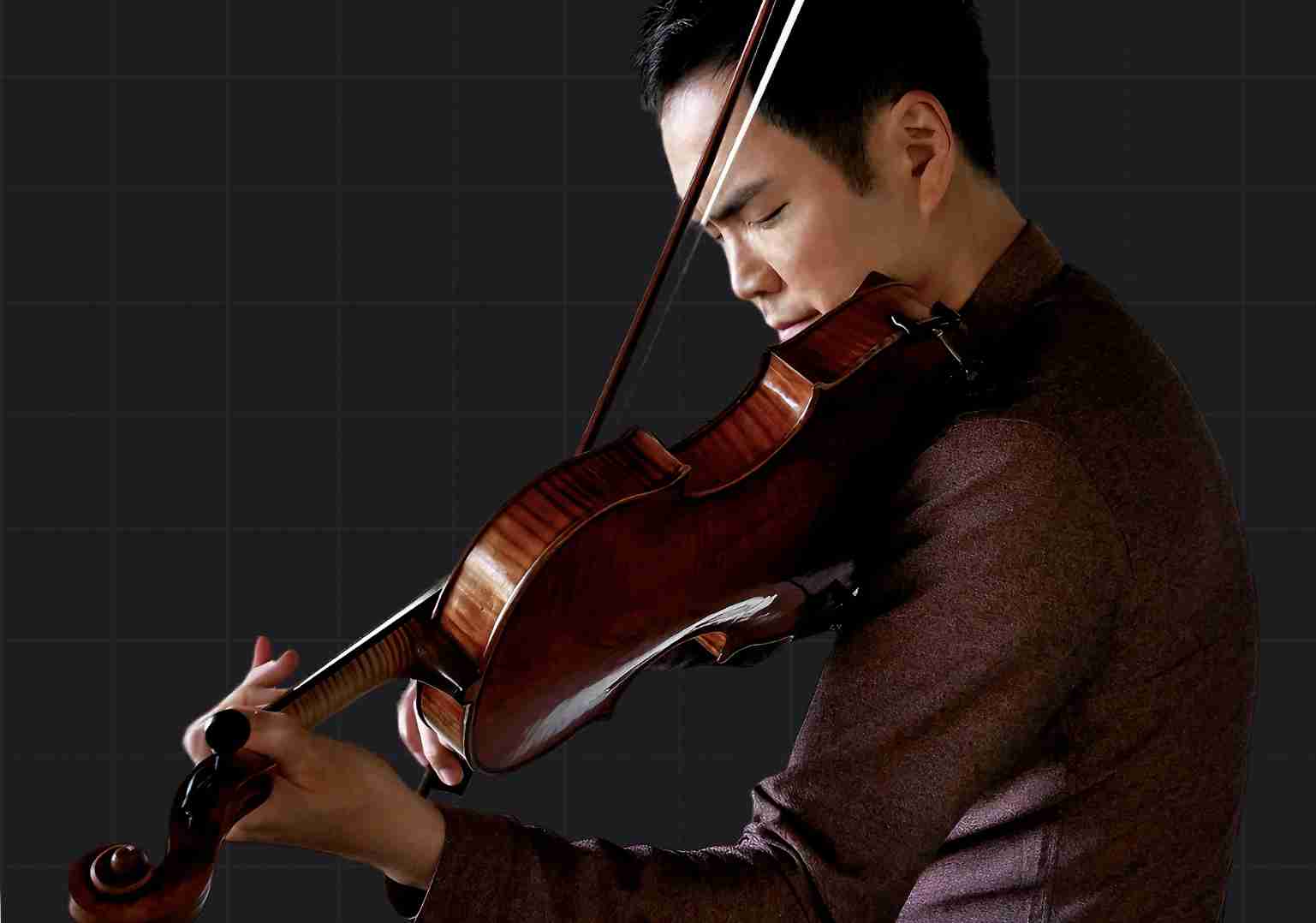
Richard O’Neill, the Grammy and Emmy Award-winning violist of the Takács Quartet, then joined Ohlsson for two of Schubert’s most beguiling Lieder, arranged here as wordless songs for viola and piano. In “Du bist die Ruh,” Op. 59, No. 2, D. 776 (1823) — that exquisite setting of Friedrich Rückert’s devotional love poem — O’Neill’s rich, velvety tone was evident from the very first bow stroke, capturing the sonic poetry of the music with an eloquence that transcended the absence of text. His playing was at once beautiful and deeply expressive, each phrase shaped with a cantabile warmth reminiscent of the finest Lieder singers.
Meeting of Artistic Minds and Kindred Musical Souls
Subsequently, in “Nacht und Träume,” Op. 43, No. 2, D. 827 (1825), O’Neill’s sublime control and expressivity proved altogether mesmerizing. The oscillating piano figurations, those active undulations Schubert deployed to energize his extraordinarily long, arcing melodic lines, flowed beneath O’Neill’s viola like moonlit water beneath a bridge. Ohlsson, for his part, was virtuosic yet wonderfully collaborative — a true meeting of artistic minds and kindred musical souls. The music arrived not as sound alone but as sensation, as the feeling of dusk settling over a familiar landscape.
Pure Schubertian Song
The first half concluded with the Sonata in A Minor, Op. Posth., D. 821, the beloved “Arpeggione” (1824), originally composed for an obscure hybrid instrument that combined the tuning of a guitar with the bowing technique of a cello. Here, the duo performed in impeccable ensemble, navigating the slurred leaps and arpeggiated passages with seamless unanimity. The central Adagio, pure Schubertian song channeled through the viola’s dusky timbre, was heartbreakingly tender, while the rustic finale bounded forward with an infectious, folk-inflected energy. Throughout, O’Neill — performing on one of his rare instruments, a Matteo Goffriller viola crafted in Venice in 1727 — demonstrated why the Juilliard School honored him as the first violist ever to receive its Artist Diploma, and why the Chamber Music Society of Lincoln Center has long counted him among its most treasured artists.
Crossing the Stylistic Rubicon: From Schubert to Rachmaninoff
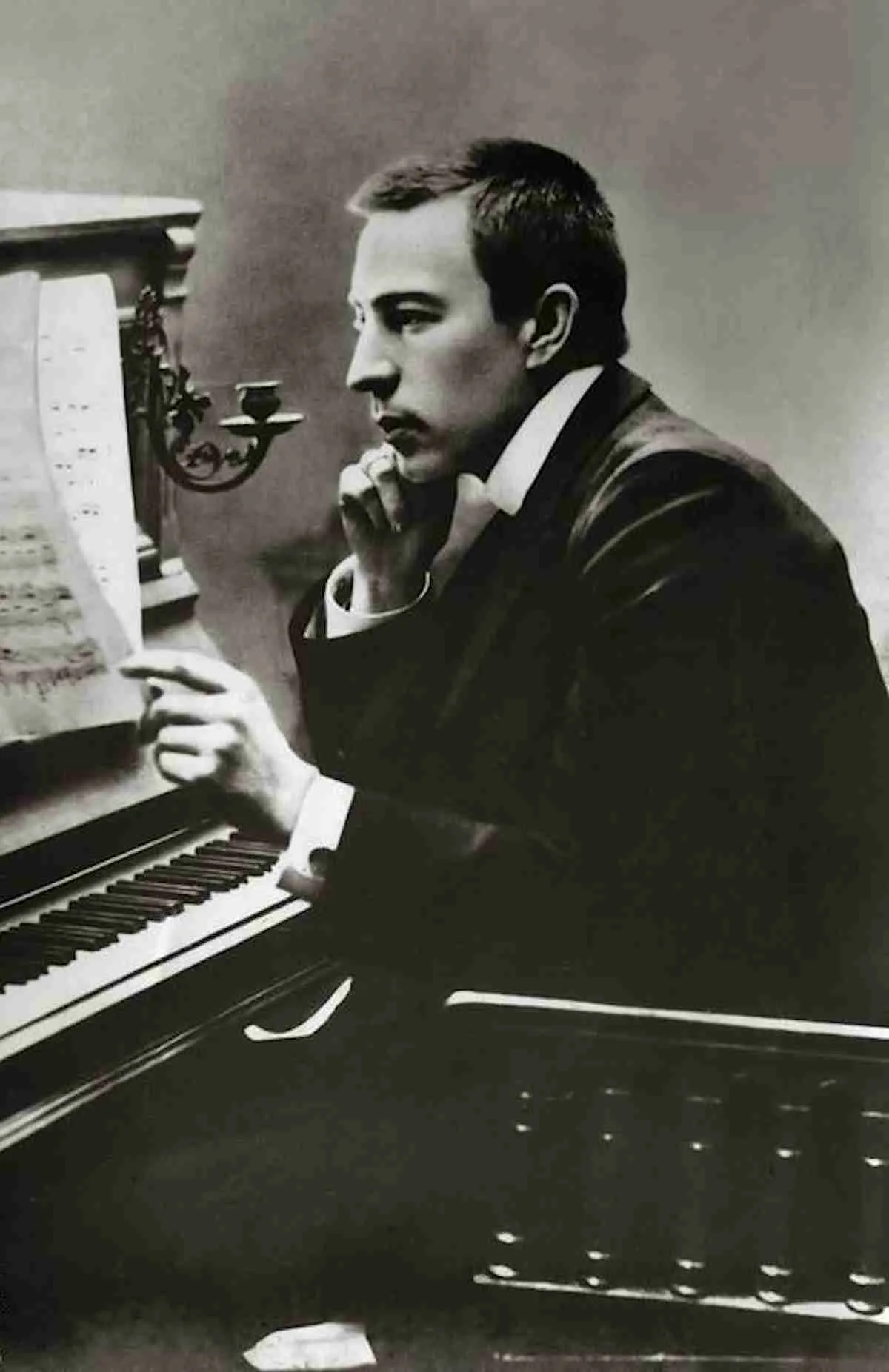
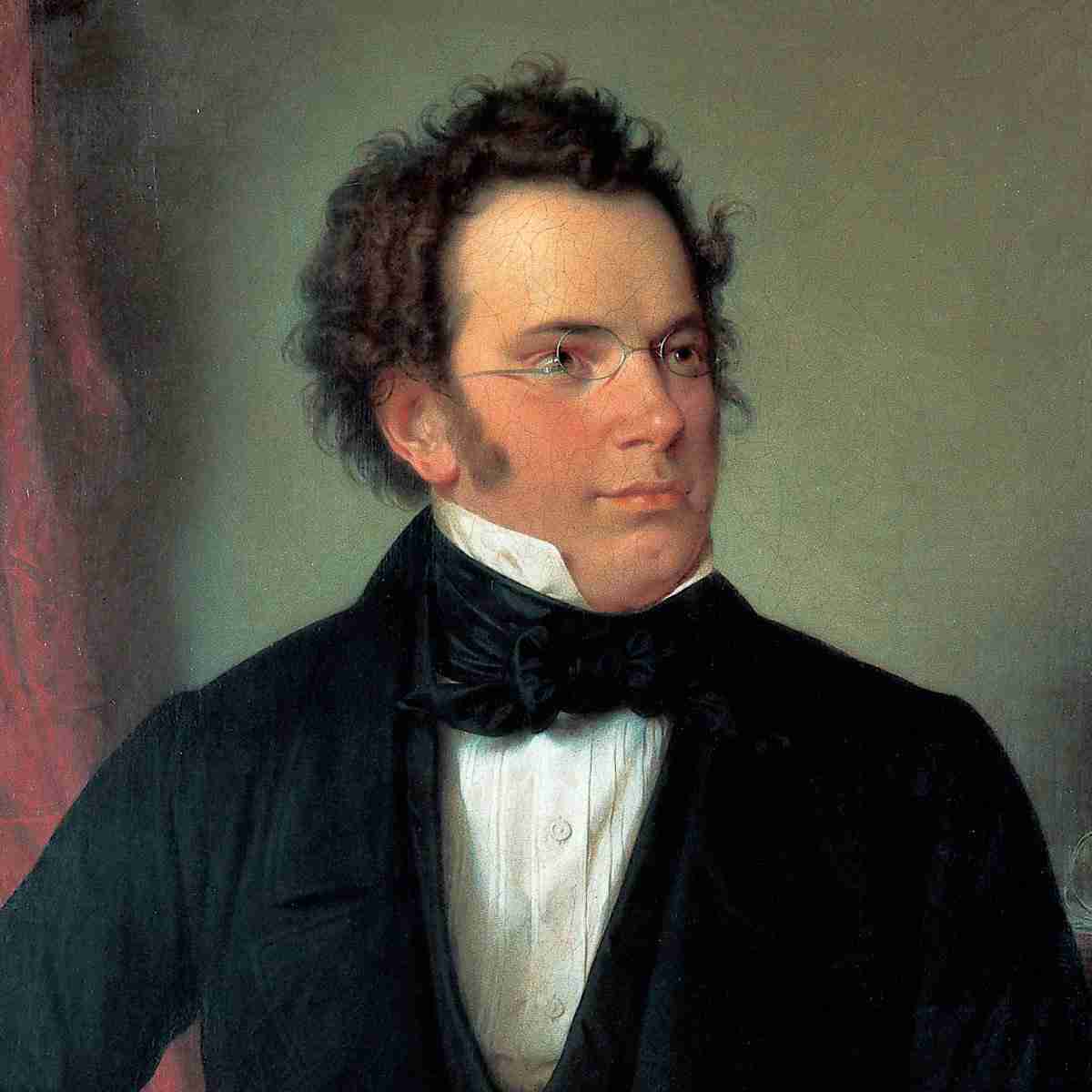
One of the evening’s most intellectually stimulating aspects was the programmatic journey itself — the leap from Schubert’s early nineteenth-century Viennese lyricism to the dense chromaticism and unabashed Romanticism of Sergei Rachmaninoff. Consider the span: Schubert, who died in 1828 knowing nothing of the harmonic upheavals to come, and Rachmaninoff, who composed well into the twentieth century while remaining gloriously impervious to the atonal experiments of the Second Viennese School. Where Schoenberg dismantled tonality, Rachmaninoff deepened it, expanding the Romantic tradition’s emotional vocabulary without abandoning its tonal foundations.
A Conversation Between Eras
The effect of juxtaposing these two composers was refreshing and profoundly stimulating, illuminating how the thread of lyrical expression stretches, unbroken, across a century of seismic musical change. As Leonard Bernstein once eloquently argued, the best concert programming creates not merely a sequence of works but a narrative — a conversation between eras that reveals unexpected kinships.
Ohlsson’s Rachmaninoff: Grandeur, Passion, and Fire
After intermission, Ohlsson returned alone for Rachmaninoff’s Études-Tableaux in E-flat Minor, Op. 39, No. 5 (1917), one of the last works the composer penned before exile forced him from Russia forever. Ohlsson’s interpretation was superb in every dimension — he expressed the grandeur, the virtuosity, and above all the smoldering passion so characteristic of Rachmaninoff’s pianistic canon.
Intelligence and Structural Clarity
The incredibly rich and dense textures of this étude-painting demanded extraordinary technical command, and Ohlsson delivered with a grand finesse that illuminated form, mood, and dramatic contrast in equal measure. One sensed the pedagogical lineage at work: Ohlsson, a student of the legendary Claudio Arau, bringing to Rachmaninoff the same searching intelligence and structural clarity that defined his mentor’s art. Furthermore, the hall’s exemplary acoustics — a hallmark of the 92nd Street Y since its founding in 1874 by visionary Jewish community leaders — allowed every pianistic detail to register with crystalline precision.
The Rachmaninoff Sonata: A Summit of Collaborative Artistry
The evening’s culmination arrived with Rachmaninoff’s Sonata in G Minor, Op. 19 (1901) for viola and piano, composed in the first flush of the composer’s creative recovery following his legendary hypnotherapy sessions. The Lento opening was dramatic and expansive, with broad chords and sweeping phrases that unmistakably announced the exquisite character of late Romantic musical thought. Once more, O’Neill’s control, finesse, and extraordinary richness and beauty of sound proved remarkable — his viola sang with a transcendent luminosity that matched the virtuosic demands of Rachmaninoff’s piano partnership note for note, phrase for phrase. Together, this world-class duo brought every expressive element to the foreground with the assurance of musicians operating at the very summit of their art.
Operatic Emotional Depth
The ensuing Allegro blazed with fire, soaring melodies cascading over virtuosic accompaniment in passages that seemed almost cinematic in their sweeping grandeur. Indeed, a fleeting thought arose: certain passages in Rachmaninoff’s oeuvre seem to reflect the evolutionary arc of Chopin’s own compositional journey — that same marriage of pianistic brilliance with an almost operatic emotional depth. The Andante movement, by contrast, offered more of Rachmaninoff’s characteristic pathos — that unmistakable sonic beauty, at once lush and restrained, that hovers somewhere between melancholy and transcendence.
Compelling Chamber Musicians
Finally, the Allegro mosso opened in grandiose fashion, expressing the composer’s extraordinary rhythmic, harmonic, and melodic craftsmanship with an authority that left no doubt: O’Neill and Ohlsson are, individually and collectively, among the most compelling chamber musicians performing today. As Harold Schonberg might have noted in one of his magisterial New York Times reviews, the hallmark of great collaborative music-making is not uniformity but the capacity of two distinct artistic temperaments to arrive, through dialogue, at something neither could achieve alone.
An Encore to Remember: The Vocalise
After an extended, deeply felt standing ovation — the audience rising almost as one — the pair returned with a final gift: Rachmaninoff’s exquisite “Vocalise,” adapted from its original vocal setting into a wordless viola and piano meditation of aching beauty. It was, in every sense, the perfect coda to an evening that had traced the arc of Romantic expression from Schubert’s intimate lyricism to Rachmaninoff’s symphonic grandeur. The audience departed into the Upper East Side evening carrying, one suspects, the kind of interior luminosity that only the greatest music-making can bestow.
The 92nd Street Y: A Legacy of Excellence
It bears noting, finally, that evenings like this do not happen by accident. The 92nd Street Y, founded over 150 years ago, has long sustained a tradition of presenting the world’s finest performing artists in its intimate, acoustically superb Kaufmann Concert Hall. Its programming reflects a mission rooted in the conviction that the arts possess the power to enrich, enlighten, and transform lives — and that the gathering of a community around shared aesthetic experience is itself an act of profound cultural significance. In an era when such convictions are too often treated as quaint, the 92nd Street Y remains a vital and irreplaceable institution, a beacon on Lexington Avenue where the life of the mind and the life of the heart converge with uncommon grace.
Richard O’Neill and Garrick Ohlsson Deliver Musical Transcendence at the 92nd Street Y
The 92nd Street Y, New York (92NY)
Address: 1395 Lexington Avenue, New York, NY 10128
Phone: (212) 415-5500
Website: www.92ny.org
Current Season Tickets: 92NY 2025–2026 Season Calendar & Tickets
Support 92NY: Donate to the 92nd Street Y
Richard O’Neill — Official Website & Upcoming Concerts: www.richardyongjaeoneill.com
Garrick Ohlsson — Official Website & Upcoming Concerts: garrickohlsson.com
Takács Quartet: www.takacsquartet.com