


The Chain Theatre is where Nashville meets Manhattan in a spirited musical comedy.
In the grand tradition of theatrical commentary upon the human condition, one finds oneself contemplating the peculiar phenomenon of contemporary romantic entanglements as presented in Dax Wiley and Kit Nolan’s Oil & Whiskey, a country-western musical romp that delivers considerable material for philosophical rumination. Like George Bernard Shaw’s own observations on the marriage question in his prefaces, this production tackles the modern malaise of extended singlehood with the kind of sardonic wit that recalls Seinfeld‘s dissection of urban relationship neuroses—though here set to the twang of steel strings and the clink of whiskey glasses.
Here’s a quick look:
View this post on Instagram
The Prelude: Musical Portents in the Gathering Dark
As the audience settled into The Chain Theatre‘s intimate embrace on West 36th Street, the sound system offered its own subtle overture to the evening’s themes. Cassandra Coleman’s “Bite My Tongue” drifted through the space—that achingly contemporary meditation on restraint and the words we dare not speak—followed by Haim’s “Summer Girl,” with its wistful evocation of fleeting romance and nostalgic longing. These musical selections proved no arbitrary choices but rather a carefully curated preface to the evening’s central inquiry: What do we say? What do we hold back? And how do we navigate the treacherous territory between honesty and self-preservation?

The juxtaposition of Coleman’s indie-folk introspection and Haim’s shimmering pop sensibility established the production’s own aesthetic territory—somewhere between raw emotional confession and polished theatrical entertainment. Like the programmatic music of the Romantic era, where Berlioz and Liszt used instrumental sound to narrate specific stories, these pre-show selections functioned as emotional guideposts, preparing the audience for a narrative steeped in unspoken desires and the particular anguish of knowing exactly what one should say while being constitutionally unable to say it. One immediately recognized that this would be an evening concerned not merely with romance, but with the elaborate dance of advance and retreat that characterizes modern courtship—where “biting one’s tongue” becomes both a survival mechanism and a tragic flaw.
The Dramatis Personae: Young Hearts in an Old Dance
The premise is deceptively simple: Zelda and Teddy, former lovers separated by time and geography, reconvene in a Lower East Side watering hole for what promises to be either reconciliation or final rupture. Director Adam Jepsen has assembled a quartet of performers whose energetic commitment to the material transforms what might have been a mere romantic trifle into something approaching a genuine theatrical inquiry into the nature of attraction, regret, and the human capacity for self-deception.
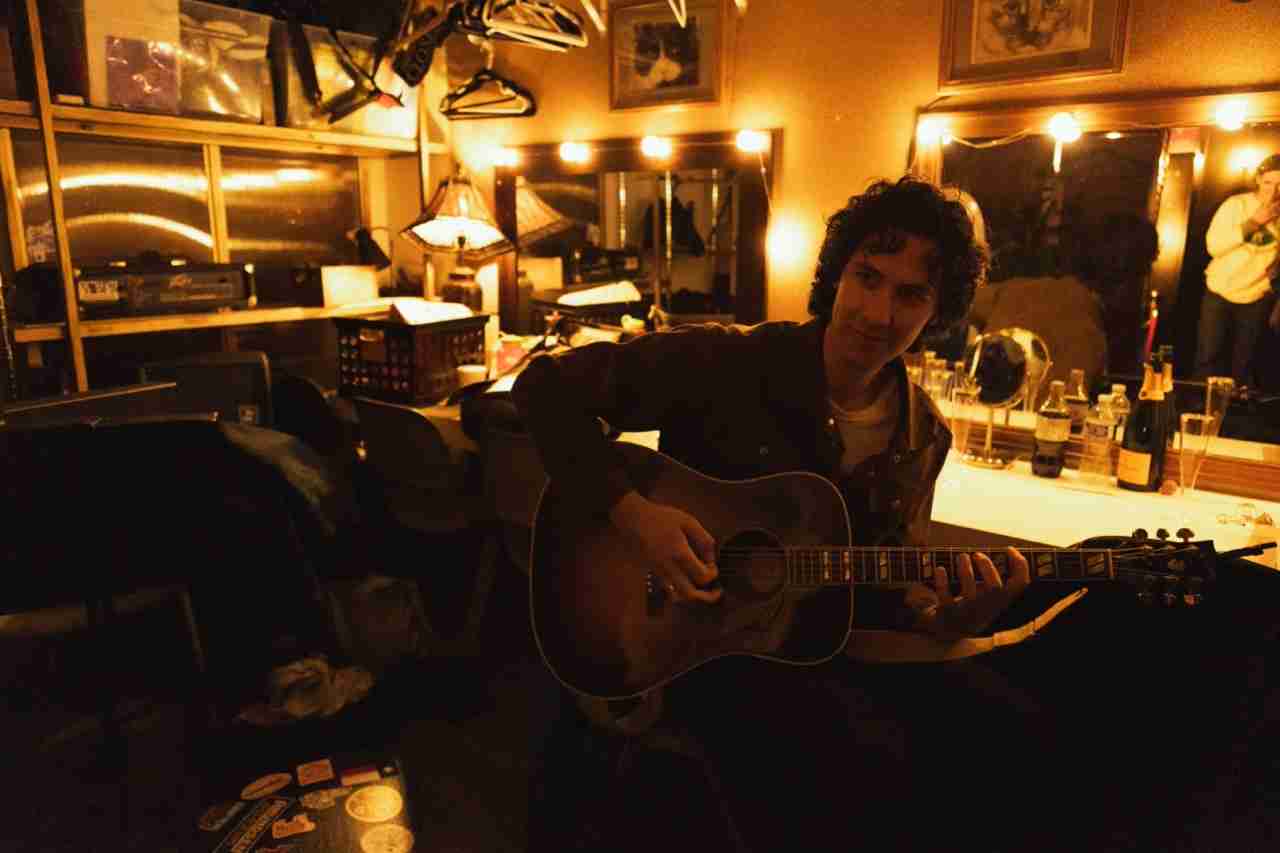
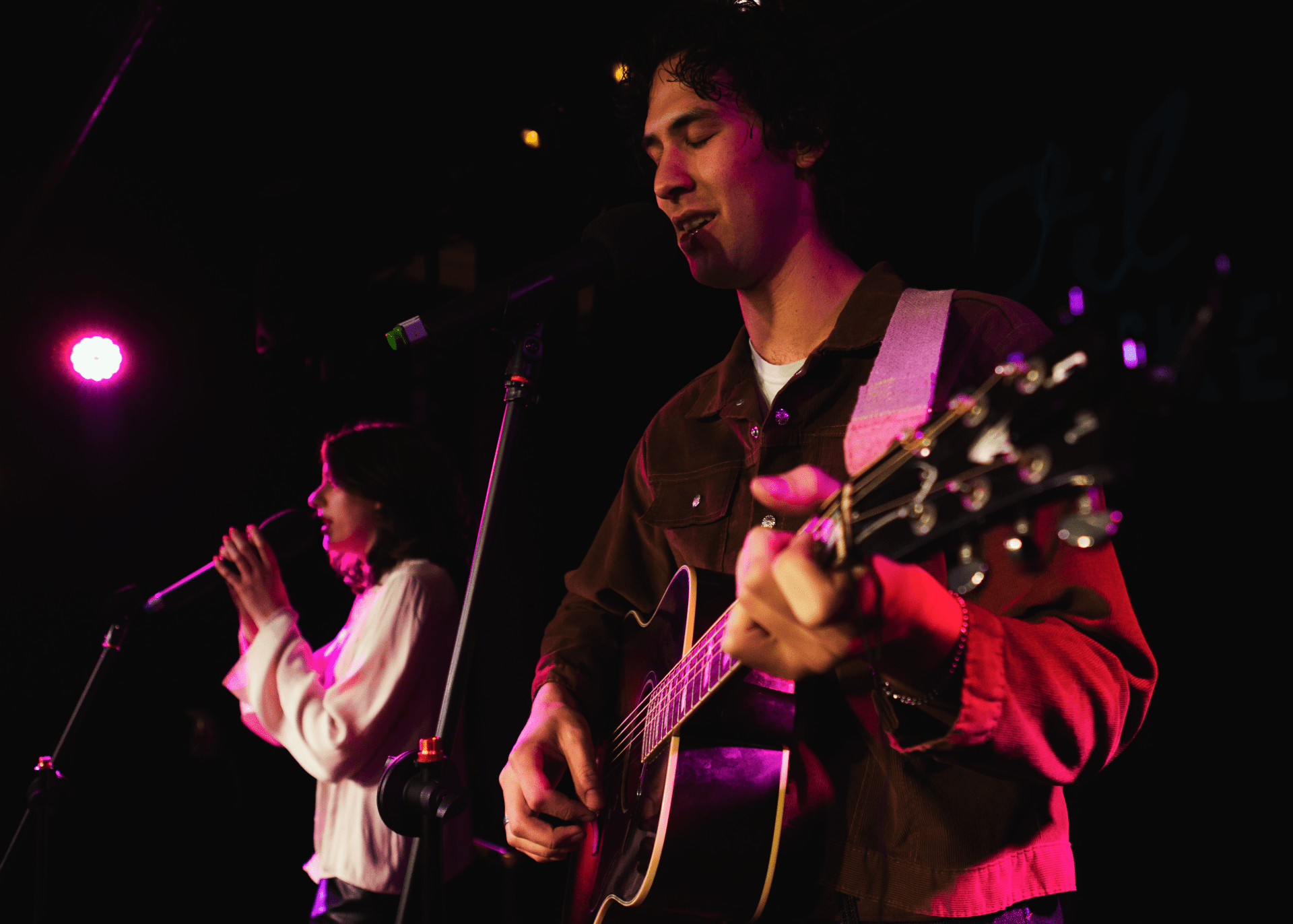
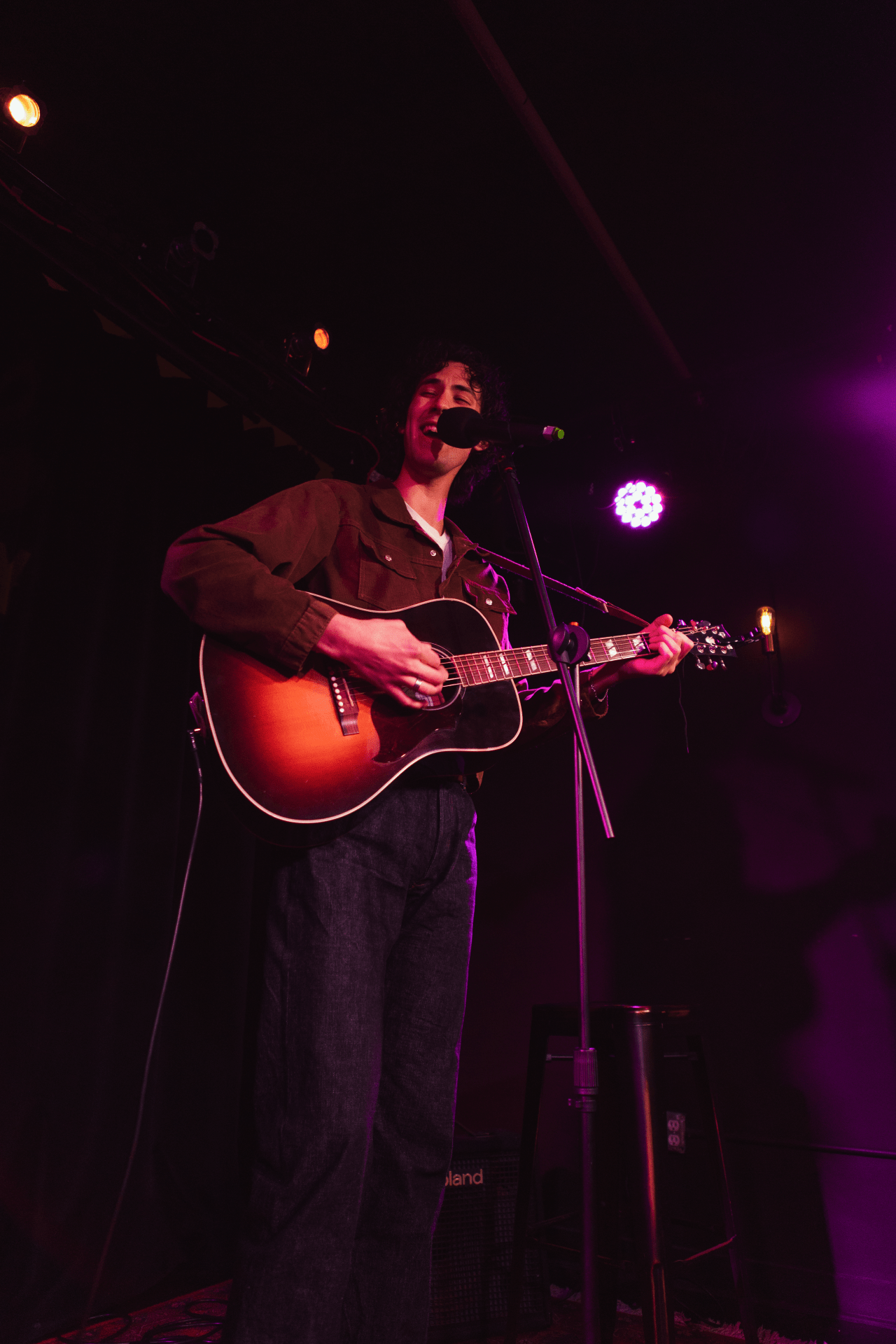
Isabel Stewart as Zelda delivers a performance of considerable charm and emotional nuance, her vocal work navigating the score’s demands with the kind of technical assurance that suggests serious training (indeed, her recent graduation from UNCSA’s drama program is evident). Opposite her, Jater Webb embodies Teddy with a particular masculine insouciance that makes such characters simultaneously infuriating and irresistible. Webb’s dual role as both actor and guitarist—seamlessly integrating his instrumental work with the three-piece pit ensemble on stage—demonstrates a musicianship that serves the character’s Nashville aspirations while grounding the performance in genuine artistry.
The Sage and the Sentinel: Supporting Players of Distinction
The production’s secret weapons prove to be Tanner McIntyre as Bree, Zelda’s protective roommate, and Levi Penley as Ray, the bar’s proprietor and unofficial Greek chorus. McIntyre brings a knowing skepticism to her role that recalls the sharp-tongued confidantes of Restoration comedy, while Penley’s Ray emerges as a figure of almost Shakespearean proportion—part Falstaff, part Puck, wholly committed to comedic exuberance. His featured number, “A Lone Star Cowboy,” provided moments of pure theatrical delight, the kind of showstopping digression that, like the great programmatic compositions of the symphonic tradition, tells its own complete story while advancing the larger narrative.
The Musical Architecture: Country Music as Emotional Cartography
Nolan’s score demonstrates a sophisticated understanding of country music’s narrative traditions, evoking everything from honky-tonk heartbreak to bluegrass jubilation. The opening number “Jealous” establishes the central conflict with admirable economy, while “Seein’ You’s Like Drinkin’ Whiskey” offered one of the evening’s most affecting sequences—a meditation on intoxication both literal and metaphorical that would not have been out of place in the Great American Songbook.
The three-piece band, anchored by the outstanding guitar work of Andrew Miramonti on electric guitar and piano, provided muscular yet sensitive accompaniment throughout. Makani Eliot’s drumming and Cody Rahn’s bass work created a rhythmic foundation that never overwhelmed the vocalists—a delicate balance often lost in intimate theatrical spaces. Miramonti’s instrumental interludes and lead guitar particularly shone, his virtuosity recalling the kind of sophisticated country-rock fusion that emerged from Nashville’s more adventurous studios in recent decades.

Scenic Evocation and Sartorial Splendor
The production design evoked a peculiar intersection of country authenticity and urban irony—cowboy boots on a Manhattan stage being no small feat of atmospheric conjuring. One was reminded of those glorious moments in The Blues Brothers when Ray Charles transformed a mere music shop into a temple of soul, or of the way certain establishments can exist as portals between worlds. The Chain Theatre on West 36th Street, that exemplar of off-Broadway intimacy, proved the ideal venue for such alchemy. In this black-box configuration, the audience becomes complicit in the action, close enough to register every knowing glance and whispered aside—an immersion impossible in larger commercial houses where distance breeds detachment.
The Philosophical Core: Love in the Age of Deferral
What elevates Oil & Whiskey beyond mere romantic comedy is its engagement with a peculiarly contemporary phenomenon: the extended adolescence of modern courtship. Like Seinfeld’s characters perpetually circling commitment, Zelda and Teddy represent a generation for whom marriage and permanence remain perpetually deferred possibilities. Wiley’s book, while maintaining comic velocity, never condescends to its characters’ struggles. The recurring motif of failed reconciliation—examined through numbers like “The Fight” and the poignant “Oil & Water”—suggests that some incompatibilities transcend good intentions.
There exists in Shaw’s dramatic criticism a persistent interest in what he termed “the life force”—that biological and emotional imperative that drives human pairing despite all rational objection. Oil & Whiskey examines this force through the lens of contemporary ambivalence, where passion and practicality wage perpetual war. The production’s refusal to offer easy answers, its acknowledgment that some loves are better appreciated from a distance, demonstrates a maturity uncommon in the romantic comedy form.
Technical Mastery in Service of Story
Sheridan Glover’s work as technical director deserves particular commendation—the lighting designs created distinct emotional territories within the space’s intimate confines. The transitions between memory and present action, between public performance and private confession, were managed with admirable clarity. In a production where the band occupies the same visual field as the actors, such technical precision becomes essential to narrative coherence.
The ensemble’s energy never flagged across the evening’s two acts, maintaining the kind of commitment that transforms written comedy into lived experience. Audience laughter and audible sympathy—that most honest barometer of theatrical success—remained constant throughout, suggesting that whatever philosophical questions the piece raises, it never forgets its primary obligation to entertain.
A Contemporary Classic in Formation
One departed The Chain Theatre in Manhattan’s Garment District, contemplating not only the specific romantic travails of Zelda and Teddy, but the larger question of how we navigate desire in an age of infinite possibility and perpetual deferral. The production suggests that perhaps the country music tradition—with its unflinching examination of heartbreak, its celebration of resilience, its recognition that some wounds never fully heal—offers as valid a framework for understanding modern love as any contemporary psychological theory.
Oil & Whiskey: A Country Music Meditation on Modern Romance
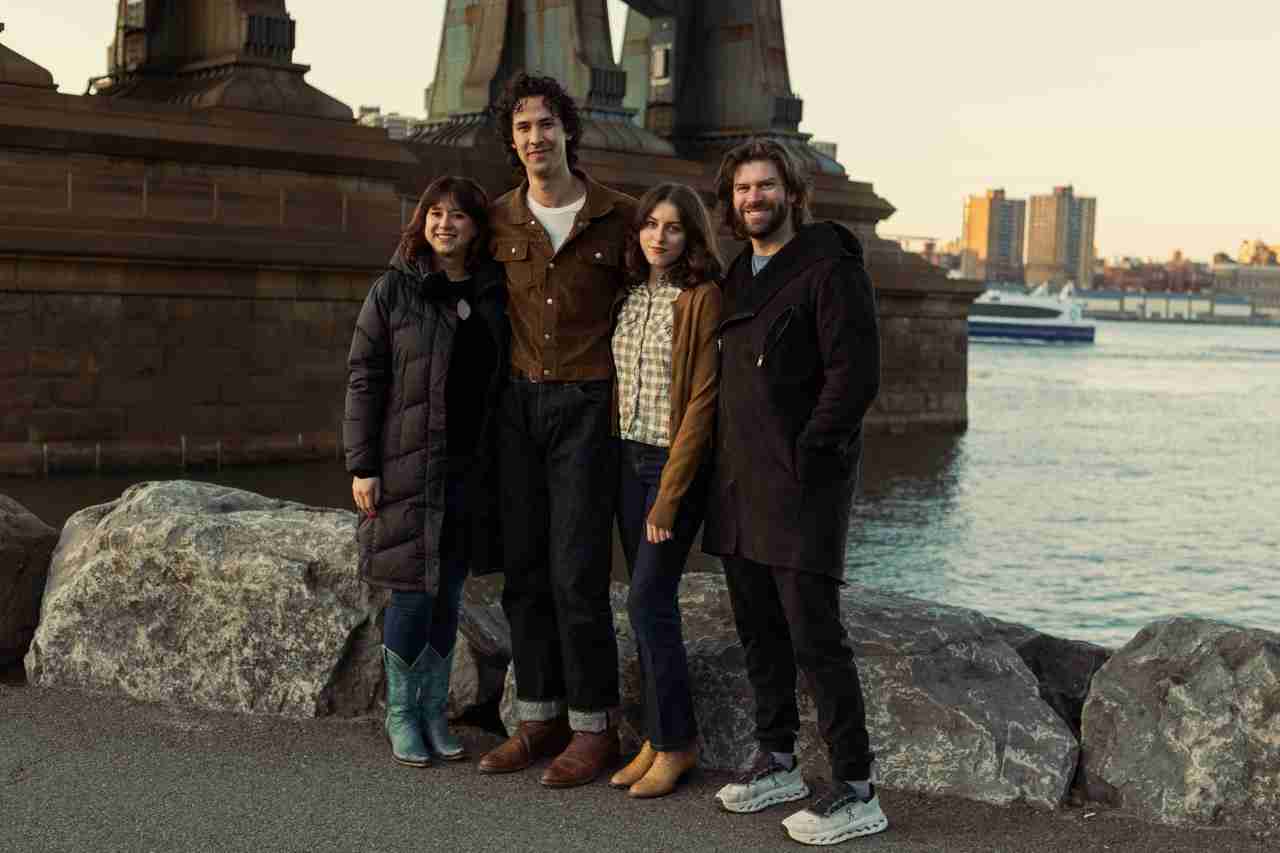
CAST:
- Zelda: Isabel Stewart
- Teddy: Jater Webb
- Bree: Tanner McIntyre
- Ray: Levi Penle
ARTISTIC TEAM:
- Book & Lyrics: Dax Wiley
- Music: Kit Nolan
- Director: Adam Jepsen
- Technical Director: Sheridan Glover
- Drums: Makani Eliot
- Guitar/Piano: Andrew Miramonti
- Bass: Cody Rahn
THEATRE: The Chain Theatre, West 36th Street, Manhattan, New York
Runtime 80 minutes without intermission. Some adult content.
One Response
Your description of Whiskey & Oil was not only spot on but poetic! Looking forward to this show one day soon hitting Broadway and receiving all the accolades necessary to have audiences running to see it! It was truly SO very good! A+ to all involved and hoping this play receives the necessary support to go ALL the way!