NEW YORK – The American Symphony Orchestra Performs Schoenberg’s Gurre-Lieder.
Opulent, Magnificent Masterpiece
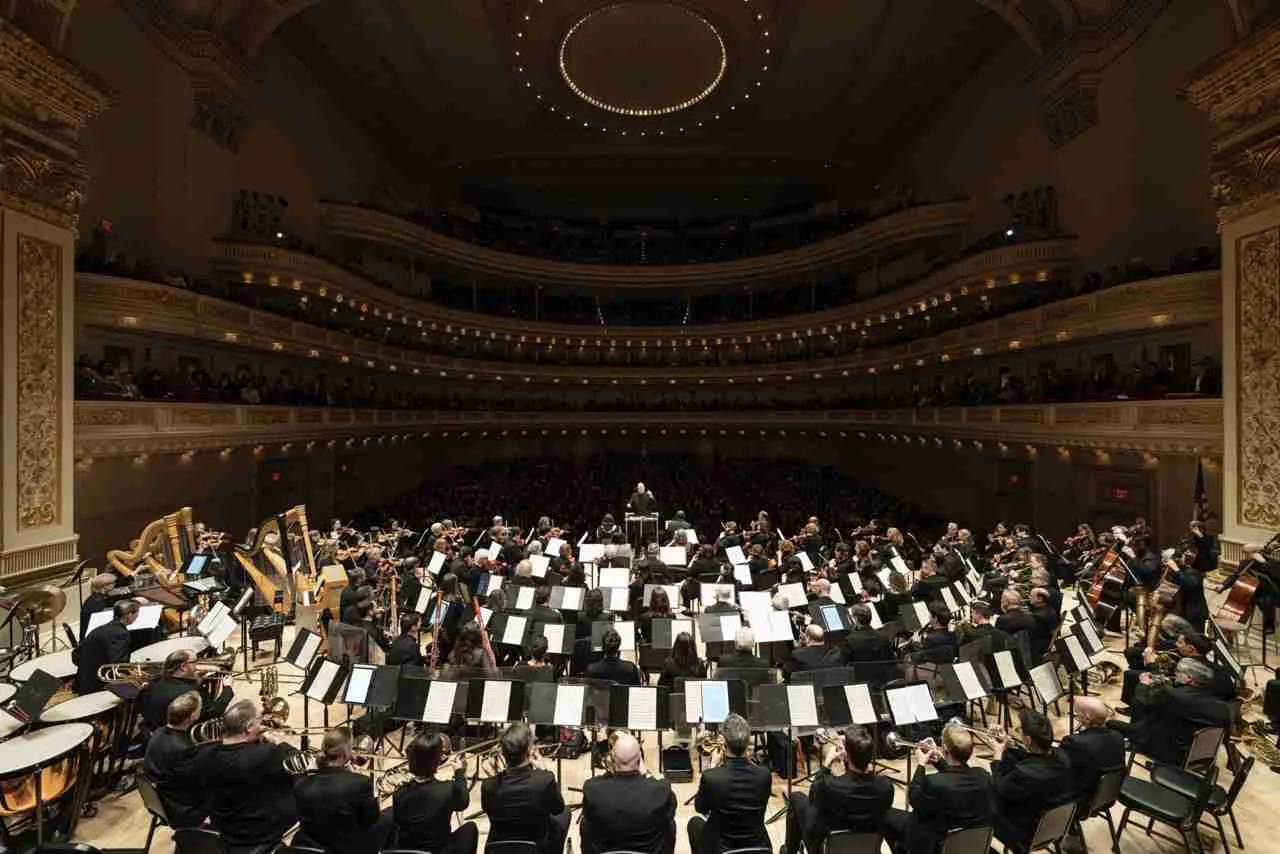
With splendid soloists, the American Symphony Orchestra and the Bard Chorale joined forces and filled Carnegie Hall. Packed onto the stage was a magnificently large orchestra crafted to project Schoenberg’s opulent, magnificent masterpiece rarely heard in this prodigious New York venue. Maestro Leon Botstein and the ASO have again marveled an audience with world-class artists and carefully curated musical works well beyond the three B’s (Bach, Beethoven, and Brahms).
Idyllic Adulation
In Gurre-Lieder, listeners enjoy music expressing a range of moods, from moments of idyllic adulation to glorious cinematic soundscapes and sublime operatic dimensions. How delightful that the ASO presented Gurre-Lieder, a work that emerged as a surprise to most people with its opulent 19th-century Romanticism.
Second Viennese School
Particularly notable to most people about Schoenberg’s oeuvre work was his focus on serialism and expressionist subjects. You may recall him as the leader of the Second Viennese School, which included Alban Berg and Anton Webern. Most music fans are better familiar with Schoenberg’s expressionist works where he invoked dodecaphonic structures as he abandoned traditional tonality.
Emotional Tumult
In two of his famed works, “Pierrot Lunaire” (1912) and “Five Pieces for Orchestra” (1909), Schoenberg explored the use of atonal melodies, where traditional notions of key and harmonic resolution were eschewed. This departure from tonality allowed Schoenberg to create music that evoked dissonance, tension, and ambiguity, reflecting the emotional tumult of the Great War era. Other mainstay works of Schoenberg include “Verklärte Nacht” (Transfigured Night), Op. 4 (1899), “Erwartung” (Expectation), Op. 17 (1909), “Die Glückliche Hand” (The Lucky Hand), Op. 18 (1913), and Moses und Aron (Moses and Aron, Op. 7. (1912).
Monumental and Grandiose
Immediately apparent was the immense orchestra required for Gurre-Lieder. Schoenberg, like Mahler, Bruckner, and Wagner, pushed the boundaries of orchestration to create music requiring significant numbers of musicians to perform, resulting in some of the most monumental and grandiose works in the repertoire—indeed, such a work was presented tonight! Thank you Maestro Botstein!
Tragic Love Story – Another Doomed Couple
In tonight’s concert marking the 150th Anniversary of Arnold Schoenberg’s birth, the monumental Gurre-Lieder was commemorated 100 years after its creation. Gurre-Lieder is based on a Danish legend retold in German by the poet Jens Peter Jacobsen. It depicts the tragic love story of King Waldemar and Tove and their love, betrayal, and inevitability of fate despite defiance against the forces of nature. Audiences love doomed couples, and tonight was no exception. Readers are likely familiar with Prokoiev’s Romeo and Juliet, Verdi’s Radames and Aida, or Tchaikovsky’s Tatiana and Eugene Onegin.L-R: Felicia Moore, Soprano. Photo by Gillian Riesen. Hair & Makeup by Madison McLain; Krysty Swann, Mezzo Soprano. Design & Select Photography by Tricia Suriani; Brenton Ryan, Tenor. Photo by Gillian Riesen; Dominic Armstrong, Tenor. Photo by Fay Fox; Alan Held, Bass Baritone. Courtesy alanheld.com; Carsten Wittmoser, Bass Baritone. Courtesy carstenwittnoser.de.
Emerging Modern Aesthetic
Rarely performed, Gurre-Lieder stands at the crossroads of late Romanticism and the early modernist movement. It showcases Schoenberg’s masterful grasp of orchestral and vocal writing and hints at the more radical musical directions Schoenberg was to pursue. This work is a testament to Schoenberg’s early genius, bridging late Romanticism’s lush, expressive world with the emerging modernist aesthetic. Its scale, ambition, and beauty make it one of the landmark compositions of the early 20th century.
Massive Orchestral and Vocal Force
The scope of tonight’s musical offering was colossal. On stage was a massive orchestral and vocal force with multiple vocal soloists, a narrator, and a mixed choir.
Leitmotif
The ASO honored Gurre-Lieder’s divergent styles and grand scale. In Part One, Waldemar and Tove expressed their love through song using post-Wagnerian harmonic language, lush and expansive orchestration, and melodically driven lines foreshadowing the leitmotif technique Schoenberg would later refine.
Death and Grief
The ensemble commanded the complex harmonies and orchestra in Part 2 that portrayed emotional intensity driven by a tragic turn of events leading to Tove’s death and Waldemar’s grief.
Ethereal Sunrise
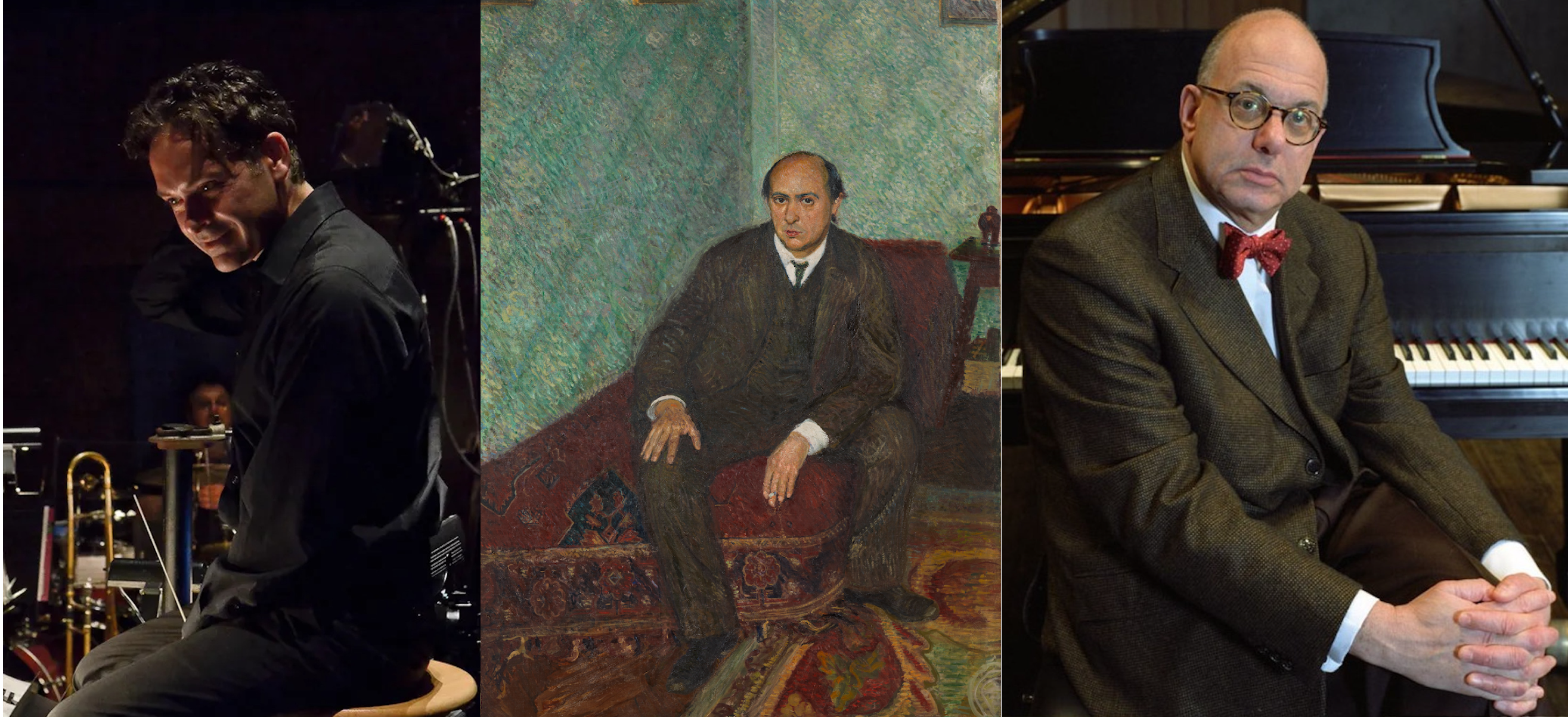
Listeners cringed in Part 3 as Schoenberg’s use of Sprechstimme evoked horripilation and dread with Waldemar’s curse and the march of the dead. A final ethereal sunrise scene concluded the cycle on a note of redemption and accord.L-R: James Bagwell. Photo by Roy Lewis; Arnold Schoenberg Seated by Richard Gerstl (1906). Public domain; Leon Botstein. Photo by Steve Pyke
Enormous Performing Force
Tonight was a spectacular performance by an enormous performing force. The audience enjoyed a rare example of Schoenberg’s early genius, bridging late Romanticism’s lush, expressive world with the emerging modernist aesthetic. Be sure to follow the ASO and watch for their next concert!
The American Symphony Orchestra Performs Schoenberg’s Gurre-Lieder
We use cookies on our website to give you the most relevant experience by remembering your preferences and repeat visits. By clicking “Accept”, you consent to the use of ALL the cookies.
This website uses cookies to improve your experience while you navigate through the website. Out of these, the cookies that are categorized as necessary are stored on your browser as they are essential for the working of basic functionalities of the website. We also use third-party cookies that help us analyze and understand how you use this website. These cookies will be stored in your browser only with your consent. You also have the option to opt-out of these cookies. But opting out of some of these cookies may affect your browsing experience.
Necessary cookies are absolutely essential for the website to function properly. These cookies ensure basic functionalities and security features of the website, anonymously.
Cookie
Duration
Description
cookielawinfo-checkbox-analytics
11 months
This cookie is set by GDPR Cookie Consent plugin. The cookie is used to store the user consent for the cookies in the category "Analytics".
cookielawinfo-checkbox-functional
11 months
The cookie is set by GDPR cookie consent to record the user consent for the cookies in the category "Functional".
cookielawinfo-checkbox-necessary
11 months
This cookie is set by GDPR Cookie Consent plugin. The cookies is used to store the user consent for the cookies in the category "Necessary".
cookielawinfo-checkbox-others
11 months
This cookie is set by GDPR Cookie Consent plugin. The cookie is used to store the user consent for the cookies in the category "Other.
cookielawinfo-checkbox-performance
11 months
This cookie is set by GDPR Cookie Consent plugin. The cookie is used to store the user consent for the cookies in the category "Performance".
viewed_cookie_policy
11 months
The cookie is set by the GDPR Cookie Consent plugin and is used to store whether or not user has consented to the use of cookies. It does not store any personal data.
Functional cookies help to perform certain functionalities like sharing the content of the website on social media platforms, collect feedbacks, and other third-party features.
Performance cookies are used to understand and analyze the key performance indexes of the website which helps in delivering a better user experience for the visitors.
Analytical cookies are used to understand how visitors interact with the website. These cookies help provide information on metrics the number of visitors, bounce rate, traffic source, etc.
Advertisement cookies are used to provide visitors with relevant ads and marketing campaigns. These cookies track visitors across websites and collect information to provide customized ads.